Heating & Cooling5 min read
How Long Do AC Units Last in Arizona? Key Factors
Arizona AC life depends on run hours, installation, maintenance, and repair history. Learn how to judge condition and plan replacement without guessing.
By JB Water & Air · Published Sep 1, 2026
- 4.9 · 580 Google reviews
- CR-39 licensedROC #341937 · CR-39
- Open 24/7
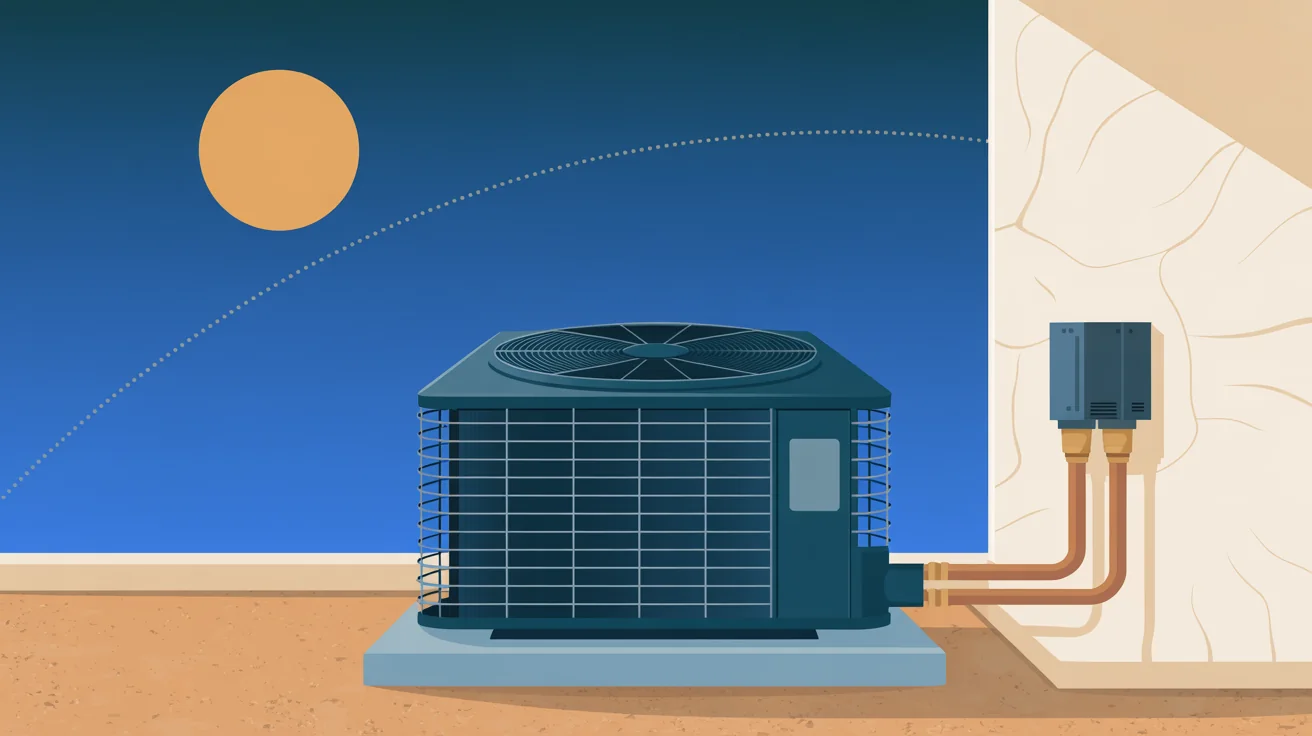
An air conditioner in Arizona does not come with a reliable local expiration age. Some systems need major work comparatively early; others remain serviceable well past a planning benchmark. Installation quality, sizing, airflow, run hours, maintenance, outdoor exposure, component condition, and repair history matter more than a single “Arizona average.”
For planning purposes, the U.S. ENERGY STAR program suggests considering replacement discussions when cooling equipment is more than ten years old, especially when other performance problems are present. That is a decision trigger, not a promise that every system will last ten years or fail immediately afterward.
Why Arizona changes the conversation
Cooling systems in the Mesa area operate through long periods of high outdoor temperature. More run time means more operating cycles and more hours for motors, compressors, contactors, capacitors, and fans. Dust and outdoor debris can also restrict heat transfer or airflow when maintenance is neglected.
Those conditions explain why national age ranges should not be copied into an Arizona guarantee. They do not justify declaring every older unit worn out. A correctly installed and maintained system with stable performance deserves a different evaluation from a newer system with poor airflow, improper sizing, or recurring failures.
Seven factors that influence service life
1. Original installation and commissioning
Equipment needs to be selected and configured for the home and installation. Airflow, refrigerant charge, drainage, electrical connections, duct condition, and controls all affect how the system operates. A brand name or efficiency rating cannot compensate for a significant installation problem.
If a system has struggled since it was installed, ask the technician to evaluate the operating conditions rather than assuming the unit simply “aged fast.”
2. Actual run hours and operating pattern
Calendar age is only one measure. A system serving a shaded, efficient home may have a different workload from the same model serving a home with major heat gain or duct loss. Thermostat settings, occupancy, building envelope, and equipment capacity all influence runtime.
Long steady operation during difficult conditions is not automatically a defect. A sudden change, such as much longer cycles, frequent stopping and starting, or failure to reach the usual indoor condition, deserves diagnosis.
3. Airflow
Restricted filters, blocked returns, closed or obstructed supply registers, dirty indoor components, blower problems, and duct restrictions can reduce airflow. The system may run longer while delivering less comfort. Use the filter type specified for the equipment and check it based on actual loading; an arbitrary calendar rule may be too often for one home and not often enough for another.
4. Outdoor heat transfer
The outdoor unit must reject heat. Leaves, stored items, vegetation, damaged fins, and dirt can interfere. Homeowners can keep the surrounding area clear and visually inspect the unit with power left on only for observation. Coil cleaning, cabinet removal, and electrical work belong with a qualified technician using the manufacturer’s procedure.
5. Maintenance and early correction
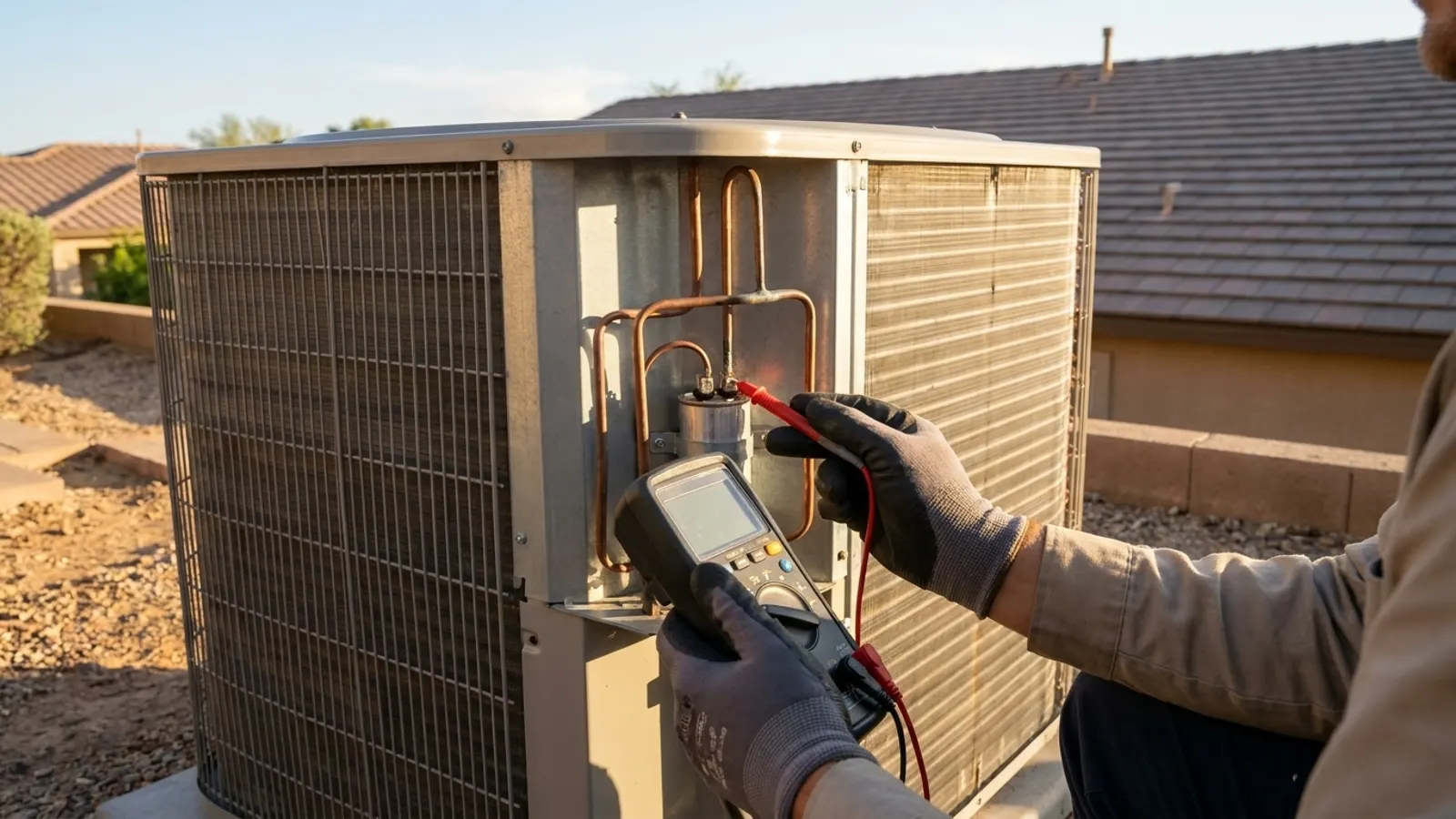
Maintenance cannot guarantee a lifespan, but it can identify developing problems before they create secondary damage. A professional AC maintenance visit may include system-specific checks of electrical components, refrigerant-circuit performance, airflow, temperature change, drainage, controls, and outdoor condition. The exact checklist should match the equipment and agreed scope.
6. Repair history and parts context
One replaceable electrical component does not mean an entire system is finished. Repeated refrigerant leaks, major compressor trouble, extensive coil damage, incompatible components, or several recent failures change the decision. Parts availability, refrigerant type, labor scope, and remaining warranty also matter.
7. Ductwork and the house itself
Rooms can become uncomfortable because of leakage, insulation, solar gain, return-air limitations, or building changes, not just because the outdoor unit is old. Replacing equipment without understanding the load and distribution system can preserve the underlying complaint.
Signs that justify an evaluation
Arrange AC repair diagnosis when you notice:
- The system will not start or repeatedly trips a breaker
- Airflow is substantially lower than normal
- The home no longer reaches its usual comfort level
- Cycling behavior changes sharply
- New grinding, buzzing, rattling, or squealing appears
- Water is collecting where it should not
- Ice appears on refrigerant lines or indoor components
- Energy use changes without an obvious weather or household explanation
- Repairs are becoming frequent or involve major components
Turn the system off and seek appropriate help if there is smoke, a burning odor, damaged wiring, or water near energized equipment. Do not open electrical compartments or handle refrigerant lines.
Repair or replace? Use a whole-system comparison
Avoid deciding from age alone. Ask for the confirmed failure and compare two written paths:
- Repair scope: What part failed? What caused it? Does the recommendation correct the cause or only the failed component? What other known issues remain?
- Replacement scope: How was capacity selected? Which indoor and outdoor components are included? What duct, electrical, drainage, thermostat, access, permit, or commissioning work is part of the proposal?
Then consider comfort, efficiency, noise, repair frequency, parts context, warranty, expected time in the home, and budget. A modest repair on otherwise stable equipment can be rational. A major repair on a system with multiple unresolved problems may make replacement worth comparing.
If replacement is being considered, JB Water & Air’s AC installation page explains the questions that should shape a proposal. Do not accept a size recommendation based only on the old nameplate without discussing the home and system.
Build a replacement plan before the system fails
For older equipment, collect model and serial numbers, warranty information, maintenance records, and recent utility history. Know where the disconnect, filter, thermostat, and condensate outlet are. Ask for a condition assessment during planned service rather than waiting for a no-cooling event to begin every conversation.
Planning does not commit you to replacement. It gives you time to compare scopes, understand electrical or duct needs, and decide which performance goals matter. It also reduces pressure to choose based on a headline efficiency rating or a generic lifespan claim.
An Arizona AC answer based on evidence
JB Water & Air is a family-owned Mesa company serving the area since 1981. HVAC work is provided under Arizona license ROC #341937 (CR-39). A technician can assess current operation and explain the evidence for maintenance, repair, or replacement without treating age as a diagnosis.
To discuss a system’s condition, contact JB Water & Air at (480) 969-3193. Share the equipment age if known, repair history, symptoms, and recent changes; the inspection and measurements determine the recommendation.
Frequently asked questions
- How long does an AC unit last in Arizona?
- There is no dependable Arizona expiration age. Service life varies with run hours, installation, sizing, airflow, maintenance, environment, and repair history. Once a system is past about ten years, planning and closer evaluation are sensible, but age alone does not prove replacement is due.
- Is it worth repairing an AC unit that is 12 years old?
- It can be. Compare the confirmed failure, total repair scope, other major-component condition, comfort and energy performance, warranty status, refrigerant and parts availability, and the cost of a suitable replacement. A small repair and a major system failure should not be judged by the same age rule.
- Does running the AC constantly shorten its life?
- Long seasonal run time adds wear, but continuous operation can also signal high outdoor load, an undersized system, airflow trouble, thermostat settings, duct losses, or a developing fault. Runtime needs context; have a change in normal behavior evaluated.
- What is the best way to help an AC last longer?
- Use the correct filter and check it at an interval suited to the home, keep return and supply airflow unobstructed, keep the outdoor unit clear, and schedule qualified maintenance based on manufacturer guidance and system condition.