
Leak detection · Mesa, AZ
Slab leak detection in Mesa, before anyone cuts concrete
We find hidden slab, wall and yard leaks by isolating valves and listening, so concrete gets opened on evidence instead of a guess.
- 4.9 · 580 Google reviews
- CR-77 licensedROC #260511 · CR-77
- Since 1981Family owned since 1981
- Open 24/7
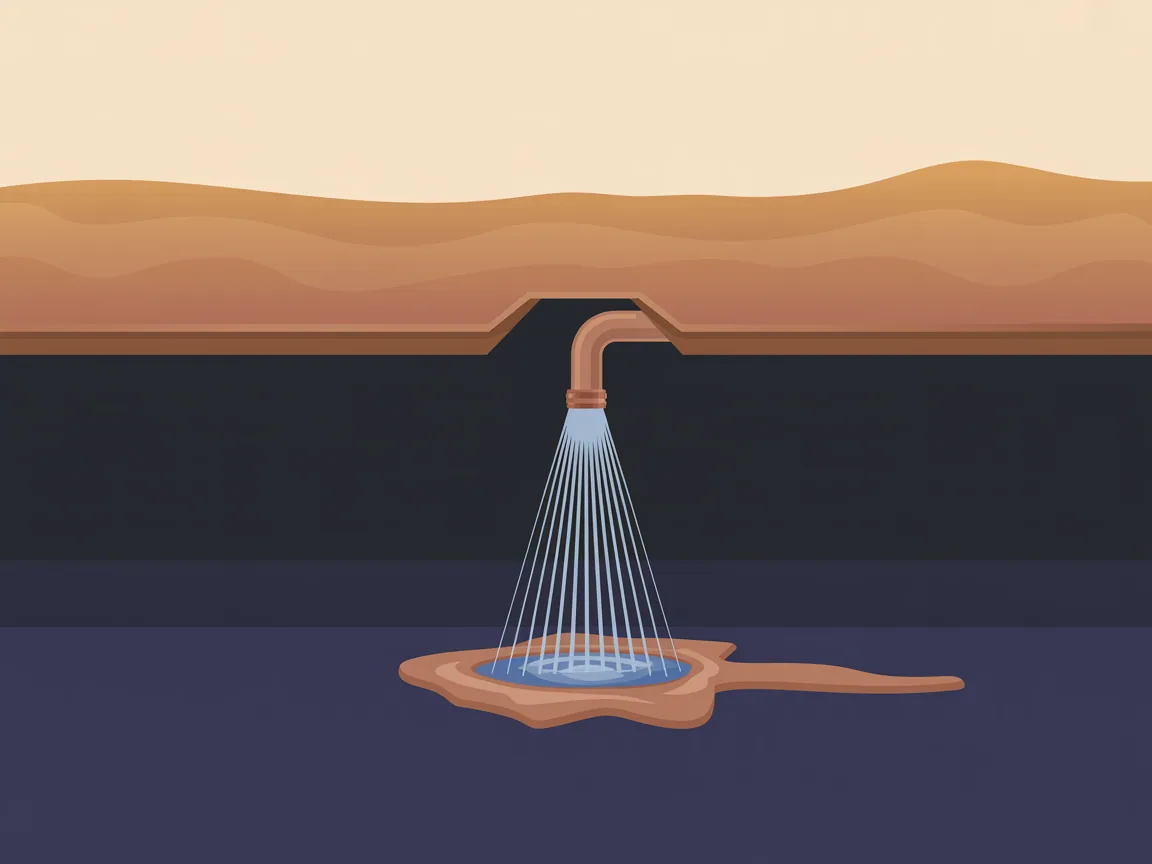
Water escaping now? Close the nearest working shutoff, stay clear of standing water near electrical equipment, and see emergency plumbing.
What slab leak detection is
Slab leak detection is the process of confirming that a concealed pressurized water line is losing water beneath or within a building slab, then narrowing its location by isolation, listening and pressure testing before any concrete is opened.
A leak-detection call, in one customer's words
“He took time to troubleshoot our leak and explain everything in detail while tracking down the problem.”
James Chaffin · On a leak-detection call · Read it on Google: James Chaffin's review, opens in a new window
10Google reviews mention leak repair, as of 2026-09-02
Read what Mesa customers wrote
JB's verified Google Business Profile lists online estimates as unavailable. A leak is priced from what it takes to reach, not from a photo or a form, so the diagnosis comes first.
What you noticed, and the question it raises
No single sign proves a leak
Each of these has ordinary explanations worth exhausting first. What they do well is narrow the side, and each one opens a question the visit has to answer.
- The water bill jumped
- An unexplained rise with no change in use is the most common first sign of a leak on a line nobody can see. The question is whether the water is leaving before or after the house shutoff.
- A warm spot on the floor
- Warmth underfoot points at a hot line below the slab. The question is whether the warmth persists once the water heater is isolated, because a heater can put warm water on a floor a room away.
- Running water with everything off
- Water is still moving somewhere. The question is which closure stops the sound, since that single answer separates supply from drainage and the house from the yard.
- A damp baseboard or cabinet base
- Water is arriving at that point rather than starting there. The question is what sits uphill of it, because water travels along the top of a slab before it becomes visible.
- Pressure dropped at every fixture
- A fall across the whole property suggests loss on a supply line rather than a restriction at one fixture. The question is whether the service line into the building is involved.
- A wet patch in the yard
- Ground moisture can come from the service line, from irrigation or from recent weather. The question is whether the patch survives a dry stretch with the irrigation controller switched off.
Name the side before anyone locates it
Which side is the water leaving from?
Every locating method works better on a smaller search area, and valves produce that area for nothing. Walk the same closures a technician would, and see which side the meter names. If the loss turns out to sit before the house shutoff, it belongs to water line repair instead.
Reading 1 of up to 3
With every fixture, appliance and the irrigation controller off, does the meter still move after an hour?
Stop the ice maker, the pool autofill and any treatment gear that regenerates on a timer too, then read the meter and its small leak dial.
Got a meter reading? Say what it did with everything off, and the visit starts from a fact instead of a guess. Family owned in Mesa since 1981, open 24 hours a day, 7 days a week.
(480) 969-3193Slab Leak Detection in Mesa, AZ
JB Water & Air evaluates concealed water leaks for Mesa homes and businesses under Arizona CR-77 plumbing license ROC #260511. The purpose of a detection call is not to open a floor. It is to reach a defensible answer about where water is escaping, so whoever opens the floor knows why that spot and not one four feet away.
If water is escaping now, close the nearest working shutoff, or the main if you know which valve controls the building. Stay out of standing water near electrical equipment. Our guide to which shutoff controls a leaking fixture or the whole house sets out the order. JB Water & Air is open 24 hours a day, 7 days a week at (480) 969-3193, though arrival timing must still be confirmed.
Why Mesa ground and Mesa houses change the answer
Caliche, the cemented hardpan running through East Valley soil, sheds water rather than absorbing it, so a leak beneath a slab can travel sideways along a hard layer and surface a long way from the pipe that failed. Where water appears is evidence, not an address. The foundation matters as much: most Valley housing sits on slab on grade, and newer construction is frequently post-tensioned. Older Mesa runs the other way, with original cast iron and decades of hard water working on copper.
Reading the Meter, the One Sign That Measures
- Stop everything that uses water: fixtures, the ice maker, the irrigation controller, the pool autofill, any treatment equipment on a timer.
- Read the meter, including the small leak indicator dial if it has one.
- Leave the property alone for an hour or two, then read again. Movement with nothing running means water is leaving the system.
- Close the house shutoff and read once more. If the meter stops, the loss is inside or beneath the building. If it keeps moving, the loss sits between the meter and that shutoff: the yard service line, or the irrigation taken off it.
Step four is the one most people skip, and it decides which scope you are dealing with. If the valve itself weeps while you work, a leaking main shutoff has its own diagnosis.
Rule out the look-alikes first
A slab is expensive to guess at
So eliminate the sources that are cheap to check. Each of these mimics a slab leak, and each has a test that settles it in minutes.
Irrigation and the yard
Valley irrigation is commonly taken off ahead of the house shutoff, so a valve leaking by moves the meter exactly as an under-slab leak does. Close the irrigation shutoff and read again. In monsoon season, test through a dry stretch with the controller off.
The water heater
A heater can put water on a floor from the tank, the connections, the pan or the relief valve, and it can surface a room away. Isolate the cold inlet and read the meter again. Warmth stops being evidence of a hot line once the heater is the source.
The pool
Summer evaporation here is high enough that a falling level proves nothing alone, so compare the pool against a bucket on a step. A pool leak rarely moves the house meter, unless the autofill runs to keep up and the bill starts behaving like a house leak.
Air conditioning condensate
An air handler makes condensate all summer, and a blocked drain puts water at a ceiling or an interior wall. Two things separate it: it stops when the cooling stops, and it never moves the water meter.
Toilets and fixtures
A flapper leaking by is silent, runs continuously, and is a common cause of a bill that jumps with no change in habits. Dye in the tank shows it within minutes.
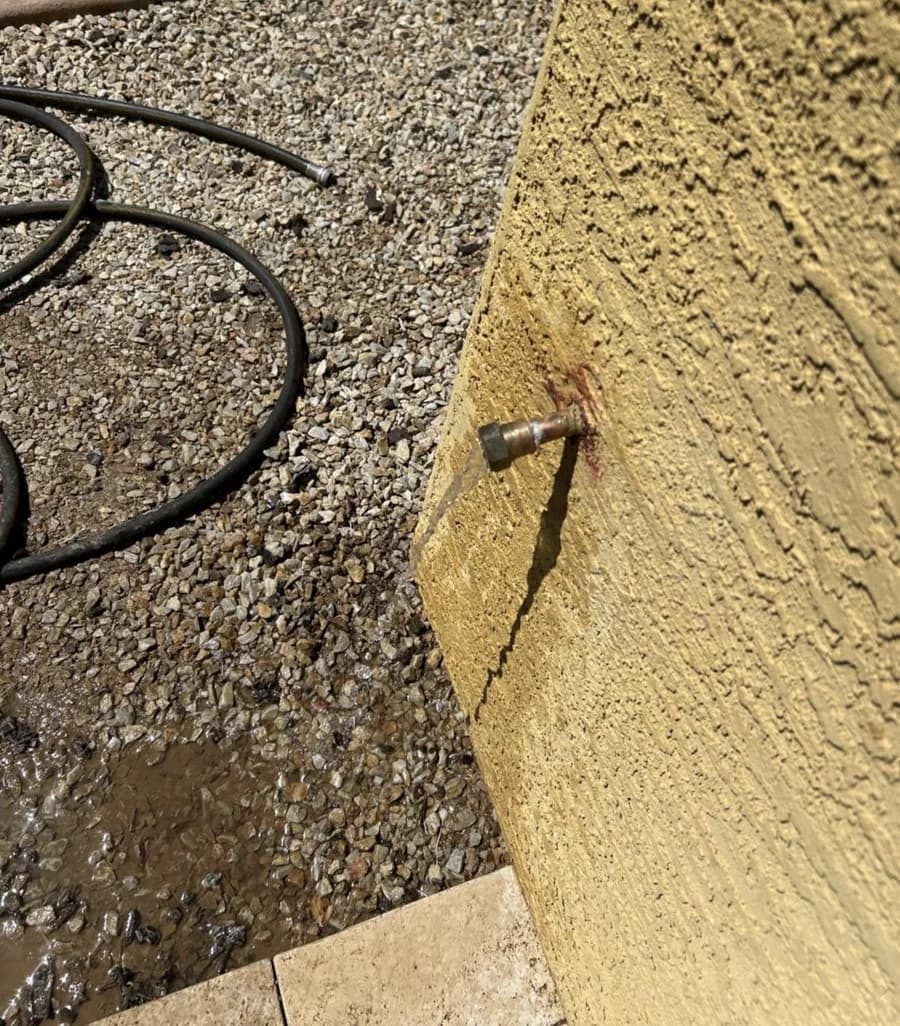
Locating without opening the slab
What each method does, and what ruins a reading
JB uses non-intrusive methods but publishes no equipment list, so this describes what the trade uses rather than promising a device on a given call.
Acoustic listening
Water escaping a pressurized line makes a continuous broadband hiss that carries through pipe and concrete, and ground microphones pick it up. Strongest on a quiet cold line at pressure. Weakest under thick tile and mortar beds, over carpet and pad, or with road noise and a pool pump running.
Thermal imaging
An infrared camera images the warm plume a hot-side leak leaves in a floor. It reads only the hot side, and it is easily fooled: sunlight through a west window and a duct run in the slab both produce warm shapes that have nothing to do with plumbing.
Pressure isolation
A gauge, the main shutoff and a methodical order of valve closures. It needs no specialist equipment and it answers the biggest question first, which is which part of the system is losing water. Everything else works better on the smaller area it produces.
Tracer gas
The line is drained and an inert gas is introduced, then a detector follows it to the surface. Useful where acoustic work is defeated by floor covering or ambient noise. It requires the line taken out of service and a reasonably intact surface above it.
Pipe tracing
Establishes where the line actually runs before any reading is interpreted. Without it, an acoustic or thermal hit is being compared against an assumption about the route, which is how a floor gets opened in the wrong place.
Two readings that agree before anything is cut. A single strong hit is a hypothesis, and marking a spot on one acoustic reading is how a floor gets opened twice. Ask what agreed before the mark went down, and ask how large the marked area is. An honest answer has a radius.
When the slab is post-tensioned
Cutting a tendon is a hazard, not an inconvenience
A post-tensioned slab holds steel tendons under load, common in Valley construction and identifiable from a garage-slab stamp, patched cable ends around the perimeter, or the builder documents. Where one is involved, three things change before any concrete is opened.
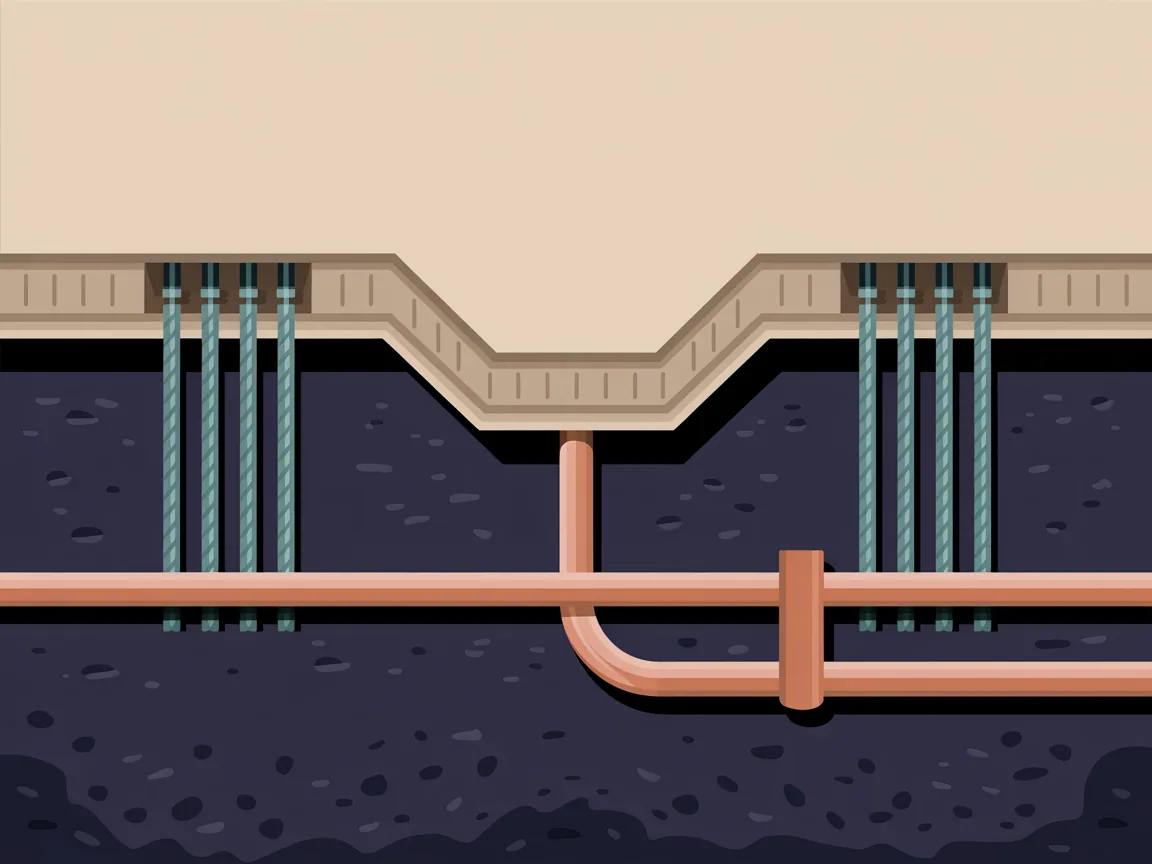
Locating precision stops being a convenience and becomes a requirement, because the tolerance for opening the wrong area is far smaller.
Tendon positions must be established before any cut, from the builder drawings or by scanning the slab.
Rerouting the affected line rather than trenching the floor moves from a fallback to the first candidate.
Ask any contractor proposing to cut concrete how they established the foundation type and how they will confirm where the tendons run.
Repair Options Once the Leak Is Located
Local repair at the failure
Where one accessible section has failed and the surrounding pipe looks serviceable, a focused pipe repair may be appropriate. The quote should name the access, the section repaired, and who restores the finish that gets opened.
Rerouting the line
The damaged segment is abandoned and the run replaced on a different path, frequently overhead. Under a post-tensioned slab, or under tile that cannot be matched, that trade is often worth making.
Broader repiping
One slab leak does not prove a house needs repiping. That project earns consideration when evidence shows repeated failures or deterioration in more than one place, and the Mesa repiping guide sets out what should support the decision.
Outside the building
If the loss sits between the meter and the house, the access and ownership questions change, and caliche makes the excavation a real variable. Review water line repair in Mesa for the boundary questions.
What Detection Does Not Settle
Detection reduces uncertainty. It does not promise that nothing further appears once finishes are open, and it does not price the repair from a photograph or a form. JB Water & Air's verified Google Business Profile lists online estimates as unavailable. What drives the number is access: the hardness of the ground outside, the floor covering inside, the foundation type, and who restores the surfaces afterwards. A quote should itemize diagnosis, access, pipe repair and restoration separately, and the guide to comparing plumbing quotes and scopes explains what to ask each bidder.
Protecting the Property While You Wait
If a working shutoff isolates the leak, leave that branch off, move belongings away from the moisture and stay clear of wet electrical equipment. Photograph the damage and record the meter readings, since documenting a loss before repair begins is easier now than later. Do not cut into a slab on the strength of where water appeared, because on caliche ground that is often the last place it went rather than the first.
Describe the sound, the stain or the bill
Start with what you already know
A running sound with everything off, a warm patch of floor, a bill that jumped: tell us what changed and when.
Send what you have noticed and a JB team member will call you to confirm a time that works. If water is running now, the phone is the fastest route.
(480) 969-3193Questions people ask
Straight answers
How do plumbers find a slab leak without breaking the concrete?
Do water leak detection sensors find a hidden leak?
Does a post-tension slab change how a leak is repaired?
Can a sewer camera find a slab leak?
Does detection include repairing the leak?
How do I request slab leak detection?
Still not sure which side is losing water? Family owned in Mesa since 1981. Open 24 hours a day, 7 days a week.
(480) 969-3193Related plumbing services
Get a defensible answer before the saw comes out
Describe the sound, the stain or the bill, and what the meter does with everything off. That is what decides how the visit starts.