
Water heaters · Mesa, AZ
Water heater repair and replacement in Mesa
We repair and replace gas and electric water heaters across Mesa, and tell you plainly whether your tank is worth fixing or ready to retire.
- 4.9 · 580 Google reviews
- 2-year labor guarantee2-year workmanship guarantee
- CR-77 licensedROC #260511 · CR-77
Guarantee covers JB's own labor. Excludes normal wear, manufacturer defects and outside damage.
In one line
Water heater repair addresses a failed component on a tank or tankless unit whose vessel is still sound, while replacement becomes the reasonable comparison once the tank leaks through its shell, corrosion is advanced, or the unit no longer meets the property's hot water demand.
What you are seeing, and what it points at
Water pooling at the base, fittings dry
Water reaching the floor with every connection above it dry points at the vessel rather than a part. The question is whether the steel has perforated or the water is arriving from something else nearby.
Gas unit will not stay lit
Flame is being established and then lost. That raises whether flame sensing, the gas supply, the venting or a blocked combustion air screen is responsible.
Electric unit cold, breaker holding
The fault sits downstream of the panel. Whether hot water stops immediately or after a short burst is what separates an upper element question from a lower one.
Popping, rumbling or kettling
Usually sediment on the tank floor. What it raises is not the noise but how much heat stress the insulating layer has already put on the lining.
Rotten egg smell on the hot side only
With the cold tap clear, this points at a reaction involving the anode rod rather than the supply. Which anode material is fitted becomes the question.
Rusty hot water, clear cold water
Color confined to the hot side suggests corrosion inside the vessel. That raises whether the anode has been consumed and how much protected life the tank has left.
Repair or replace
Tell us what the tank is doing
Tell it the tank age and what it is doing, and it shows which way repair-or-replace usually leans, including the one symptom that ends the conversation.
Send it through instead
A form is the right route for a tank that has stopped heating, is running out early or has started rumbling. For water on the floor right now, call rather than type. If you smell gas, leave the house first and call 911 and the gas utility from outside.
(480) 969-3193Open 24 hours a day, 7 days a week. For an active break, see emergency plumbing.
From the van
What we actually find
A water heater call, in one customer's words
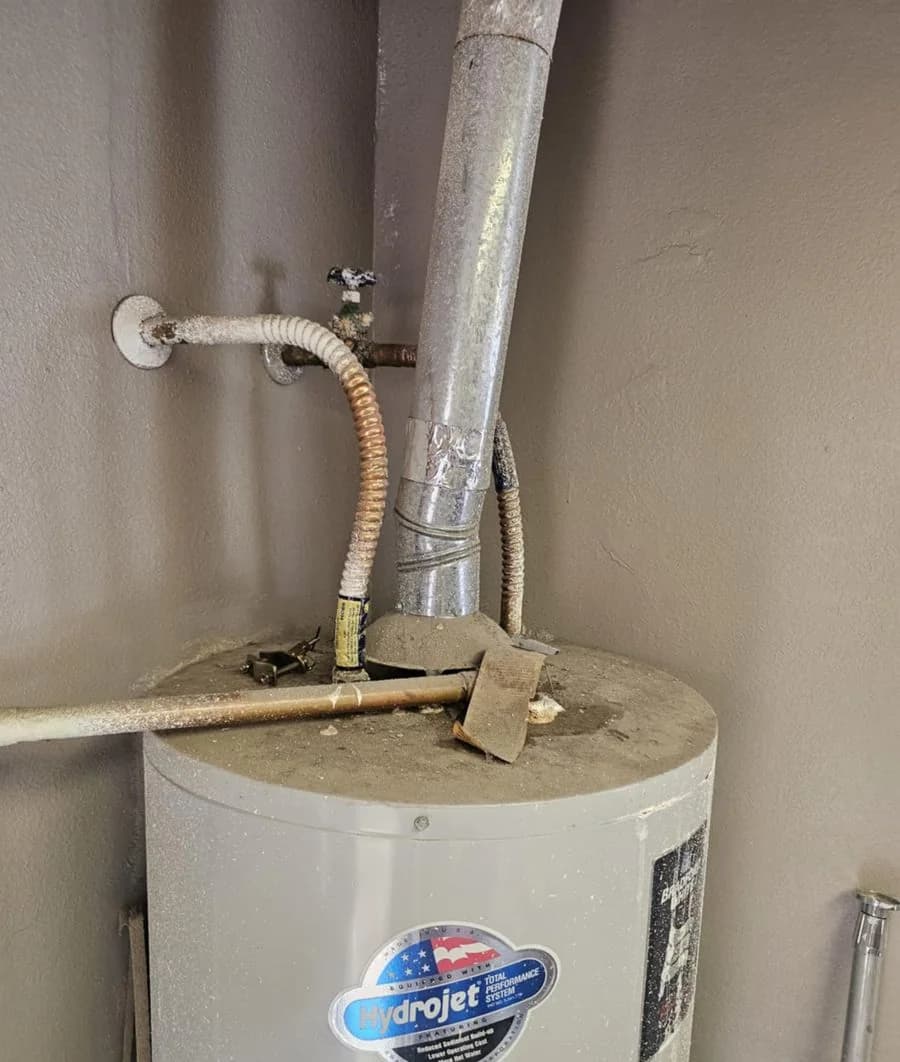
“serviced our hot water heater. He even pointed out and fixed a dangerous venting issue we were completely unaware of.”
Keith Shane McGlynn · On a water-heater service call · Read it on Google: Keith Shane McGlynn's review, opens in a new window
41Google reviews mention water heater replacement, as of 2026-09-02
JB does not publish an instant online estimate for a water heater. What the number turns on is the equipment, the condition of the connections it ties into and what the location demands.
Almost every water heater call in Mesa resolves into three questions: where the water is coming from, why heat stopped, and whether the steel vessel is still sound. Here is how each one gets answered, and the signs worth acting on.
If Water Is Escaping Right Now
Close the unit's water supply when it is safe and accessible. Do not touch electrical controls while standing in water. If a tap is running hot enough to scald, stop using it. If you smell gas, leave the area and contact the gas utility or emergency services from a safe location. For an active break that will not wait, emergency plumbing is the faster route than a form.
Where the Water Is Coming From
A puddle is not a diagnosis. The source decides everything downstream of it.
A leak at a connection
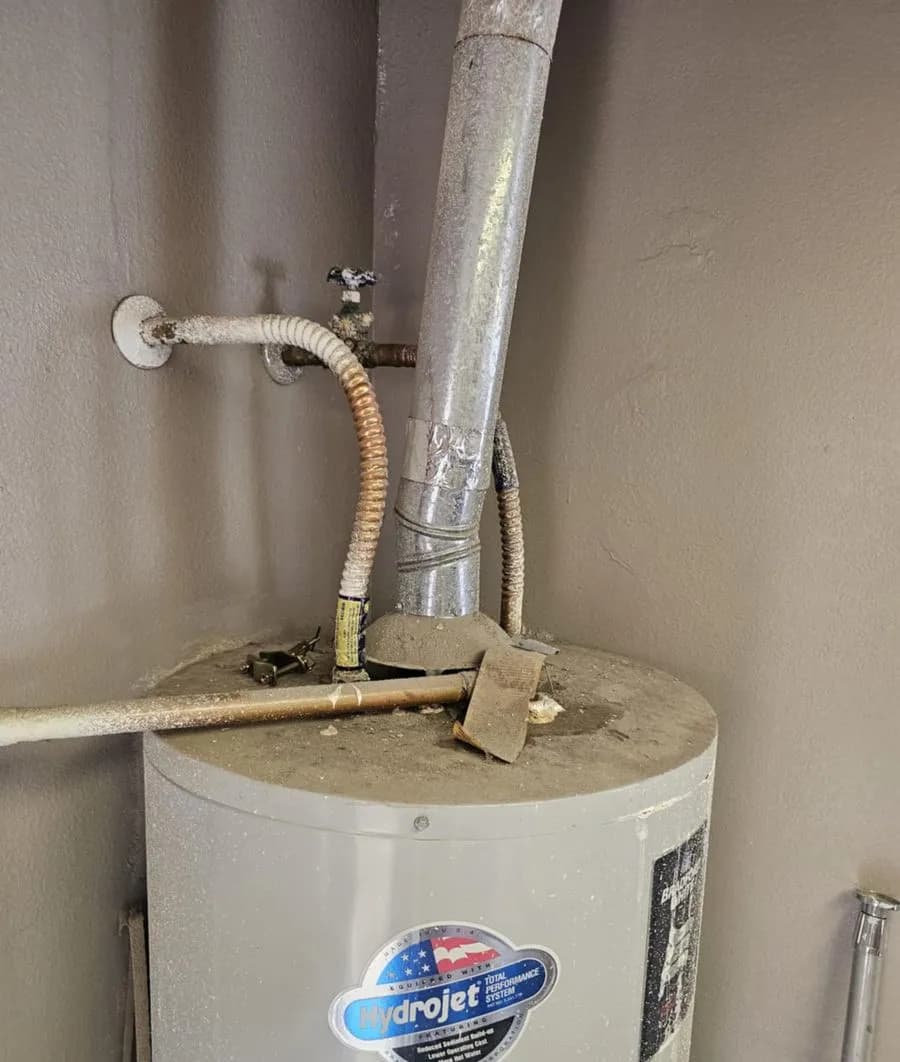
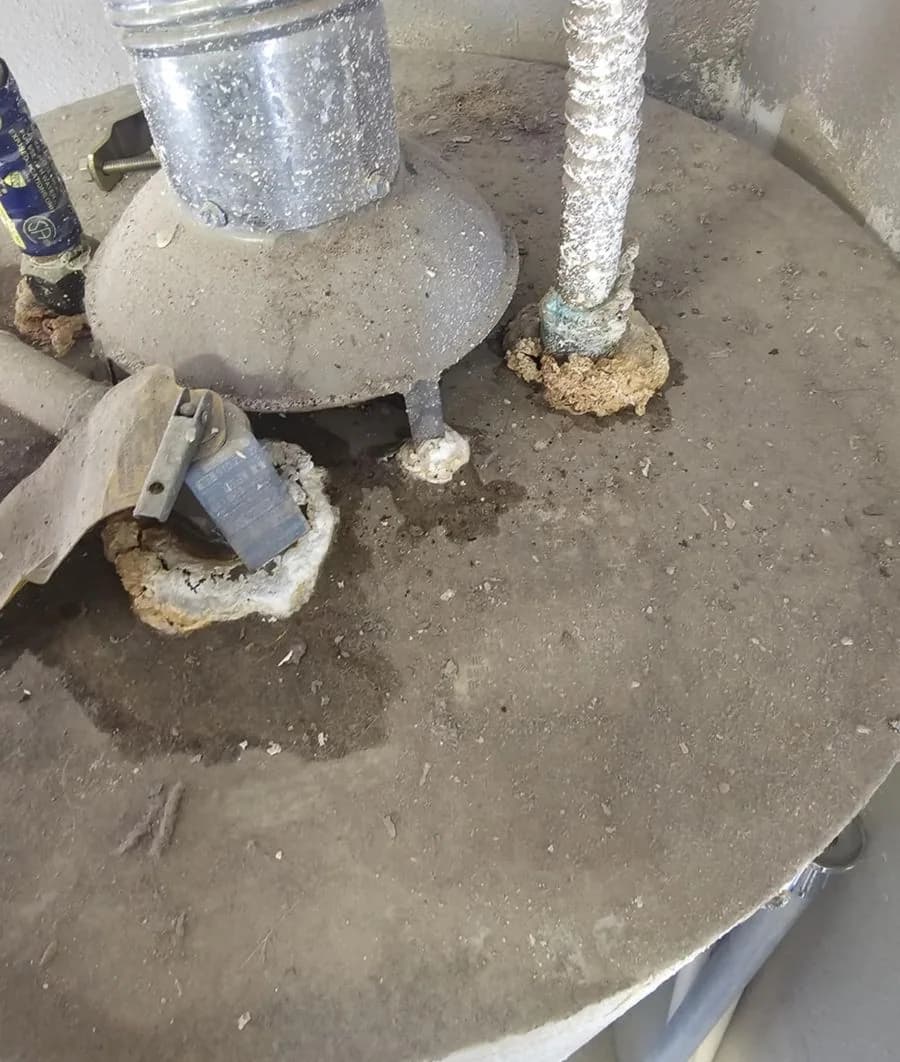
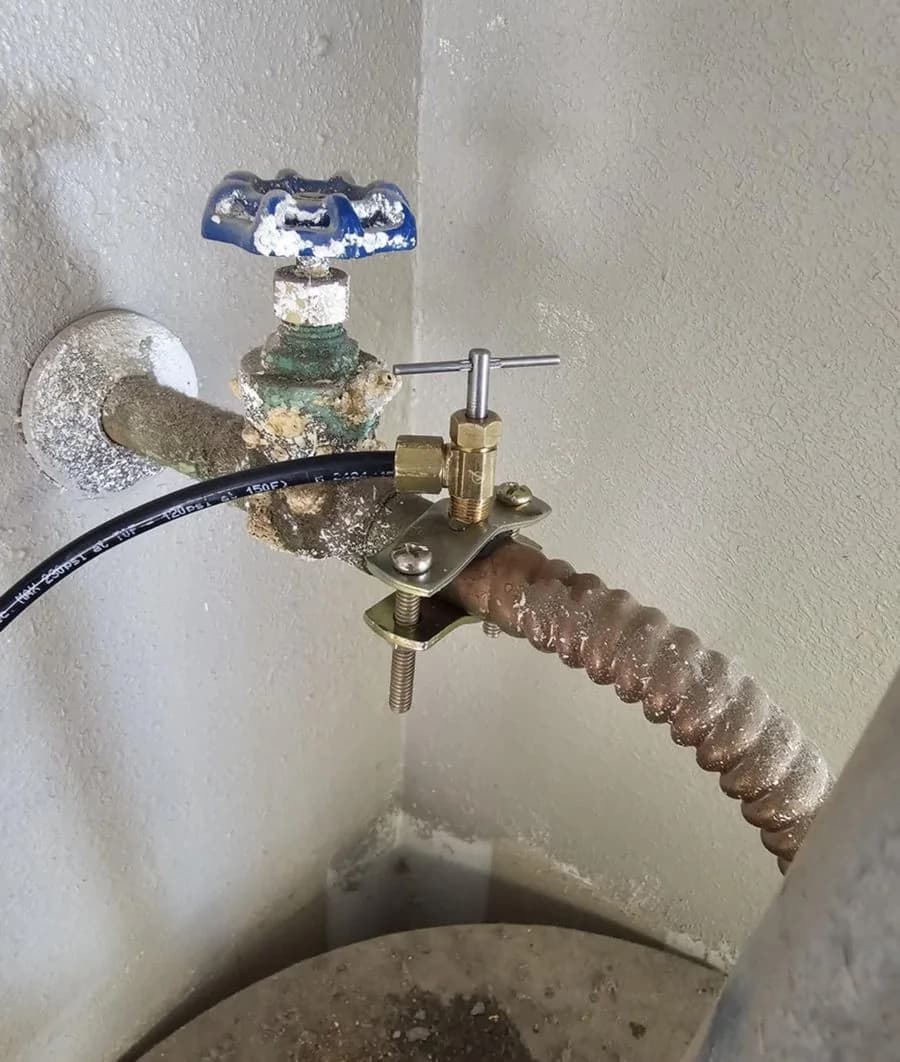
The flex connectors, the shutoff, the drain valve and the temperature and pressure relief valve all sit on or beside the tank. Water from any of them runs down the shell and pools at the floor, which looks identical to a failed tank until it is traced. These are serviceable parts on a sound heater. A relief valve that weeps repeatedly is usually reporting a system condition, often thermal expansion on a closed system, so replacing it without asking why it opened produces the same puddle again.
A leak through the tank body
Water from under the jacket with every fitting above it dry means the steel has perforated, and there is no repair for that. The lining is fired glass enamel over steel, and once water reaches steel and corrodes through, the vessel is finished. Whether a homeowner's policy responds to the water damage is worth asking early rather than after cleanup. Not every puddle near a heater is the heater, either: garages and closets share walls with supply piping, softeners and condensate lines, and where the source cannot be traced by inspection, leak detection comes first.
The pan and its drain
A pan only helps if it drains somewhere, and plenty of Mesa garages have a pan with no outlet. Adding one is not a small change here. Routing to an exterior wall can mean trenching through caliche, the cemented hardpan common across the East Valley, and cutting a slab is a different job again on a post-tension foundation, standard in Valley homes built from the late 1970s onward, since tendons cannot be cut and have to be located first. A pan drain is its own project, not an add-on.
No Hot Water: Gas and Electric Fail Differently
The same complaint has two diagnostic paths, and knowing which one applies is most of the work.
Gas heaters
Heat stops when combustion stops. A pilot that lights and then dies usually points at the thermocouple or thermopile that proves flame to the gas control. A unit that will not light at all points further upstream, at the control valve, the igniter or the gas supply. If other gas appliances are behaving oddly too, the heater is not the problem. Where a control shows a fault code, record it and when it appears rather than clearing it repeatedly.
Mesa produces one failure mode more than most places. Modern gas storage heaters draw combustion air through a flame arrestor screen at the base of the burner compartment, and that screen collects lint and dust. Garages fill with fine dust during monsoon season, and a single haboob deposits more in an hour than months of ordinary living. A blocked screen starves the burner: the unit lights, runs briefly and locks out, sometimes with sooting. That is a maintenance condition rather than a dead heater, but it repeats until the dust source is dealt with. Check the venting at the same time, because a vent that has separated, corroded through or been blocked is a combustion safety problem before it is a hot water problem.
Electric heaters
Most residential electric tanks carry two elements, upper and lower, wired so only one runs at a time. Which one failed produces a different symptom, and that is the most useful thing to establish before anyone opens a panel.
- No hot water at all, from the first draw, usually points at the upper element or the upper thermostat.
- A short burst of hot water that turns cold quickly points at the lower element, because the upper element is still heating the top of the tank and you get what is stored above it and nothing more.
Behind both sits the high limit switch, often called the ECO. Pressing its reset restores heat. Pressing it repeatedly does not, because the switch is reporting a cause. Monsoon outages and voltage sags trip resets and stress controls, so a heater that quit during a storm is worth checking rather than assuming.
When a tank runs out too fast
Running out quickly is a different complaint from having no hot water at all, and it applies to gas and electric tanks alike. Capacity that was adequate for years and is not now has changed for a reason: a failed lower element, sediment reducing usable volume, a thermostat drifting, or new demand. A failing shower or tub cartridge can cross cold water into the hot line and imitate a heater fault exactly, so where the shortage is confined to one fixture, fixture repair and installation is the likelier answer than a new heater.
Why a tank starts talking
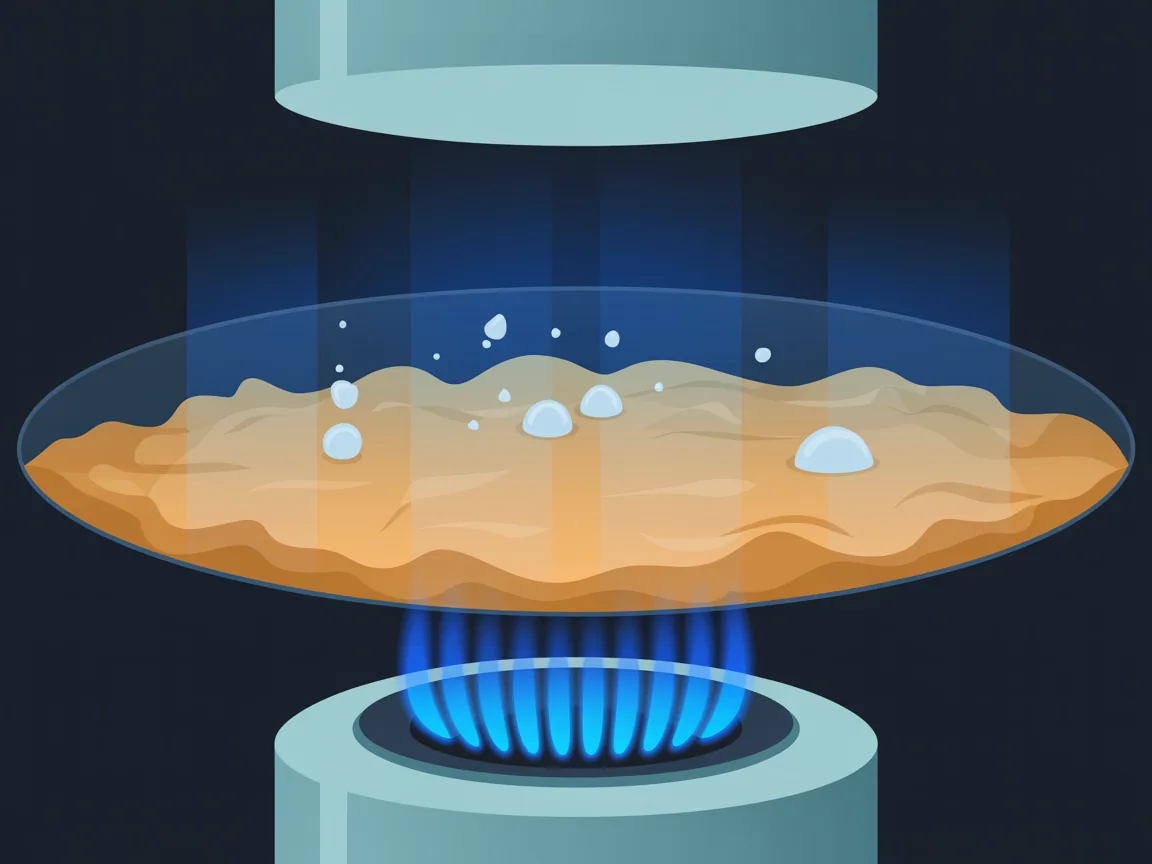
Popping, Rumbling and What Sediment Does
Mesa's supply is blended. The city draws surface water from the Salt and Verde river system alongside Colorado River water delivered through the Central Arizona Project, and supplements with groundwater, so hardness is not one fixed value across the year or across the city. Mesa publishes its sources and its measured hardness, reported in grains per gallon or milligrams per liter, in an annual water quality report, and what those figures do and do not mean is worth reading first.
Dissolved calcium leaves solution fastest at the hottest surface. On a gas heater that is the tank floor over the burner, where it forms an insulating layer. Water trapped underneath flashes to steam and forces its way out, and that is the popping. On an electric heater the deposit builds on the lower element instead, which is why the same water produces noise in one design and a burned out element in the other. The consequence on a gas unit is not the noise. It is that steel above the sediment has to run hotter to move the same heat, and heat stress is what cracks a glass lining.
Sediment is a whole-property symptom as much as an appliance one, so water treatment should follow from a measured water concern rather than being attached to a heater repair by default.
Flushing addresses accessible sediment. It cannot restore a leaking tank, and it is not risk free: a drain valve on a tank that has never been opened can fail to close again, so share the unit's age and its maintenance history before authorizing one. How to flush a water heater, and why Mesa conditions matter sets out the sequence.
How a tank fails
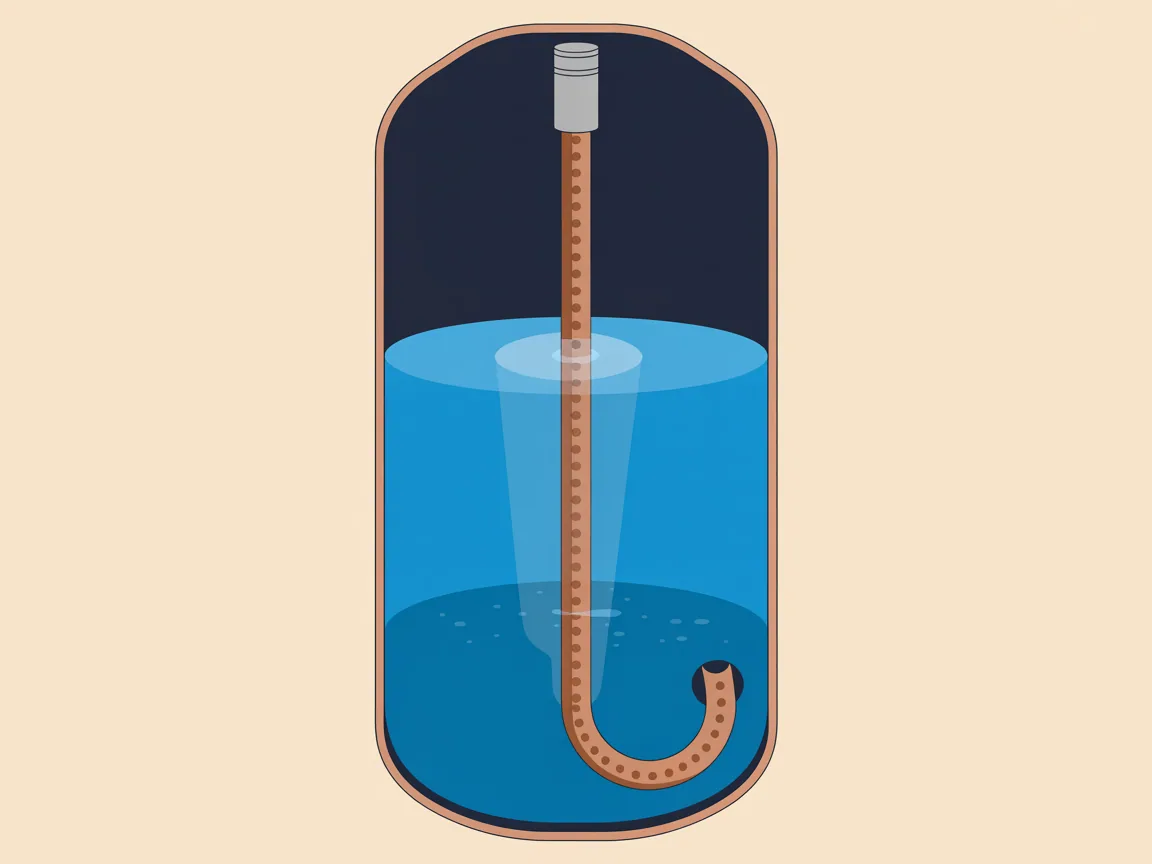
The Anode Rod
Most homeowners are never told this part exists, and it is the single component that decides how long a steel tank lasts. It sits behind several of the mechanisms that make a water heater fail.
What it does
A storage tank is steel with a fired glass lining, and that lining is never perfect: it carries pinholes and stops short at threaded fittings. Left alone, water attacks the exposed steel there. Instead a sacrificial anode rod, magnesium or an aluminum and zinc alloy, is threaded into the top of the tank. Being electrically less noble than steel, it corrodes first so the steel does not. The rod is designed to be consumed. Once it is gone, protection stops and the tank spends its remaining life corroding. A tank that leaks from the bottom in year nine is usually a tank whose anode was finished in year five.
Why Mesa is hard on anodes
Consumption runs faster in hot water, in mineral rich water and in water with higher conductivity, and all three describe the East Valley. Two local habits speed it up further: a thermostat set high, and a whole house softener. Softened water conducts better than hard water and consumes an anode faster, which is one reason a softener can improve everything else in a house while shortening the life of the heater in the garage. Several of the factors that shorten a water heater's life trace back to this part.
Inspecting one
The supply and the gas or power are shut off, pressure is relieved, and the hex head is broken loose, which on a heater that has never been serviced is frequently seized. Clearance matters too: a rigid rod needs roughly the height of the tank above it to withdraw, which a closet or a low garage ceiling rarely offers, so a segmented rod is used instead. Some tanks have no separate rod and use a combination anode built into the hot outlet nipple. The threshold is visual: a rod worn thin, or consumed back to its bare steel core wire, is protecting nothing. Intervals should come from the manufacturer's manual and from what the last inspection found, not a calendar rule. One caveat: opening an old, corroded tank to inspect a rod can turn an inspection into a replacement, so age and condition are worth weighing first.
The rotten egg smell
Sulfur odor on the hot side only, with the cold tap clear, is usually a reaction between a magnesium anode and sulfate reducing bacteria in the water rather than a supply problem. Changing to an aluminum and zinc rod, or a powered rod, is the usual line of investigation. Pulling the anode out stops the smell and also stops protecting the tank, so it is not a fix.
Reading this with a tank at home that is leaking, rumbling or running cold? JB has worked on East Valley water heaters since 1981.
(480) 969-3193Tank and Tankless in the East Valley
Neither design is better in the abstract. They fail differently, and Arizona presses on each in different places.
Tank
A storage tank keeps a set volume ready. Replacement planning covers capacity, dimensions, energy source, venting, drain and pan arrangements, connections and access. In older Mesa homes the connections themselves matter: original shutoffs and corroded flex lines above a heater are common, and disturbing them during a swap can uncover work that was not visible when the unit was quoted.
Tankless
A tankless unit is sized by temperature rise at a given flow rate rather than by gallons stored. Gas capacity comes first, because a tankless burner draws several times the input of a tank, so the meter, the regulator and the pipe size all have to be checked. That is the most common reason a tank to tankless change is not a swap, and why gas line work belongs in the planning before equipment is chosen. Venting is second: a sealed vent system is required and an existing atmospheric flue generally cannot be reused. Scale is third, and locally it decides how a unit ages. A tankless heat exchanger moves water through narrow passages, so hard water deposits there instead of on a tank floor. Descaling is routine maintenance rather than a repair, and it needs isolation valves on the hot and cold connections. A unit installed without them cannot be descaled without cutting pipe, so confirm those valves appear in the quote.
What the climate changes about sizing
Incoming main temperature in Mesa runs high through the summer, so the required temperature rise is small and a given unit supports more simultaneous flow than it would in a cold climate. That is a real local advantage, and sizing for it is the mistake. Valley incoming temperature drops enough in winter for the required rise to roughly double, and a unit sized in August disappoints in January. Size for the coldest month. Two smaller points: a gas tankless unit still needs electrical power, so a monsoon outage means no hot water even with gas at the meter, and its air intake carries a filter that collects the same dust that blocks burner screens on tank heaters.
What a Replacement Quote Should Cover
Confirm:
- tank or tankless model and the basis for the capacity chosen;
- energy source and any gas, electrical or venting work;
- water, drain and relief connections, plus isolation valves on a tankless unit;
- pan and pan drain arrangement;
- access and removal of the old unit;
- permit and inspection responsibilities;
- startup and operating checks; and
- excluded wall, floor, platform, cabinet or finish work.
JB Water & Air does not advertise instant online estimates or a fixed replacement price. What drives the number is the equipment, the condition of what it connects to and the work the location demands. A quote that itemizes those can be compared against another quote. One that gives a single figure cannot. What tank and tankless installation actually costs in Mesa walks through the same scope line by line.
Questions people ask
Straight answers
How much does water heater replacement cost?
- There is no single figure, because the appliance is only part of it. A quote is driven by tank or tankless design, capacity, energy source, and the condition of the gas, electrical, venting, water, drain and pan connections it ties into. Ask for those itemized separately from the equipment so two quotes can actually be compared, and read what drives tank and tankless installation cost in Mesa before you compare two numbers.
How often does a water heater need to be replaced?
- Replacement is driven by condition, not by a fixed interval. Storage tanks are commonly planned for around a decade of service, but water chemistry, temperature setting, anode condition and maintenance history move that in both directions. A tank that leaks through the shell is finished at any age. A sound tank with a failed component usually is not.
Can a tankless water heater be repaired?
- Often, yes. Tankless units are built as serviceable assemblies, so igniters, flow sensors, fans, control boards and gas valves are components rather than a sealed unit. Scale in the heat exchanger is a maintenance issue addressed by descaling, which requires isolation valves on the connections. A cracked or blocked heat exchanger is the failure that changes the conversation.
Do I need a plumber to install a water heater?
- Water heater installation in Mesa is licensed plumbing work, and it involves gas, venting or electrical connections where mistakes are dangerous rather than merely inconvenient. Permitting and inspection responsibilities also apply. Ask any installer which license the work falls under and who is pulling the permit before the equipment is ordered.
How do I request water heater repair?
- Call (480) 969-3193 or use the contact page. Have the fuel or energy type ready, tank or tankless design, the model and serial information from the label, how old the unit is, what changed and when, any fault code displayed, and whether water is actively leaking or standing at the base.
Related plumbing services
Get the water heater looked at
A tank that leaks, rumbles or has stopped heating is worth a call rather than a wait. JB is open 24 hours a day, 7 days a week.