
Recurring clogs · Mesa, AZ
Hydro jetting for Mesa drains that keep coming back
Hydro jetting scours grease, scale and roots off the pipe wall with high-pressure water, instead of punching a channel through the clog. A camera checks the pipe first.
- 4.9 · 580 Google reviews
- CR-77 licensedROC #260511 · CR-77
- 2-year labor guarantee2-year workmanship guarantee
Guarantee covers JB's own labor. Excludes normal wear, manufacturer defects and outside damage.
How many times has this line been cleared?
Cleared onceCable first
Reads like a single localized clog. A cable is often the proportionate tool.
Cleared 2 to 3 timesWeigh jetting
Clearing is opening a path. The coating on the wall is the open question.
Cleared 4 or more timesCamera first
Something in the pipe is resetting the clock every few months.
Read the signal
What the recurrence is telling you
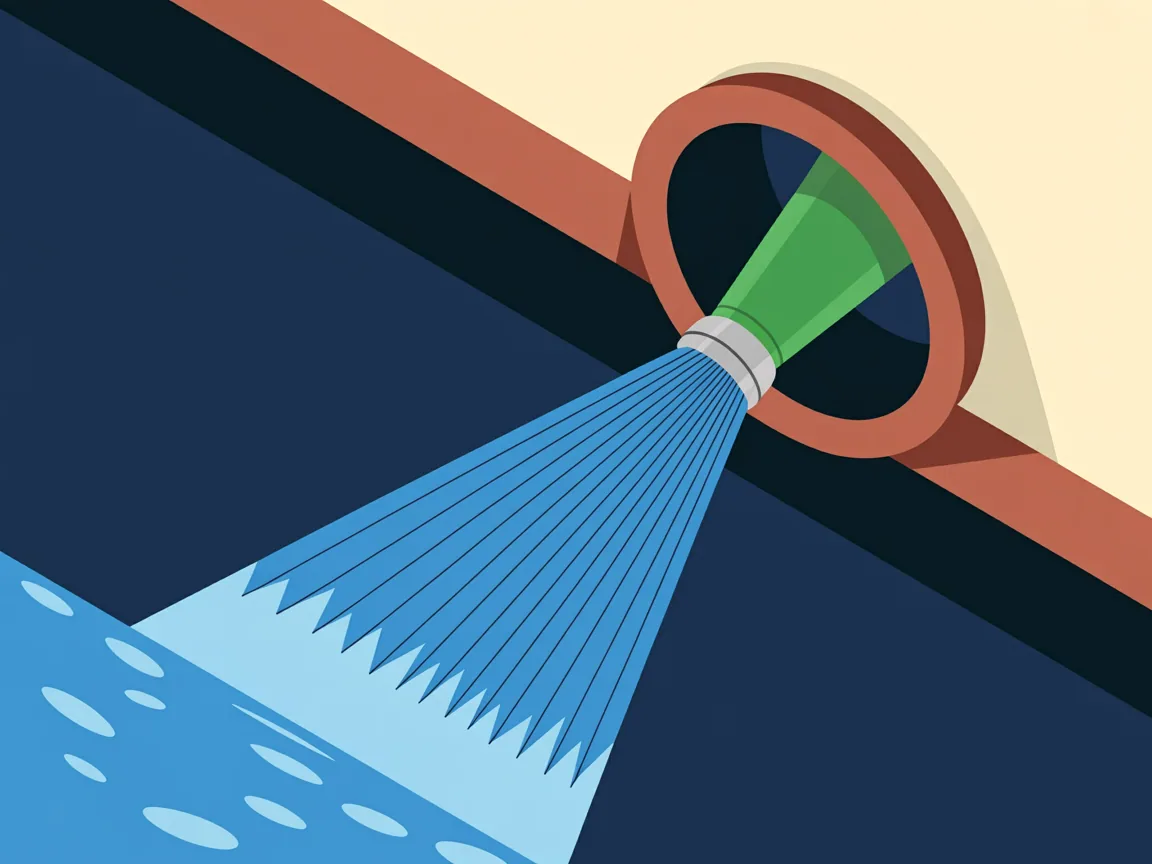
Hydro jetting is a drain cleaning method that sends a pressurized water hose down a cleanout and pulls a rear-facing nozzle back through the line, scouring grease, sludge, mineral buildup and root fiber off the pipe wall instead of punching an opening through the blockage.
Each of these is a question about the pipe, not a verdict. Recurrence is the strongest signal that clearing opened a path rather than cleaned the wall.
- The same line blocks again within a few months
- Flow was restored but the pipe may not have been cleaned. The question is whether the last visit removed the blockage or opened a path through it.
- A kitchen or laundry line slows again soon after clearing
- Grease and soap film commonly reform on a bore that is already narrowed. The question is how much of the wall is still coated.
- Camera footage shows a rough, coated wall after clearing
- Material is still in the line even though water is moving. The question is whether that coating is buildup or corrosion, because the two lead different directions.
- Roots were cut and flow returned, then reduced again
- The entry point is commonly still open. The question is whether the pipe defect admitting roots has been located and documented.
- A yard or floor drain backs up after a monsoon storm
- Washed grit and dust can settle in a low section of the run. The question is where the sediment is entering and how much is sitting there.
- Several fixtures gurgle or slow together
- The restriction is likely in a shared branch or the main sewer rather than one trap. The question is which segment, before any method is chosen.
If several fixtures are involved rather than one, how to tell whether the main sewer line is clogged narrows the location before any method is chosen.
Cable, jet or camera first
How proportionate is jetting for your line?
Set how many times the same segment has been cleared, how long the last clearing held, and the pipe material if you know it. This returns the proportionate next step and the question to take into the call.
How often the same segment has needed clearing, not other drains in the house.
Months of clear flow before it slowed or backed up again.
Condition, not age, settles it. When the pipe is unknown, footage comes first.
Look before pressure
A camera pass is the proportionate first step
With the pipe condition unread, footage comes before any pressure goes in. A camera separates a coating problem, which jetting suits, from a defect, which it does not, so the method is chosen from what the wall actually shows.
Question to take into the call
Ask what a camera survey showed, and what finding would stop the job and point to repair instead of cleaning.
This is a reading to bring to the call, not a promise about how long a line stays open. The interval follows the cause, roots on their own growth cycle, grease on how the drain is used, a defect resetting the clock at once, rather than the calendar.
A line cleared more than once is worth a phone call before more pressure goes into it.
(480) 969-3193Two tools, two jobs
Hydro jetting versus snaking
Neither is better in general. A cable is direct on a single localized obstruction; jetting removes material spread along the wall. The obstruction and the pipe condition decide which fits.
A cable machine
Drives through the center
A snake, auger or cable machine sends a rotating steel cable down the pipe to break through or retrieve a localized obstruction: a hair mass at a trap arm, a wad of wipes, a toy. Direct, and often the proportionate choice.
What it commonly leaves behind is the coating on the wall. Flow returns because a channel is open, not because the pipe is clean.
Jetting
Works the surface of the pipe
A rear-facing nozzle pulls the hose along the line while the jets cut outward, lifting material spread along a length: grease films, soap and mineral deposits, silt, and the fine root hair that regrows behind a cutting head.
It needs a suitable access point and a pipe that can tolerate the pressure. The choice gets made from recurrence and footage, not a preset package.
Is your line a candidate?
What jetting targets, and what disqualifies a line
Central Mesa runs a great deal of original cast iron, so the material matters, and corroded cast iron is the case to be careful with: the scale jetting removes well can be sitting over a wall that has already thinned. In every case, condition read on camera settles it rather than the year the pipe went in.
Cast iron
Candidate, if the footage agrees
Standard in much of central Mesa's older housing stock. Scale and a roughened bore are exactly what jetting targets, but corrosion also thins the wall, so footage decides whether the line is a candidate.
ABS and PVC
Candidate, if the footage agrees
Smooth-walled plastic, common in newer East Valley construction. Usually tolerant of cleaning, so the questions shift to joints, slope and low sections rather than wall strength.
Vitrified clay
Candidate, if the footage agrees
Found on older sewer laterals. Sound clay can be serviceable, but the joints between short sections are where roots enter, and offsets or cracked lengths change the plan.
Bituminized fiber conduit
Not a candidate
Mid-century pipe, often called Orangeburg, that deforms and delaminates with age. Finding it usually moves the conversation from cleaning to replacement.
Footage decides, not age. Sound older cast iron or clay can be a candidate; a line with missing wall, cracks, separated joints or a collapsed section is not. A camera pass is what settles which one is in the ground.
How the visit runs
Inspect, set up, scour, re-inspect
Inspect before jetting
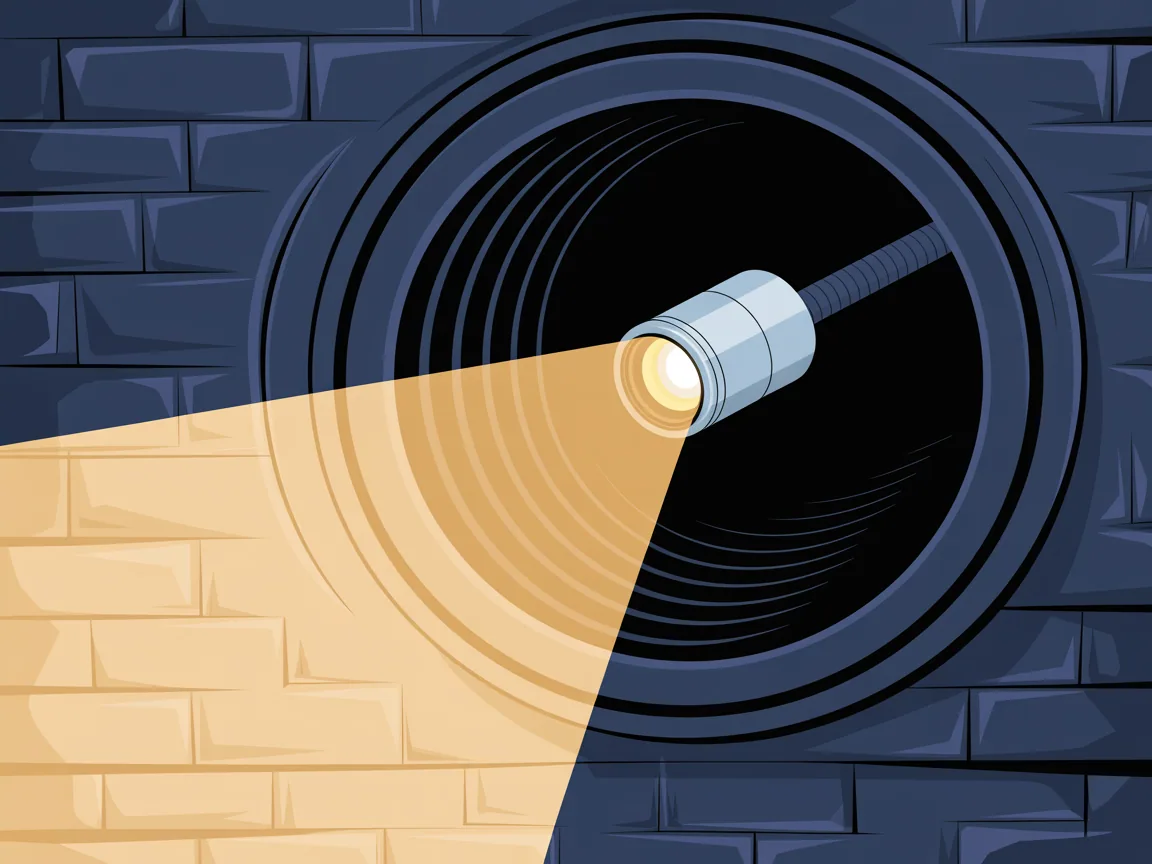
Jetting puts pressure into the line, so the pipe's condition needs establishing first. A camera survey is what establishes it.
Set up at the access point
The hose is introduced through a cleanout. Where the access sits determines what length of line can actually be reached.
Scour the pipe wall
The head pulls back through the line while water cuts outward, which is what removes build-up from the wall rather than punching a hole through it.
Re-inspect
The camera goes back in afterwards. That is the only way to see what the wall looks like now and whether anything structural was hiding under the build-up.
Has this drain been cleared before?
Tell us how often it has come back
Say which fixtures are affected, how many times the line has been cleared, and whether anyone has run a camera through it. That is what tells us whether pressure or a cable is the proportionate call.
Prefer to talk it through? Calling is the fastest way to reach JB.
(480) 969-3193What the Pressure Is Doing
Two things are happening, and they are not the same. Pressure cuts, and volume carries. A nozzle set to break a hardened scale ring is a different tool from one set to move soft sludge along a larger sewer, and a line standing full of water behaves differently again. Ask which head is planned for your pipe and what the plumber expects to change.
Jetting is also not the automatic answer to a slow drain. Access, pipe condition, the type of blockage and where the problem sits all come before the decision.
Why East Valley Lines Fill In the Way They Do
Three local conditions do most of the work here.
Supply is hard. Colorado River water, Salt River Project deliveries and groundwater are blended, hardness is reported in grains per gallon and shifts through the year, and inside a drain that means soap and mineral deposits accumulating on the wall and giving grease and hair something to hold. What hard water means in Mesa covers the supply side of the same mineral.
Monsoon season adds grit. Haboob dust settles into yard drains, area drains and around a loose cleanout cap, and the first heavy runoff carries that silt into the line, where it drops out in any low section and stays.
Then there is what the pipe sits in. Caliche stops water percolating away, so a small seep at a buried joint concentrates instead of dispersing, and desert roots track straight to it. Jetting cuts root fiber out. It does not close the opening admitting them. Roots in a sewer line explains why that becomes a schedule rather than a cure.
How Long the Result Holds
Jetting is not permanent, and the interval follows the cause rather than the calendar. A grease-loaded kitchen or restaurant line stays open longer when what goes down the drain changes. A root intrusion returns on the growth cycle until the defect is repaired. A line with a belly collects again, because water stops moving where the pipe dips.
Set the interval on the line's own history rather than on a universal number. How often drains need professional cleaning sets out how to build that from symptoms and documented recurrence instead of a subscription habit.
What the Scope Should Say
A hydro jetting scope should name the segment to be cleaned, the access point that will be used, whether inspection is included, and what happens if the camera finds damage.
The line drives the quote, not the calendar. Which drain or sewer segment is involved, how it is reached, how far the equipment has to travel, whether the buildup is grease, scale, silt or roots, and whether camera work is part of the visit. Ask for clearing, pipe wall cleaning and inspection to be itemized separately, because those are three different outcomes that sound alike on an invoice. Comparing what a drain cleaning quote includes covers that comparison in more detail.
Have this ready before you call: every fixture affected, prior clearing and how long relief lasted, known pipe materials, where the cleanouts are, anything a previous camera found, and any product already poured into the line. Chemical openers matter here, because in a line standing full the product stays in that water and is still caustic when a cleanout is opened.
After the Line Is Clean
Test the fixtures that were symptomatic, under real volume rather than a trickle. Ask to see the footage taken after cleaning, where the viewed section sits in relation to the property, and whether the full area of concern was visible. Then keep it. On a line with a history, a record of where and why it fills in is worth more than treating each visit as unrelated.
Where the honesty is
What jetting will not do
Jetting cleans a pipe. It does not rebuild one. If cleaning exposes structural damage, the footage is what compares repair options on the sewer line repair page.
It does not rebuild pipe
Jetting removes material. It will not correct a collapsed section, restore missing cast iron wall, realign a separated joint or fix a poorly sloped run. Where the run passes under a post-tension slab, common in Mesa homes from the late 1970s onward, the repair options narrow before the damage is even scoped.
It cannot fix a belly
A line that dips collects again, because water stops moving where the pipe sags. Cleaning it clears the moment, not the geometry.
It cannot promise a line never blocks again
Use, roots, pipe geometry and condition keep acting on the system after the water is shut off. The interval follows the cause, not a fixed number.
A rental machine is the least of it
Rental units exist, and matching pressure and nozzle to a pipe nobody has looked at is where it goes wrong. Sewer gas, wastewater pushed back at low fixtures and injury risk are all real.
Questions people ask
Straight answers
What is hydro jetting in plumbing?
- Hydro jetting is drain cleaning with pressurized water. A hose runs down a cleanout and the nozzle sends most of its water backward against the pipe wall, so the head pulls itself along the line and lifts grease, sludge, scale and root fiber off the surface behind it. The debris flushes downstream rather than being retrieved.
Is hydro jetting better than snaking?
- Recurrence is what settles it, not the tool. One clearing that held for a long stretch reads like a single localized clog a cable handles directly, while a line that closes again within months is usually coated along its length, which is the job pressure is for.
Is hydro jetting safe for old pipes?
- Camera footage settles that, not the year the pipe went in. Sound cast iron or clay can be a candidate, while missing wall, cracking, separated joints or a collapsed section rule the line out.
How long does hydro jetting last?
- It depends on why the line filled in. A cleaned kitchen or commercial grease line can stay open for a long stretch when the habits that loaded it change. Roots return on their own growth cycle, because jetting cuts fiber without closing the opening they enter through. A structural defect resets the clock quickly.
How long does hydro jetting take?
- There is no fixed answer, and the variables are worth understanding: which line is being cleaned, how far the hose has to travel, whether a usable cleanout exists, how heavy the buildup is, and whether camera work is part of the visit. Ask for the expected sequence when the scope is agreed.
How much does hydro jetting cost?
- No honest figure exists before the line is identified. What moves a quote is which drain or sewer segment is involved, the access point, how far the equipment must reach, how heavy the buildup is and what it is made of, and whether inspection is included. Ask for clearing, wall cleaning and camera work to be itemized separately. The Mesa drain cleaning price guide sets out what each of those line items covers.
Is hydro jetting worth it?
- It is worth considering when the same line keeps closing and clearing only holds for a few months, when footage shows coating left on the wall after a cable has passed through, or when a commercial kitchen line carries steady grease. It is not a proportionate response to one blocked fixture near its own trap.
Where can I get hydro jetting services in Mesa?
- JB Water & Air performs hydro jetting on qualifying Mesa and East Valley lines under Arizona CR-77 plumbing license ROC #260511. Call (480) 969-3193 or use the contact page. Say which fixtures are affected, how often the line has been cleared, and whether anyone has run a camera through it.
Related services and areas
Talk it through before pressure goes in
A line that has been cleared more than once is worth a phone call. JB is family owned in Mesa, open 24 hours a day, and the number reaches a person.