Emergency plumbing · Mesa, AZ
Emergency plumber in Mesa, AZ, 24 hours a day
Burst pipe, sewage backing up or no water at all? Call now. With water still moving or waste coming back up, the phone is faster than any form.
- 4.9 · 580 Google reviews
- CR-77 licensedROC #260511 · CR-77
- Since 1981Family owned since 1981
The first minute
- Close the nearest shutoffThe valve at the fixture first. If that will not hold, the main where the line enters the house.
- Backing up? Stop using waterEvery flush, sink and wash cycle adds to what the line already cannot clear.
- Call, and say what you seeWhat is leaking or backing up, and whether a shutoff held. That decides what comes on the truck.
Smell gas? Leave first. Get everyone outside, then call 911 and the gas utility from there. The plumbing comes after.
Stop the loss first
Which shutoff do you reach for?
Tap what is happening and see the first valve to reach, drawn from the four you are likely to meet in a Mesa home. This is guidance for the first move, not a diagnosis. If you cannot stop the loss, stop reading and call. The order for each fixture type is worked through in which shutoff controls which leak.
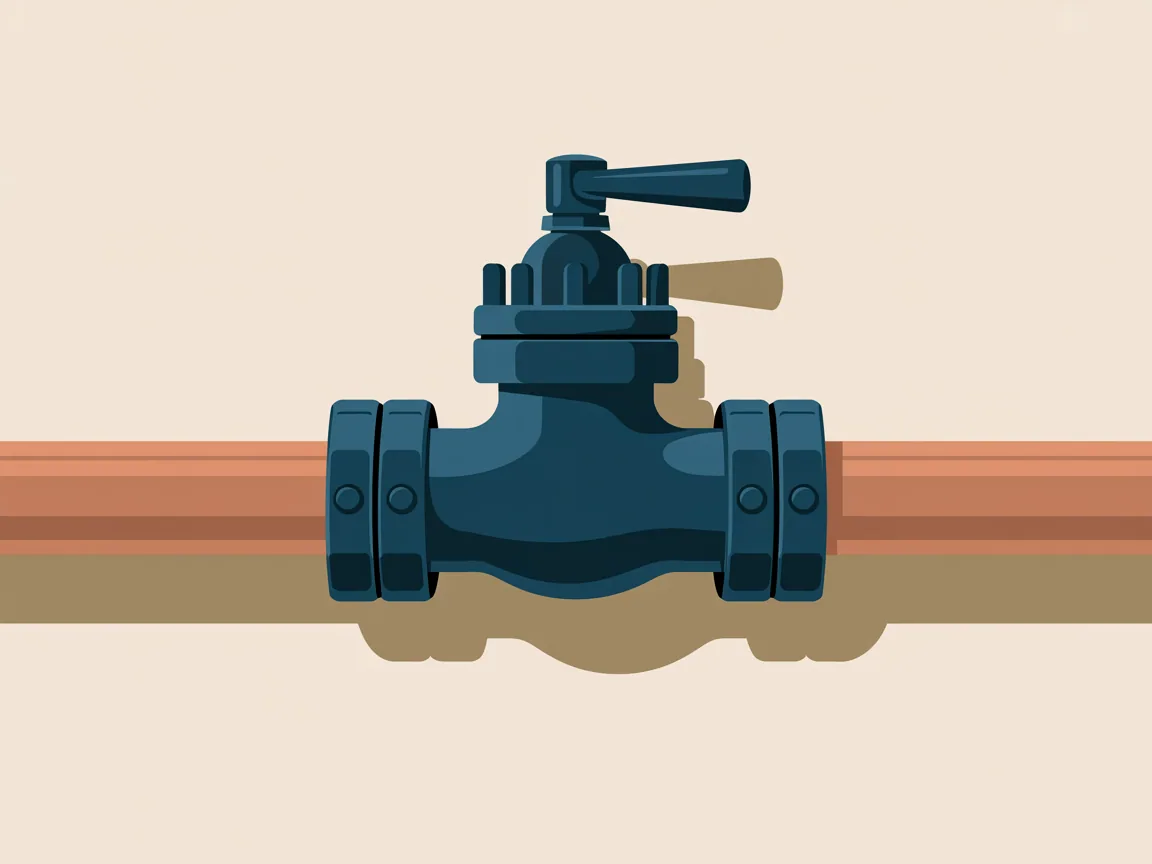
The four valves, and how each behaves
- Quarter-turn ball valve
- A lever that moves ninety degrees from open to closed. It is the valve you want at the main, because it either works or it visibly does not, and it tolerates sitting unused far better than the alternative.
- Multi-turn gate valve
- Common in older Mesa homes. It takes many turns to close and it is the type most likely to seize with scale or to weep at the packing nut once it finally moves. Exercise it annually rather than discovering its condition during a leak.
- Fixture angle stop
- The small valve under a sink or behind a toilet. It controls one fixture only, so it is the right first move for a fixture leak and useless for a failure inside a wall or under the floor.
- Meter box curb stop
- Sits in the utility box at the street and may be restricted to authorized personnel depending on the provider. Treat it as a last resort, not a substitute for knowing where your own main shutoff is.
If the water will not stop, or waste is coming back into the house, stop reading here.
(480) 969-3193Emergency, or does it wait
Three tests decide whether it is tonight
A plumbing emergency is a failure that is actively damaging property, creating a sanitation or gas hazard, or leaving a building without usable water, and in all three cases the first correct action is closing a shutoff.
Almost everything else is a scheduling question wearing an emergency's clothes. Describe the symptom on the phone and let the person answering weigh it, rather than guessing at the risk yourself.
Call now
Water is escaping and cannot be isolated
A burst supply line, a failed heater vessel, a line under a slab or a leak inside a wall. The damage lands in drywall, cabinet bases and subfloor, not in the plumbing.
Waste is coming back into the living space
Several fixtures slowing together, or waste rising at the lowest drain. The pattern points downstream, at the building drain or the lateral, and it is what separates a main line restriction from a local clog.
A system the building cannot function without is out
No water at all, or no hot water with an infant or somebody unwell in the house. Check the street before assuming the fault is inside your property line.
Reasonable to schedule
- A drip caught by a bucket and a working fixture stop.
- One sluggish drain with nothing else affected.
- A running toilet.
- A heater that still heats but is showing rust at the fittings.
These are real problems and they do get worse, but they do not need somebody at the door tonight.
While you wait
Damage control before anyone arrives
Water travels along framing and under flooring, so the wet area is almost always larger than it looks. A few moves help. A few make the loss, or the insurance claim, worse.
Do
- Cut power to the wet area from a dry positionOnce the water is controlled, kill the breaker for the affected area if you can reach the panel without crossing standing water. If you cannot, stay out and say so when you call.
- Lift, move and get air across itLift rugs, boxes and the bottom shelf of a closet off the floor. Get furniture legs onto blocks or foil and move air across the area.
- Stop feeding a blocked systemIf the failure is drainage, stop using water anywhere in the building. Every flush and wash cycle adds volume the line already cannot clear.
- Photograph it before you clean upWide shots and close shots, the source in frame if visible, and note the time. Your insurer decides coverage; your job is to preserve the record.
Do not
- Force a valve that will not closeA snapped stem turns a controllable leak into an uncontrolled one with nothing left to close. If it weeps at the packing nut as you turn it, that is its own diagnosis.
- Open drywall or pull up flooringThat decision belongs with whoever assesses the loss and the claim, not with the first ten minutes of the emergency.
- Reach for baking soda, vinegar or caustic drain chemicalsDuring an active backup they sit in the standing water instead of reaching the blockage, and they leave the line hazardous for whoever opens it. Here is what the fizz is and is not doing.
Hard water and shutoffs
The valve you will reach for is the one nobody tests
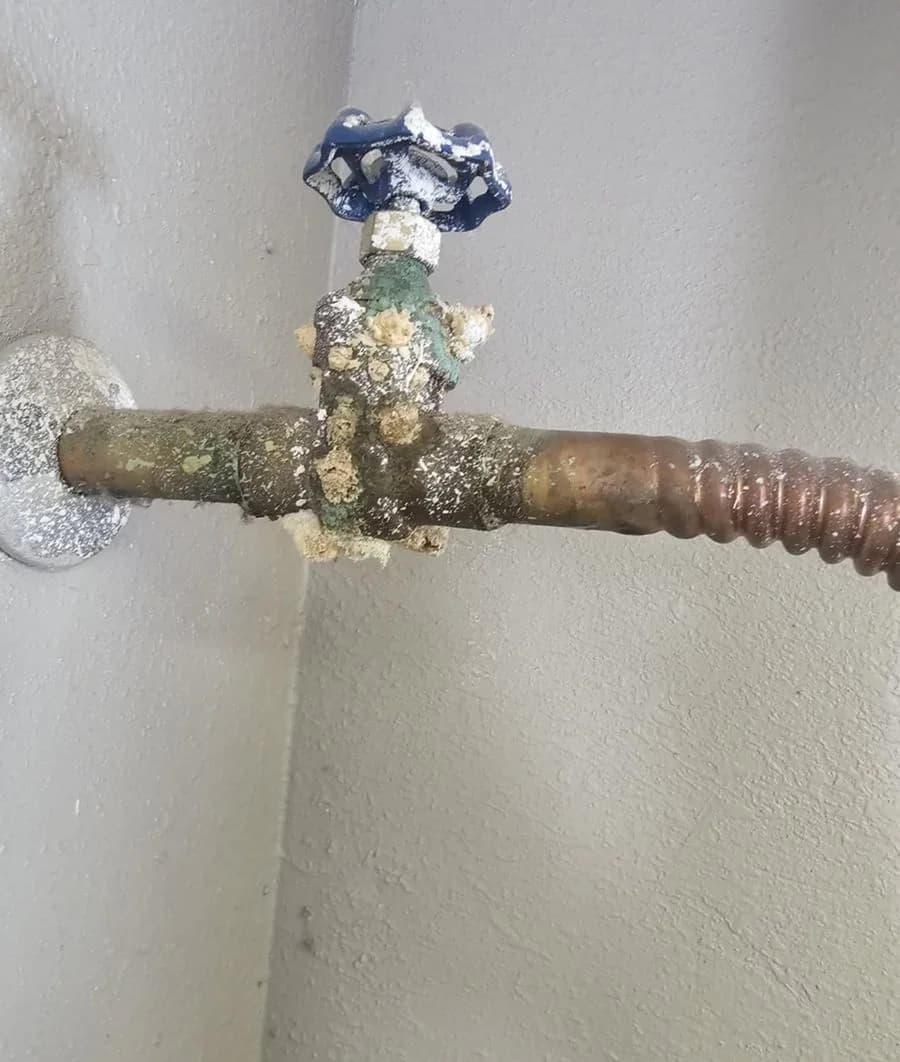
Valley water carries a heavy mineral load, and the Colorado River and SRP supplies that Mesa blends leave scale on everything they pass through. That scale builds on valve stems and seats exactly as it builds on a showerhead, which is why a shutoff that turned easily at installation can be immovable years later.
Knowing what hard water does to fixtures and equipment is the practical argument for exercising your main shutoff once a year on a calm afternoon, rather than learning its condition at two in the morning. Find it now, turn it, and turn it back.
After you call
Stop the loss first, correct it second
The permanent repair is a separate decision, and it should rest on the condition of the system rather than on the urgency of the night.
Isolate
Water off at the fixture stop or the building main, then power off to the wet area from a dry position. Nothing else is assessed until the loss has stopped.
Find the source
Where the water appears is rarely where it came from. Locating the actual failure comes before any decision about opening a wall, a ceiling or a slab.
Stabilize
Make the system safe to leave: cap, isolate or bypass the failure and restore what can be restored, so the property is not running on a closed main overnight.
Correct permanently
The repair decision rests on the condition of the system, which is why it follows the other three rather than being made in the first ten minutes.
What to say when you call. Name what is leaking or backing up, whether water is still moving, whether a shutoff held, which fixtures are affected, and whether sewage or electrical equipment is involved. Mention any history on the same line, such as a previous root intrusion or an earlier repair. That decides what comes on the truck, and it is frequently the difference between one visit and two. If you smell gas, that is not a plumbing call yet: leave the house first and call 911 and the gas utility from outside.
Request help
Active failure? Call. Everything else, this form.
For an active leak, a sewage backup or a loss of water, the phone is faster than anything you can type. Shut the water off first if you can do it safely, then call (480) 969-3193.
(480) 969-3193Water running now? Call, do not type
For anything that is not urgent, send the details here or use the contact page, and describe the symptom, the fixtures involved, and whether the system can be isolated. That decides what comes on the truck.
21 Google reviews mention quick response time, as of 2026-09-02. That is what past customers wrote, not a promise of any arrival time.
Arizona conditions
What the Valley adds to the problem
These set honest expectations about access and time. None of them is a promise about how long a repair takes, only the reasons a given failure behaves the way it does here.
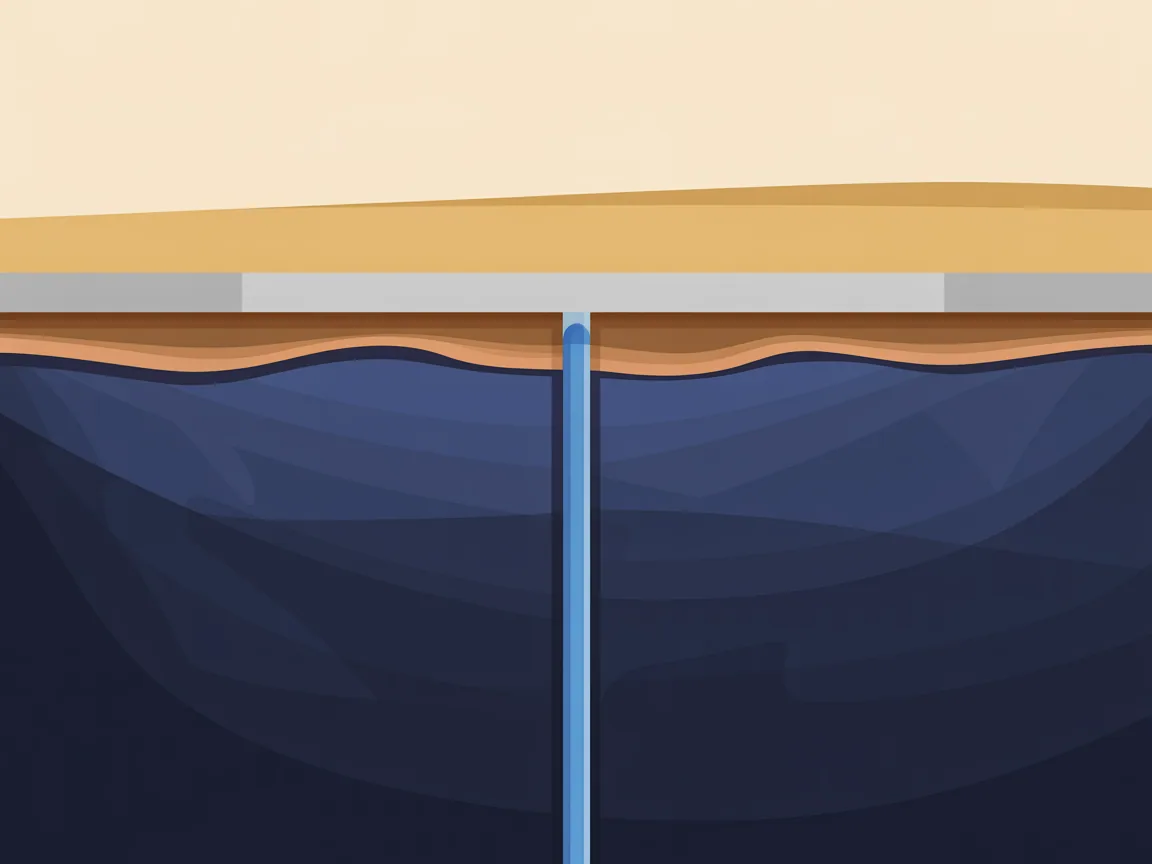
Slabs, and post-tension slabs
Much of the East Valley is built slab on grade, so supply lines run in or under concrete. Post-tension slabs carry steel tendons under tension that must be located first, which is often why an overhead attic reroute gets proposed instead of opening the floor. Leak detection exists to answer the location question before anyone picks up a saw.
Caliche
A cemented hardpan under the topsoil that behaves more like weak concrete than soil. It is why reaching a buried water line can take far longer than its depth suggests, and why hand digging near a located pipe is slow. Form your expectations about a yard excavation accordingly.
Monsoon and dust
Storm runoff finds any cleanout with a missing cap, and haboob dust puts grit into anything left open. A storm outage can take a pump or booster offline, which reads at the tap as a water failure when it is really a power one.
Original cast iron
Houses drained in cast iron through the middle of the last century scale inward, thin, and eventually lose their base. Backups get more frequent, then the failures stop being blockages and start being pipe, and cast iron pipe repair covers how that is assessed rather than guessed at.
Emergency Plumber in Mesa, AZ
JB Water & Air is a family-owned Mesa company founded in 1981, holding Arizona plumbing license ROC #260511, classification CR-77. The emergency line is staffed 24 hours a day, seven days a week at (480) 969-3193, covering Mesa, Gilbert, Chandler, Tempe, Scottsdale, Queen Creek, Apache Junction and Fountain Hills.
Shut the Water Off First
Match the valve to the failure
Water escaping at one fixture is usually controlled at that fixture. Look under the sink or behind the toilet for an angle stop on the supply line and turn it gently clockwise. If the flow is coming from inside a wall, a ceiling, a slab, or an appliance connection you cannot reach, skip the fixture and go straight to the main shutoff for the building. The guide to which shutoff controls which leak works through the order for each fixture type.
When the valve will not close
This is where a lot of Mesa homes lose the argument. Older properties commonly have a multi-turn gate valve at the main, and a gate valve that has not been operated in a decade may seize, or may start weeping at the stem once it finally moves. Do not force it. A snapped stem turns a controllable leak into an uncontrolled one with nothing left to close. If the valve moves but water keeps running, or it leaks around the packing nut as you turn it, that is its own diagnosis, covered in what a leaking main shutoff valve is telling you.
Why valves fail here in particular
Valley water carries a heavy mineral load, and the Colorado River and SRP supplies that Mesa blends leave scale on everything they pass through. That scale builds on valve stems and seats exactly as it builds on a showerhead, which is why a shutoff that turned easily at installation can be immovable years later. Knowing what hard water does to fixtures and equipment is the practical argument for exercising your main shutoff once a year on a calm afternoon, rather than learning its condition at two in the morning.
Then deal with the electricity
Once the water is controlled, cut power to the affected area if you can reach the panel from a dry position. Do not cross standing water to reach a breaker, and do not touch a wet outlet, appliance or light fixture. If the panel cannot be reached without stepping in water, stay out of the area and say so when you call.
What Is an Emergency, and What Waits
Three tests
A plumbing problem is urgent when one of three things is true: water is escaping and cannot be isolated, waste is coming back into the living space, or the building has lost a system it cannot function without. Almost everything else is a scheduling question wearing an emergency's clothes.
Water that is escaping
A burst supply line, a failed heater vessel, a broken line under a slab or a leak inside a wall all put water somewhere that does not drain. The damage accumulates in materials rather than in the plumbing: drywall, cabinet bases, baseboard, subfloor, insulation. If a shutoff has held and nothing further is getting wet, the situation has moved from emergency to appointment. If it has not held, it has not moved.
Waste that is coming back
One slow fixture is a fixture problem. Several fixtures slowing together, a toilet that bubbles when the washing machine drains, or waste rising at the lowest drain in the house all point downstream of the branches, at the building drain or the lateral. The pattern carries more information than the smell does, and the signs of a main line restriction rather than a local clog are what separate a drain call from a sewer call.
A system out of service
No water at all, or no hot water in a house with an infant or somebody unwell, is urgent for reasons that have nothing to do with property damage. Check whether the street is affected before assuming the fault is inside your property line, because that changes who needs to attend.
What is reasonable to schedule
A drip caught by a bucket and a working stop. One sluggish drain with nothing else affected. A running toilet. A heater that still heats but is showing rust at the fittings. These are real problems and they do get worse, but they do not need somebody at the door tonight. Describe the symptom on the phone and let the person answering weigh it, rather than guessing at the risk yourself.
What an emergency quote should itemize
An emergency cannot be priced accurately over the phone, because the scope is not known until the source is found. What you can insist on is a written breakdown that separates diagnosis from stabilization from permanent repair, names the parts, states what access or excavation is included, and says plainly what is excluded. What actually drives an emergency plumbing quote sets out the variables to ask about. If the main line was involved, ask whether the visit includes a camera inspection or drain cleaning before the line is signed off as repaired.
A single failed section does not automatically justify a whole-house repipe. Ask whether the proposed work restores the system or only stabilizes it, what follow-up is required, and what the alternatives are, and see pipe repair for where that line usually sits.
Questions people ask
Straight answers
How much does an emergency plumber cost?
- Nobody can price it accurately before seeing it, because the scope is not known until the source is found. What drives the figure is the hazard being controlled, the access required to reach it, how much of the visit is diagnosis rather than repair, and whether the line can be permanently corrected the same visit. Ask for those separated in writing.
How do you repair a burst pipe?
- A burst supply line is isolated before it is repaired, so the sequence is shutoff, then power, then assessment. The permanent fix depends on why it failed: a single split section, a corroded run, or a line under a slab are three different scopes. Anything done under pressure is temporary, and a clamp on a corroded pipe usually moves the failure rather than ending it.
Is JB Water & Air really available 24 hours a day?
- Yes. The line is staffed 24 hours a day, seven days a week, weekends and holidays included, at (480) 969-3193. Calling puts the symptom in front of someone who can weigh it; it does not by itself schedule a visit or fix an arrival time, and that gets settled on the call rather than on this page.
Does DIY drain cleaning work on a main line backup?
- Not on a main line, and the pattern matters more than the remedy. Several fixtures backing up together points at a restriction downstream of every branch, past anything poured in from above. Baking soda and vinegar cannot reach it, and caustic chemicals sit in the standing water and leave the line hazardous for whoever opens it. Stop running water and have the line looked at.
Call rather than wait on a form
For an active leak or a sewage backup the phone is faster than anything on this page.
Open 24 hours a day, 7 days a week. Calling invites the JB team to help; it does not schedule a visit or promise an arrival time.