
Before a repair or a home purchase
Sewer camera inspection in Mesa: see the pipe first
A camera shows roots, cracks, offsets and buildup inside your sewer line, and a locator marks where each one sits and how deep, before anyone quotes a repair.
- 4.9 · 580 Google reviews
- CR-77 licensedROC #260511 · CR-77
- Since 1981Family owned since 1981
In one line
A sewer camera inspection sends a camera through a drain or sewer line so its accessible interior can be seen, letting repair decisions rest on visible pipe condition rather than on symptoms alone.
JB Water & Air runs sewer camera inspection across Mesa and the East Valley under Arizona plumbing license ROC #260511, CR-77. A camera does one job: it shows the inside of a pipe nobody can otherwise see. It clears nothing. It answers some questions completely, some partly, and a few not at all, and knowing which is which before the visit is what keeps the footage useful.
What a sewer camera inspection can show
Where the line is open enough for the head to travel, a survey can identify:
- grease, sludge, soap and mineral scale held on the pipe wall;
- root entry at a joint, a crack or a failed connection;
- corrosion and channeling in older cast iron;
- separated, offset or dropped connections;
- cracks, deformation or a collapsed section;
- standing water that suggests a low section; and
- the distance at which an obstruction stops the camera.
Why you are here
What sends a Mesa line to the camera
A camera is worth its cost when the answer would change a decision. Each situation below turns into something specific the footage is meant to settle.
- The same line blocks again within months
- One point is holding material, not the whole run. Clearing resets the symptom and leaves the cause exactly where it was.
- Wastewater surfaces at a floor drain or a low shower
- The system is relieving itself at its lowest opening, so the restriction sits downstream of everything above it. How far along is the open question.
- Roots were cleared before and the line slowed again
- The opening the roots came through is still there. What it is decides the answer: a single joint, a crack, or a length of pipe that has lost its wall.
- The house still has its original cast iron drain
- Interior corrosion narrows and roughens the bore long before anything leaks. How much wall is left, and whether the loss is general or local, changes the fix.
- A replacement has been recommended without footage
- The proposal is resting on symptoms rather than on visible pipe condition. Ask which segment was actually seen, and where the survey started and stopped.
- A previous camera run stopped short of the connection
- Part of the line was never viewed, so the report covers only what the head reached. Something stopped it, and a second access point may get past it.
Describe what the line has been doing and we will say whether footage is what settles it.
(480) 969-3193Read it, do not overread it
What the footage actually tells you
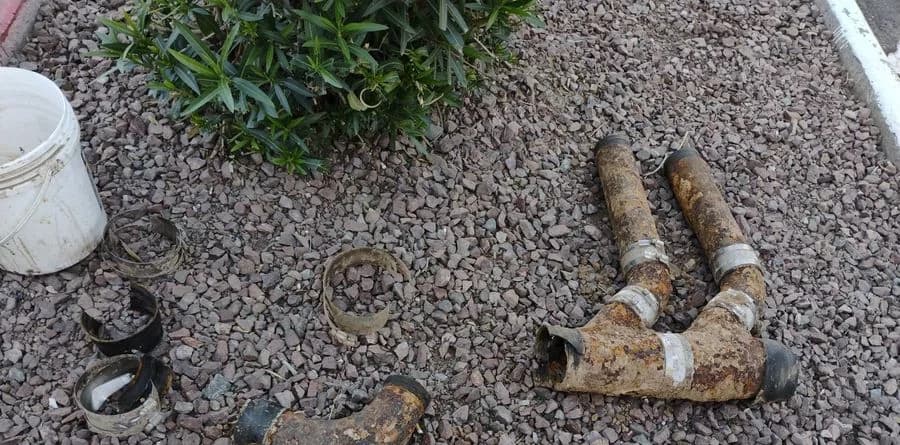
An image without a position is close to useless, and a clear picture on the day is not a forecast. Pick the reading a plumber described from the screen and see the three things worth separating: what it confirms, what it only suggests, and what it leaves unknown because the camera saw the surface and no further.
What it confirms
At this distance the line is holding water rather than draining through.
What it only suggests
Either a low section that has dropped below grade, or water backed up behind a restriction further along the run.
What it leaves unknown
A single pass rarely separates the two. The camera gives an impression of fall, not a measured grade, so it cannot say on its own that the pipe has a belly.
The decision it should drive
A locate and a second look before anyone prices a dig. One still frame of standing water is not enough to authorize a repair.
A reading of footage, not a diagnosis of your line. What a survey establishes depends on the line it reaches on the day. Keep the recording and the distances, and ask the plumber to state what the footage confirms, what it suggests, and what stays unknown because the camera did not get there.
How a survey runs
Access, clear enough to see, locate, record
Find an access point
A cleanout is the usual entry. Where none exists, how access gets created is part of the conversation before anything is quoted, because it changes both the scope and how much of the line can be reached.
Clear enough to see
A camera cannot survey a line full of standing water and debris. What the wall looks like underneath is the thing being bought.
Survey and locate
The camera runs the line while a locator tracks the head from the surface, so a defect is tied to a distance along the run and a depth below grade rather than to a description.
Record and review
The recording is what turns a verbal account into something you can see, compare against the next visit, and take to a second opinion.
Clearing a blockage, cleaning the pipe wall and inspecting it are three different services that sound alike. Expect them itemized separately rather than folded into one price.
The locate is what turns a picture into a place to dig
A transmitter in the head is tracked from the surface, so a finding is tied to a distance along the run and a depth below grade rather than to a description. In Mesa that pairing carries most of the consequence. A shallow defect in caliche is a different excavation from a deep one, and a line running beneath a post-tension slab is not concrete anyone cuts casually, which usually pushes the discussion toward a re-route or trenchless sewer repair before open digging is priced at all.
- A camera sized to the line
- A self levelling mainline head on stiff cable travels a long buried run out to the city connection. A smaller push head negotiates the tight traps and small diameters behind a sink, tub or laundry, at the cost of reach.
- Sonde and surface locator
- A transmitter in the camera head paired with a receiver above ground. This is the difference between knowing a defect exists and knowing where to dig for it, which is what governs the cost of any excavation.
- A retained recording, not only a live screen
- Watching a screen on the day tells you what the plumber saw. A recording with distance reference is what lets you compare a later visit or get an independent reading of the same pipe.
The limits of the lens
What a camera cannot prove
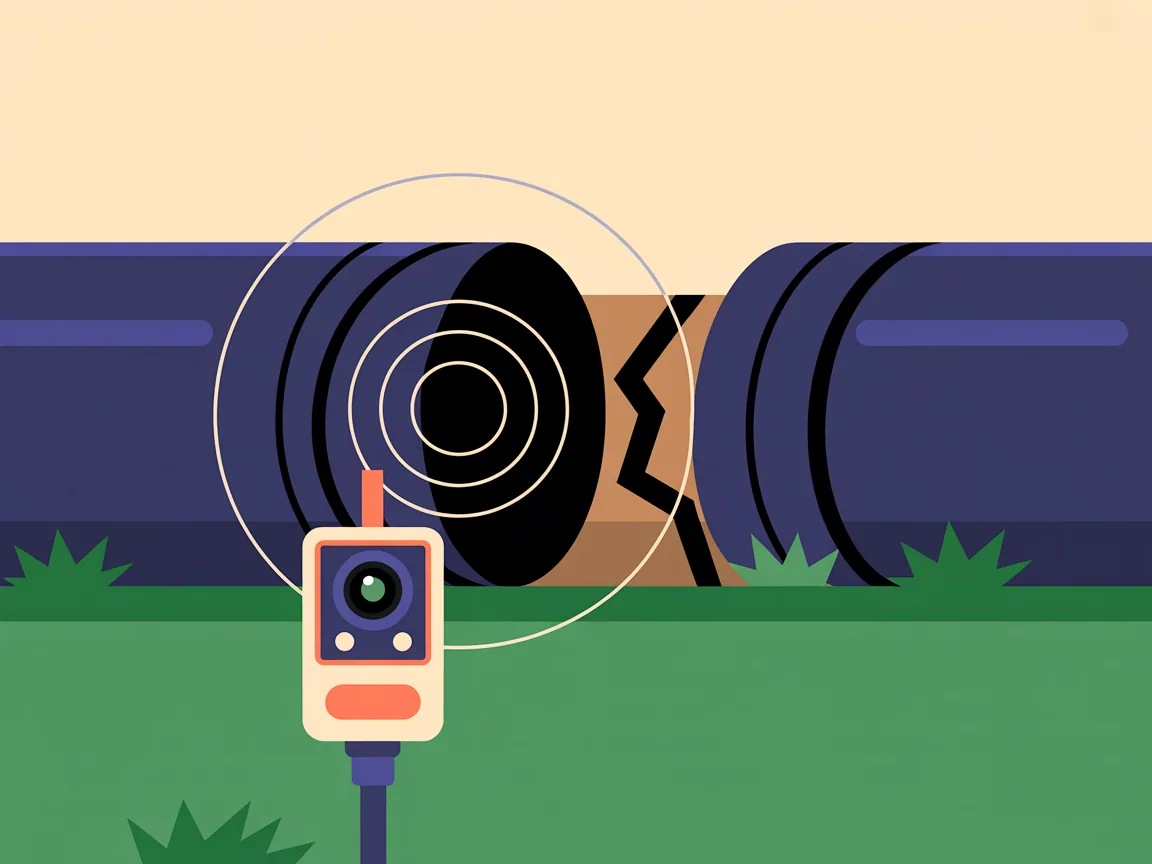
The lens sees the surface in front of it and nothing behind the wall. Knowing the edges of the tool before the visit is what keeps the footage honest.
It does not see through the pipe wall
Soil voids, water escaping into caliche and the outside condition of the pipe stay invisible to a camera inside the line.
It reads fall, it does not measure grade
Standing water gives an impression of a low section, but a single pass cannot say for certain whether that is a belly or a backup further along.
It does not find pressurized leaks
A supply leak beneath a slab is a separate diagnostic problem, approached with pressure testing and listening equipment, not a drain camera.
It describes the day, not the future
Clear footage covers the sections reached on the day it was viewed. Dirty water, heavy buildup, tight bends and a full plug each limit how much was actually seen.
For a pressurized supply leak under a slab, see slab leak detection. Water appearing indoors can come from either system, so the symptom alone does not decide which.
Sewer scope before you buy an older Mesa house
A pre-purchase sewer scope is a condition report on the one buried asset a general home inspection does not enter, and central Mesa neighborhoods still carry plenty of original cast iron. Ask for the recording, the access point used, and the distance the survey reached. Plumbing due diligence for Arizona real estate transactions covers how those findings get documented while a purchase is live.
What moves the price of a camera inspection
Two things dominate. The first is access: a usable cleanout is a different job from creating one, and it also decides how much of the line can be reached at all. The second is what the survey has to cover, meaning the diameter and length of the run and whether locating a defect to a distance and depth is part of the work.
Where the defect turns out to sit past the property boundary, who is responsible for fixing the sewer lines can decide who is paying before method does.
Say so if a chemical drain product went down the line. It stays in standing water and matters to whoever opens the cleanout, and the rest of the reasoning is in why plumbers caution against chemical drain cleaner.
Where the footage points: clear, repair or replace
- Buildup in an otherwise sound line may support mechanical clearing or hydro jetting, and jetting in particular needs pipe condition established first.
- One localized defect supports a focused repair rather than condemning a whole run.
- Repeated corrosion, missing wall or collapse makes pipe replacement the more defensible reading of the same footage.
- A blockage the camera passed with nothing structural behind it belongs with ordinary clogged drain repair.
Keep the recording and the distances. For a line that has blocked more than once, a record of where and why is worth more than three unrelated invoices.
Request an inspection
Tell us why the line is being looked at
Say whether the inspection follows a backup, a clog that keeps returning, a planned repair, or a property purchase. Mention the age of the house and whether a cleanout is reachable, and disclose any chemical drain product used before anyone opens the line.
Want to see what is actually in the line?
- Open 24 hours a day
- 2-year workmanship guarantee on our labor (excludes normal wear, manufacturer defects and outside damage)
- Family owned in Mesa since 1981
“visual confirmation on a tablet made it easy to get a quick estimate”
Prefer to talk it through? Call (480) 969-3193. The phones are open open 24 hours a day, 7 days a week.
Questions people ask
Straight answers
How much does a sewer camera inspection cost?
- The quote follows the line rather than a fixed rate, so ask what moves it. The usual factors are whether a usable cleanout already exists or access has to be created, the diameter and length of the run, whether clearing is needed before anything is visible, whether locating a defect is included, and whether a recording is provided. Ask for those itemized separately.
Is a sewer camera inspection worth it?
- It is worth it when the answer would change a decision. A single slow sink rarely needs one. A main line that has backed up, a blockage returning to the same spot, a proposed replacement, or an older property still on original cast iron are all situations where footage is what separates a cleaning job from a structural one.
Should I get a sewer scope before buying a house?
- A pre-purchase sewer scope is worth considering on older housing stock, where the buried line is the part of the plumbing a general home inspection does not enter. Ask for the recording, the access point used, and the distance the survey reached. A scope that stops short of the city connection describes only the section the camera traveled.
Does the drain need cleaning before its condition is judged?
- Often, yes. A camera cannot read a pipe wall through standing water, sludge or a solid plug, so clearing usually comes first and inspection follows it. The order matters for a second reason: a line can look different once material is off the wall. Expect clearing and inspection to appear as separate items rather than one service.
Does a camera inspection find slab leaks?
- No. It inspects the interior of drain and sewer piping. A pressurized supply leak beneath a slab is a different diagnostic problem, approached with pressure testing and listening equipment rather than a drain camera; see the slab leak detection page. Water appearing indoors can come from either system, so the symptom alone does not decide which.
How do I request a sewer camera inspection?
- Call (480) 969-3193 or use the contact page. Say whether the inspection follows a backup, a clog that keeps returning, a planned repair, or a property purchase, and mention the age of the house and whether a cleanout is reachable. Disclose any chemical drain product that was used, before anyone opens the line.
Put a camera down the line
A camera turns a guess into a picture of the actual pipe before anyone quotes a repair.
Mesa and the East Valley · Open 24 hours a day, 7 days a week