01
One zone runs warm while the rest of the building is fine
What it points to: The fault belongs to that zone's unit or its controls, not the building. Start with what that unit's thermostat displays and whether the unit runs at all.
Open 24/7Open 24 hours a day, 7 days a week · Since 1981Family owned in Mesa since 1981
(480) 969-3193Commercial service · CR-39 air conditioning
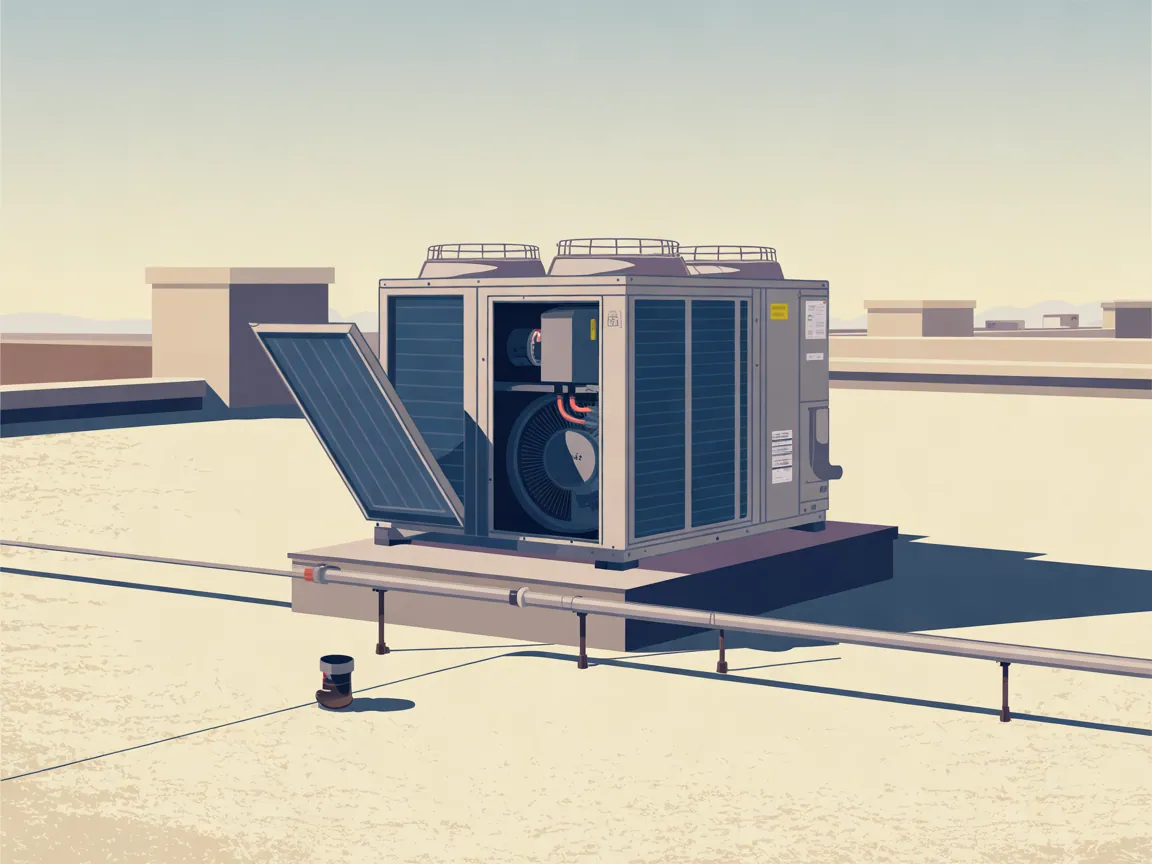
Rooftop package units, split systems and zoned tenant spaces in Mesa, diagnosed against a desert load that runs longer and hotter than the equipment's spec sheet assumes.
In one sentence
Commercial HVAC is the heating, cooling and ventilation equipment that conditions a business property, most often packaged rooftop units serving defined zones, serviced against an equipment inventory rather than one unit at a time.
What a lost unit costs
A zone that will not hold temperature in July empties a suite faster than any other fault on the property.
Server closets, pharmacy stock and food storage carry their own temperature limits, separate from the people in the room.
A blocked condensate line on a rooftop unit drains into the ceiling below it, which turns an HVAC call into a water damage call.
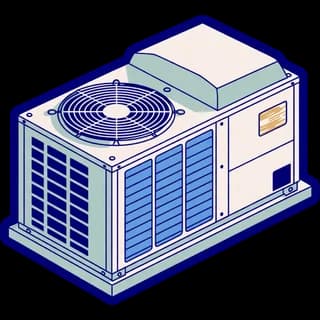
Inside a rooftop package unit
Most low-rise commercial space in the East Valley is cooled by packaged units on the roof. Knowing what sits behind each panel makes the service call shorter, and it shows why a Phoenix-area unit wears differently than the same model elsewhere.
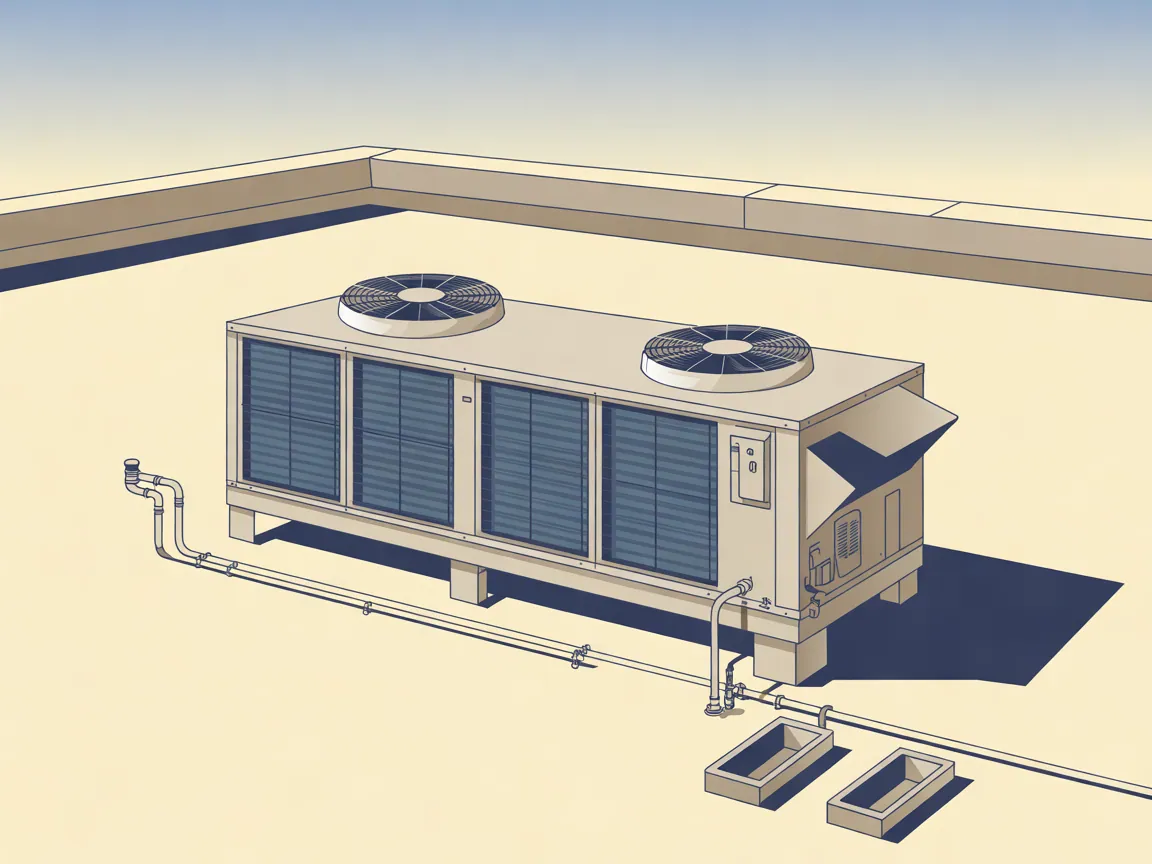
Monsoon dust and cottonwood packs the fins, so the unit rejects less heat on exactly the afternoons it needs to reject the most.
Loaded filters starve the evaporator of air and can freeze the coil. Belt-drive blowers also lose tension over a long cooling season.
The damper that brings in outside air when it is cool enough. Stuck open in July, it pulls 110-degree air straight into the space.
Electrical parts run hot on a sun-baked roof, which is why they are the most common failed part on a summer call.
The trap and line clog with dust and biological growth, then overflow into the curb or the ceiling below.
New equipment is moving to A2L refrigerants such as R-454B and R-32 under the federal AIM Act transition, which changes how repair-or-replace decisions get made on older units.
Reading the building
One fixture misbehaving is a fixture. The same complaint arriving from several places, or on a schedule, is the building telling you where to look, and it is the most useful thing to describe on the call.
What it points to: The fault belongs to that zone's unit or its controls, not the building. Start with what that unit's thermostat displays and whether the unit runs at all.
What it points to: Capacity is met at low load and lost at peak. Dirty condenser coils, a low charge or an economizer stuck open are the usual suspects in July.
What it points to: A condensate line or trap is blocked and overflowing into the curb, or a roof penetration around the unit is leaking. Both get worse in monsoon season.
What it points to: Oversizing for how the space is now used, a failing control, or a safety switch tripping on high pressure because the coil cannot reject heat.
What it points to: Ventilation and filtration rather than cooling capacity. The economizer and outside air settings belong in the conversation.
Seeing more than one of these?
Say which ones on the call. Two patterns together narrow the cause faster than either alone.
The sequence
Step 1
Which units serve which zones, their age and data plates, and how the roof is safely reached. Without that list no two visits compare.
Step 2
Electrical checks, refrigerant circuit readings, airflow and the controls, in that order, so the fault is found rather than guessed.
Step 3
Most calls end in a repair. When they do not, the replacement case is written with run hours, repair history and what failed.
Step 4
The measurements taken and the work done, logged against that unit so the next visit starts from a baseline.
When it is stopping the business
Start with what it is doing to the business, then the equipment involved. Open 24 hours a day, 7 days a week; timing gets settled on the call.
What is in these buildings
Everything in one cabinet on the roof, which keeps tenant space clear and puts service access, dust and sun exposure up top.
A condenser outside and an air handler inside, which suits smaller suites and zoned interiors but needs indoor space and a refrigerant route.
Thermostats, schedules and outside air dampers decide how hard the equipment works. A schedule left on 24 hours costs a season of run time.
New equipment is moving to A2L refrigerants such as R-454B and R-32 under the federal AIM Act phasedown, which matters when an older unit needs a major refrigerant repair.
Worth knowing before you call
JB Water & Air services commercial heating and air conditioning in Mesa and the East Valley under Arizona ROC #341937, CR-39. The company is open 24 hours a day, 7 days a week; timing for a visit is settled on the call.
Most low-rise commercial buildings in Mesa, from strip centers to medical offices, are cooled by packaged units on the roof. That keeps equipment out of tenant space, and it puts the equipment where the sun, dust and heat are worst. A roof surface in July runs far hotter than the air, so electrical parts, belts and refrigerant pressures all work harder than the same unit would in a milder climate.
A good commercial HVAC visit starts with an inventory. Which unit serves which zone, its tonnage, its age and its refrigerant are the facts that make a diagnosis faster and a replacement decision honest. A property without that list pays for a technician to rediscover it every visit.
Most commercial AC calls end in a repair: a capacitor, a contactor, a motor, a belt, a cleared drain. The AC repair page covers how a cooling fault gets narrowed down. Replacement belongs in the conversation when the repairs repeat, when the refrigerant circuit needs major work on an older refrigerant, or when the space has changed so much that the unit no longer fits it.
When replacement is the answer, the scope covers more than the unit. The curb has to match or be adapted, the crane lift scheduled, the electrical and gas connections verified, and the controls reconnected. Ask what the quote includes for each, and how long the zone will be without cooling. The AC installation page explains the sizing decision behind a replacement.
Haboob dust loads filters and coil faces faster than a standard service interval expects, and it arrives in the months the equipment runs hardest. Check condensate drains and roof drains before storm season. A blocked condensate line on a rooftop unit overflows into the curb and then into the ceiling of the suite below. The commercial preventive maintenance page lays out the Mesa calendar that puts those checks in the right months.
A space that is cool but stuffy has a ventilation or filtration problem, not a capacity problem. Outside air settings, economizer operation and filter grade all change how a space feels. Indoor air quality has its own page for that conversation.
Industries that rely on this
Kitchen drains, grease lines, hot water for sanitizing, ice machines and kitchen cooling, worked around service.
Open the pageExam room sinks, hot water held at safe temperatures, restrooms and zoned cooling for outpatient medical offices.
Open the pageOperatory sinks, sterilization water, water heaters and zoned cooling, scheduled around patients and coordinated with your dealer.
Open the pageShared stacks and risers, unit-by-unit HVAC and the turn schedule, handled with notice, access and records in order.
Open the pageTalk about the property
Tell us the units, the zones affected, and how the roof is reached. The team calls back to confirm access, the permit question and a window. No price or date is promised before the survey.
A call is faster than this form for anything affecting the business: (480) 969-3193
Questions people ask
Name the zones, what the controls display, and how the roof is reached. Call, or send the details and the team will call back.
ROC #260511 · ROC #341937 · CR-77 plumbing & CR-39 air conditioning. Open 24 hours a day, 7 days a week.