Hard water, measured first
Water treatment in Mesa, from softeners to reverse osmosis
JB installs and services water softeners, whole-house filters and reverse osmosis in Mesa. Your water's hardness and your goal decide which one fits.
- 4.9 · 580 Google reviews
- CR-77 licensedROC #260511 · CR-77
- Since 1981Family owned since 1981
- Open 24/7
Match the goal to the method
The water decides which one
Scale on fixtures
A softener, for the whole house
Taste or odor
Filtration, matched to the cause
Drinking water
Reverse osmosis, at one tap
A test result
Equipment chosen against it
Every one of them starts from the same number: the hardness at your own tap, in grains per gallon.
16 Google reviews mention water softener, as of September 2, 2026.
In one paragraph
Water treatment is the selection of equipment against a measured water condition, and in Mesa that measurement starts with hardness, because the grains per gallon at your tap decide whether the answer is softening, filtration, treatment at one tap, or nothing at all.
Five methods, five different jobs
Water softener, whole-house filter, or reverse osmosis?
None of these is an upgrade of the others. The expensive mistake in this trade is buying one category for a job a different category does, so each card says what the method treats, where it sits in the house, and what it will not solve.
Ion exchange softening
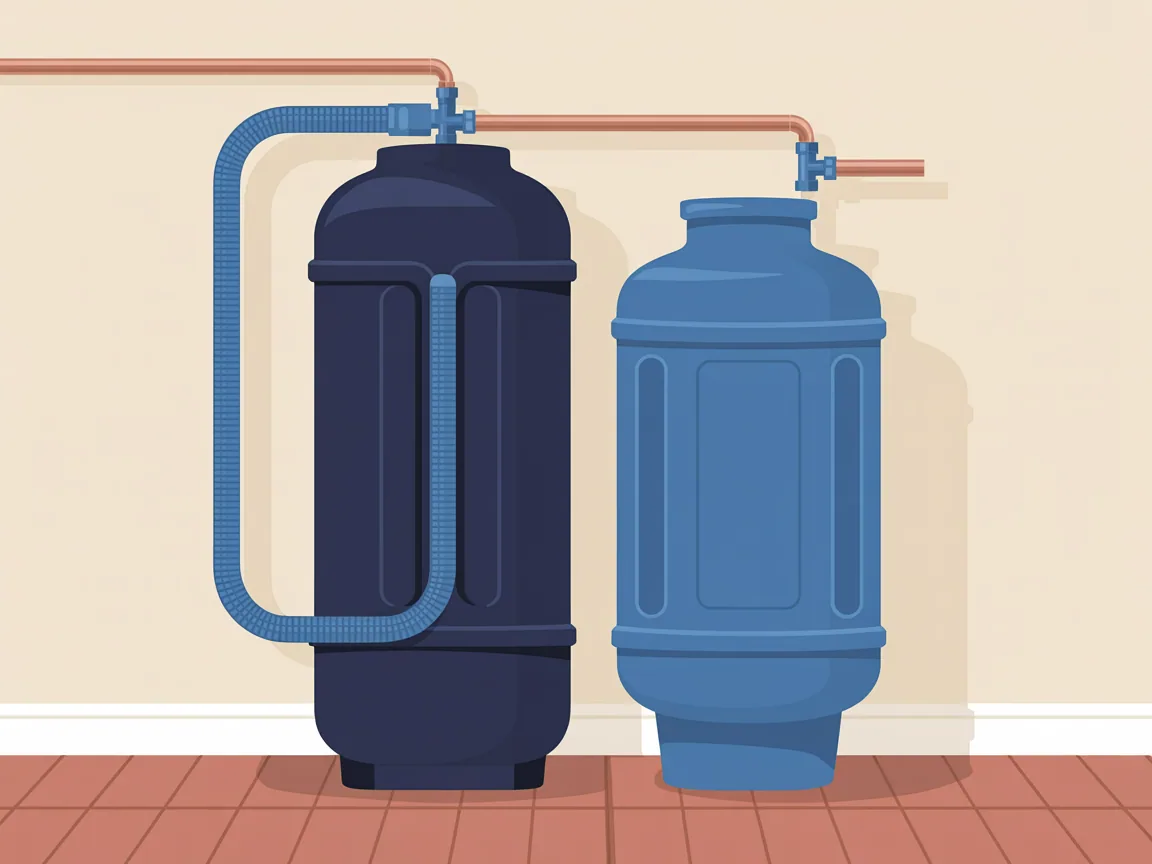
The one category here that actually lowers a hardness reading. A resin bed swaps calcium and magnesium for sodium, then regenerates on a brine cycle, so the unit needs salt and a drain. Metered controls regenerate on real water use; clock controls regenerate whether the house used water or not.
It is not a filter. It does not change a taste and it does not target a named substance.
Salt-free conditioning
Leaves the calcium and magnesium in the water and changes the form they come out of solution in, so less of it adheres to hot surfaces. No salt, no drain, no regeneration cycle. Ask which independent product standard the exact model was tested against, and for which specific claim.
It does not remove hardness. Treated water still tests hard, and soap behaves as it did before.
Whole-house filtration
Sediment, activated carbon or specialty media chosen against a defined substance, installed where water enters so every outlet in the house is treated. The media has to be matched to what you are trying to remove, which is why identifying it comes before shopping.
It does nothing about hardness. A filter is not a substitute for softening.
Reverse osmosis
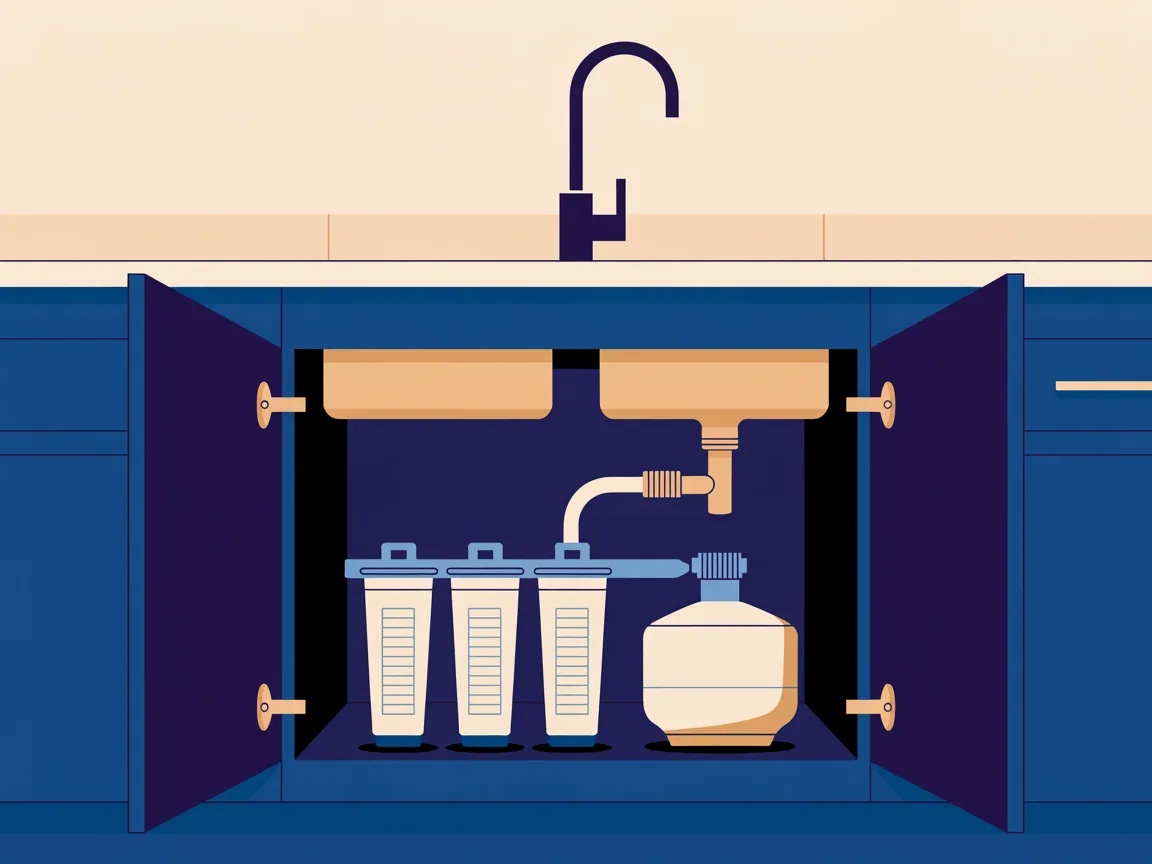
Membrane treatment at a single tap, usually under a kitchen sink, chosen against a specific drinking-water concern. Cartridges and the membrane are replaced on a schedule, so it carries an ongoing cadence rather than a one-time cost.
Everything upstream of it is unaffected, the water heater included, so it does nothing about scale.
Distillation
Boils water and condenses the vapor back. The method this company started with in 1981, with its own output rate, energy use and cleaning routine.
It treats water at one point rather than the whole house, and it produces at its own rate rather than on demand.
Match the goal to the method
What are you actually trying to fix?
Pick the concern that brought you here and this names the category that fits it, along with the one it is most often confused with.
Pick your main concern and this shows which treatment category fits, and just as usefully, what that category will not solve.
What you are noticing
Six reports, and what each one points at
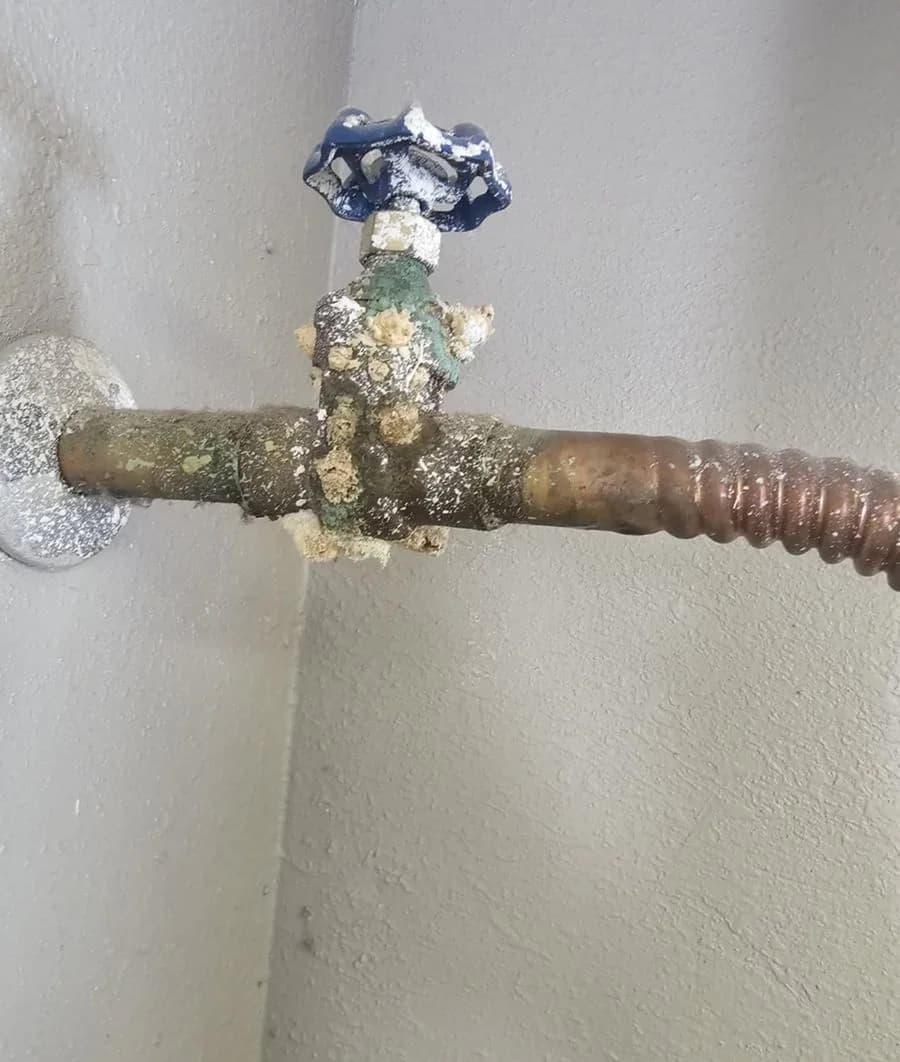
Hardness does not announce itself. It shows up as a film you keep wiping off, a dishwasher cycle that no longer finishes the job, a heater that has started making noise, and eventually as a valve that will not turn. Each of those points somewhere slightly different, which is why the report matters more than the product name.
Tell us which of these you are seeing and roughly how long it has been going on. That is what decides whether the conversation starts with a hardness figure, a filtration question, or the plumbing itself.
White crust on faucets and shower glass
Hardness coming out of solution as water evaporates. The question is how hard, because the number decides whether treating it is worth doing here.
Spots on glassware after a full dishwasher cycle
Dissolved minerals left behind as the water dried, not a detergent failure. Worth knowing the hardness reading before changing products again.
Rumbling or popping from the water heater
Commonly sediment on the tank floor with water boiling its way up through it. The question is how much has built up and how long it has run that way.
A shutoff valve that will not close
Deposits built up on the stem over years of hard water. The question this raises is what else on that supply line is in the same condition.
Taste or odor you dislike
A filtration question rather than a hardness one. What is causing it decides which media is relevant, so it has to be identified first.
Falling flow at the far fixtures
Could be scale, could be corroded galvanized pipe, could be pressure upstream. Which one matters, because any device added to the line has a pressure drop of its own.
Describing the spotting, the taste or the noise out loud takes a minute, and it is what tells us whether this is a hardness question at all.
(480) 969-3193Ask about treatment
Tell us what you are noticing
Scale, taste, or a specific worry. Testing comes before equipment, and we will say what a test can and cannot establish.
What are you noticing: taste, spots or scale?
ROC #260511 · CR-77 plumbing. Open 24 hours a day, 7 days a week. Prefer to talk it through? The number at the top of this page reaches us any hour.
How hard the water actually is in Mesa
Where Mesa water comes from, and why the number moves
Mesa does not have one water. The city blends Colorado River water delivered through the Central Arizona Project with Salt and Verde river water from SRP, and it draws on groundwater as well. Which of those dominates at your tap depends on the treatment plant serving your part of the city, and the mix shifts through the year.
That is why two homes a few miles apart can report different results, and why a hardness figure someone quoted you years ago is not automatically the figure now. The utility's annual water quality report describes the system. Your own tap describes your house. What Mesa's hard water does and does not mean works through the gap between those two things.
Grains per gallon, and what the number is telling you
Hardness is dissolved calcium and magnesium, reported either as milligrams per liter of calcium carbonate or as grains per gallon. One grain per gallon is 17.1 mg/L, so a laboratory figure in mg/L divided by 17.1 gives grains. The classification scale in common use calls anything above 180 mg/L, roughly 10.5 grains, very hard. The figures the city publishes sit in that band, which is why scale here is a standing condition rather than an occasional complaint.
That number also sets one tradeoff worth knowing before you buy. An ion exchange softener releases sodium in proportion to the hardness it removes, so harder water means more of it, and hard water versus soft water as drinking water covers what that comparison does and does not settle.
Hardness is not a safety result, and no hardness reading says anything about a substance nobody tested for. If the concern is what you are drinking rather than what is on the glass, the water and air testing page sets out what a site test can and cannot establish.
What scale is actually doing to the house
If the decision in front of you is between categories rather than brands, softener versus filter is the comparison to work through first. What follows is what the mineral is doing while you decide.
The water heater takes it first
Hardness precipitates fastest where water is hottest, which puts the water heater at the front of the queue. In a tank, the minerals settle as a layer on the bottom. On a gas unit that layer sits between the burner and the water it is meant to be heating, so the burner runs longer for the same result and the tank rumbles or pops as steam forces its way up through the sediment. On an electric unit the deposit forms on the elements themselves. In a tankless unit, scale coats the heat exchanger and shows up as fluctuating temperature or a fault code long before anything leaks.
Reducing hardness reduces that deposit. It does not repair a heater that is already scaled, corroded or leaking, and it does not replace maintenance. If hot water is the immediate problem, work through water heater repair and replacement first, then read what shortens a water heater's life for where scale sits among the other causes.
Fixtures, valves and appliances
Scale is not only the film on shower glass, though removing hard water stains without wrecking the surface is the part most homeowners notice first. It collects in aerators and shower cartridges, in the fill valve of a toilet, and in the small passages of a dishwasher or an ice maker. The one that matters most is the angle stop. A supply valve that has sat under a sink for fifteen years in this water builds deposits on the stem, and the day you find out it will not close is the day you needed it to close.
Cooling equipment, and where hard water does not reach
This is the part a softener sales call tends to skip. Hard water does not touch the sealed refrigerant side of an air conditioner. No scale forms inside a working evaporator or condenser coil from the water supply, and a pitch that claims otherwise is selling something.
Where the two trades genuinely meet is outside the sealed system. Evaporative coolers, still in service on plenty of older Mesa properties, run untreated water over pads continuously and scale the pads, the distribution line and the pump. Patio misters and pre-cool misting kits plumbed near a condenser clog at the nozzle and leave mineral film on the fins, which is the opposite of the heat transfer they were installed to improve. And rinsing a condenser coil with hard water in summer leaves deposits between the fins as it dries, where haboob dust then binds to it. Coil condition belongs in a cooling maintenance visit rather than in a water treatment proposal, but the same mineral is behind both.
How the choice gets made
Four steps, and the number comes first
Step 1
Establish the water
Source, a current hardness figure, and anything else you specifically want measured. Every later decision refers back to this, which is why it comes first.
Step 2
Define the concern in one sentence
Scale, taste, a drinking-water question, or a test result. Categories of equipment map to concerns, not to house sizes or package names.
Step 3
Walk the house before sizing anything
Where water enters, whether a soft water loop exists, where a drain and power are, foundation type, and the condition of the existing pipe. This turns a category into a specific installation.
Step 4
Match the equipment, then set the service schedule
Model, install point and consumable cadence are decided together. Equipment chosen without a maintenance plan stops performing as described.
What the house decides about the install
Slab, caliche, and where the loop can go
Many Mesa homes built from the 1990s onward were pre-plumbed with a soft water loop in the garage, which reduces the install to connecting what is already there. Older homes usually have no loop, and that is where the ground and the foundation start making decisions for you.
A post-tension slab has steel tendons under tension running through it. You do not cut, core or trench through one on a hunch, so a new loop gets routed overhead through the attic or around the outside of the house instead. Outside, caliche is the next constraint: a hardpan layer that ranges from stiff to effectively rock and slows any trench for a supply line or a discharge run. Neither of these makes an install impossible. Both change where the equipment ends up, how the drain gets to it, and how long the work takes, which is why a walkthrough happens before a proposal.
Older plumbing, and where the discharge goes
In an older Mesa house, treatment equipment lands on a system that may already be short of margin. Galvanized supply lines corrode inward and lose bore, so adding any device with a pressure drop to that system is a decision rather than a detail. If flow is already poor at the far fixtures, the piping is the conversation before the equipment is. Regeneration discharge is the other half of it. It has to reach a drain that can take it, and in a house still running original cast iron waste lines, the condition of that drain is worth establishing before anything new starts sending water into it.
Sun, heat and dust
Equipment mounted on an exterior wall lives through Mesa summers. Sun degrades plastic housings and lids, brine tanks and filter bowls included, and heat is hard on anything with a seal in it, so a garage or a shaded location is worth arguing for at the design stage rather than discovering later. Dust is the same story from the other side: monsoon season loads outdoor equipment, and anything with a vented lid or an exposed cover deserves a look after a storm rather than on a calendar.
What the quote is built from, and what it should say
Two estimates for the same house differ because the inputs differ. Measured hardness and the household's peak flow size the equipment. Whether a loop already exists, or a new one has to be routed, sets the plumbing scope. Distance to a suitable drain and to power decides where the unit can physically sit. Foundation type and any trenching decide what it takes to get there. The condition of the existing supply piping can change the job entirely.
A written scope should then answer six things: what measured condition or stated goal the equipment addresses; whether it is point of entry or point of use, and why that one here; which performance claims are documented for this exact model and against which standard; what flow, pressure, drain, power and space it requires; what consumables it needs, how often, and how you will know one is due; and what water is used during normal operation and regeneration.
An itemized proposal separates equipment, labor, any plumbing modification and the consumables schedule. A single figure with no breakdown cannot be compared against anything. Do not choose on a product nickname or on an unqualified claim that a system removes everything: no residential treatment technology should be described as doing more than its documented specification.
Living with the equipment
Keep the model and serial numbers, the setup settings, the baseline test result and the service record in one place. Changes in taste, odor, pressure, flow, or in how often the unit regenerates are reasons to have it looked at rather than reasons to stretch a replacement interval. Not every plumber works on every softener either, and what to ask before booking a softener service call is the short version of why.
To start with the water itself, call (480) 969-3193 and describe what you are seeing: the scale, the taste, the spotting, or the test result you are holding.
“Tyler did a great job on my water distiller getting it running again.”
Mozelle Ault · On a distiller service call · Read it on Google: Mozelle Ault's review, opens in a new window
Questions people ask
Straight answers
How does a water softener work?
- A softener passes water through a bed of resin that holds calcium and magnesium and releases sodium in their place. When the resin fills, the unit regenerates: it draws brine from the salt tank, rinses the hardness off the resin, and sends that rinse to a drain. Metered controls do this on actual water use rather than on a clock.
What size water softener does a Mesa home need?
- Sizing is arithmetic rather than a package name. The grains a household needs removed in a day is the number of people, times the gallons each one uses, times the grains per gallon measured at the tap. The unit is then picked so it regenerates on a sensible interval. Undersized, it runs out of soft water late in the day. Oversized, it regenerates so rarely that the resin bed sits between cycles. Both are avoidable once the hardness figure and the household's real water use are on the table.
How do I test for hard water?
- Three sources give three different answers. The city's annual water quality report describes what leaves the plant, averaged across the system. A test at your own tap describes what arrives after the mains and your own piping. A laboratory panel measures hardness plus whatever else you ask for. Scale and poor lather are indicators, not measurements.
Water softener vs water filtration system: which do I need?
- They answer different questions, so the symptom decides. Scale on fixtures, spotting on glass and deposits inside appliances are hardness, and only softening addresses hardness. A taste, an odor or a specific contaminant is filtration, and the media has to be selected against that substance. Some homes need both, some one, some neither.
Is reverse osmosis better than a water softener?
- Neither is better, because they treat different water in different places. Reverse osmosis usually treats drinking water at one tap and is chosen against a drinking-water concern. A softener treats the whole property where water enters and is chosen for hardness. An RO unit does nothing about scale in the water heater, because the heater is upstream of it.
Is a salt-free water conditioner the same as a softener?
- No. A conditioner does not remove calcium and magnesium. It is designed to change the form in which they come out of solution so that less of it adheres to hot surfaces. Water treated this way still tests hard, which is the expected result rather than a fault, and soap and detergent behave as they did before.
Related water & air services
Talk to us about the water at this address
Describe the scale, the taste, or the test result you are holding. JB Water & Air has worked in water since 1981 and answers the phone 24 hours a day, 7 days a week.