
Leaking or burst pipe · Mesa, AZ
Pipe repair in Mesa, 24 hours a day
We fix leaking, burst and corroded pipes in Mesa homes, starting with where the pipe actually failed rather than where the water shows.
- Open 24/7
- 4.9 · 580 Google reviews
- CR-77 licensedROC #260511 · CR-77
- 2-year labor guarantee2-year workmanship guarantee
Guarantee covers JB's own labor. Excludes normal wear, manufacturer defects and outside damage.
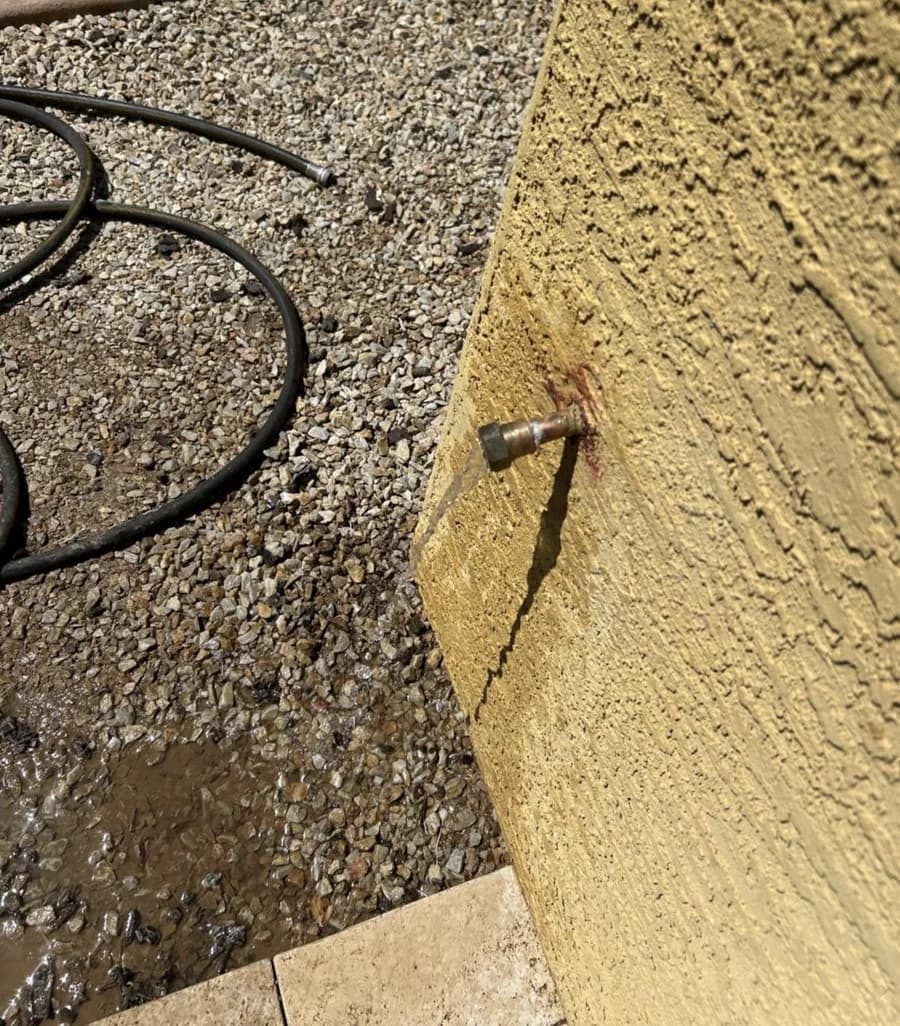
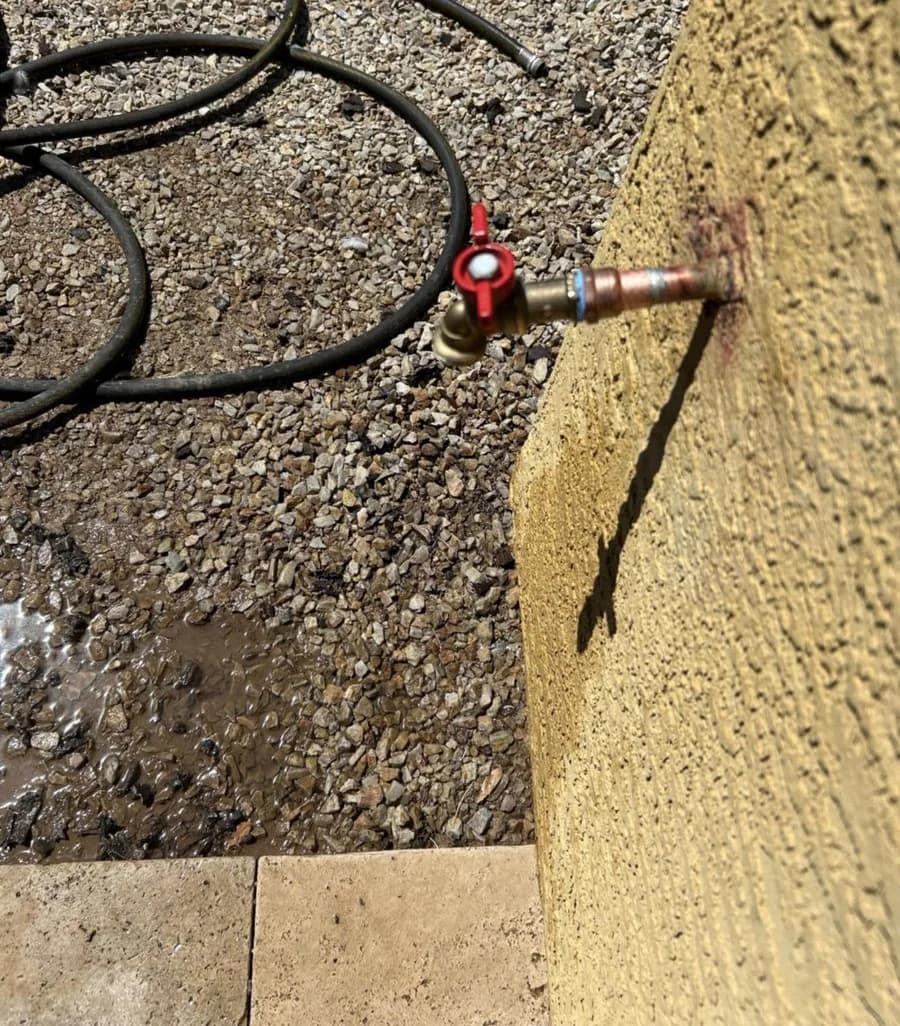
A real JB job: a failed hose bib and the water it put into the gravel, then the new valve on a fresh copper nipple.
If water is escaping right now
- Close the nearest working fixture stop. If that does not reach it, close the main shutoff for the building.
- Stay out of standing water near anything electrical.
- Photograph the wet area while it is still wet, then call.
Arrival timing is confirmed on the call, never promised here. For a break that cannot wait, see emergency plumbing.
Pipe repair is the focused correction of a single leaking, burst or corroded section of water or drain pipe, appropriate when the pipe on either side of the failure is still sound enough to connect to.
Emergency pipe repair, before anyone arrives
Which valve stops the sound?
One pipe, or the same trouble in several places? Answer as you test each valve, and this narrows the leak toward supply, drain, service line or irrigation while you wait.
Step 1
Close the nearest fixture stop, the small valve under the sink, behind the toilet or at the heater. Does the leak stop or slow?
This is the fastest test. It tells you whether the trouble is on the short supply line feeding one fixture.
Also worth reading: which shutoff controls a fixture, an appliance or the whole house, damage control for a pipe that bursts overnight, and what to do when the main valve weeps once you turn it.
Water still moving, or no valve will stop it? JB Water & Air is open 24 hours a day, 7 days a week.
(480) 969-3193Reading the symptom
What you are seeing, and the question it raises
A symptom sets the direction of the investigation. It does not on its own justify a whole-house recommendation.
- Water spraying or running inside a wall
- A pressurized line is losing water and will keep losing it until a valve closes. The question is which shutoff stops the sound, because that answer separates the supply side from a drain, an appliance or irrigation.
- A stain that keeps growing on a ceiling
- Water is arriving at that spot rather than starting there, having traveled along framing or along the pipe. The question is what runs above and uphill of the stain, not what is directly behind it.
- A damp cabinet floor under a sink
- Something in a small crowded space is losing water: the stops, the trap, the faucet body or an appliance line. The question is whether the wetness appears constantly or only while the sink drains.
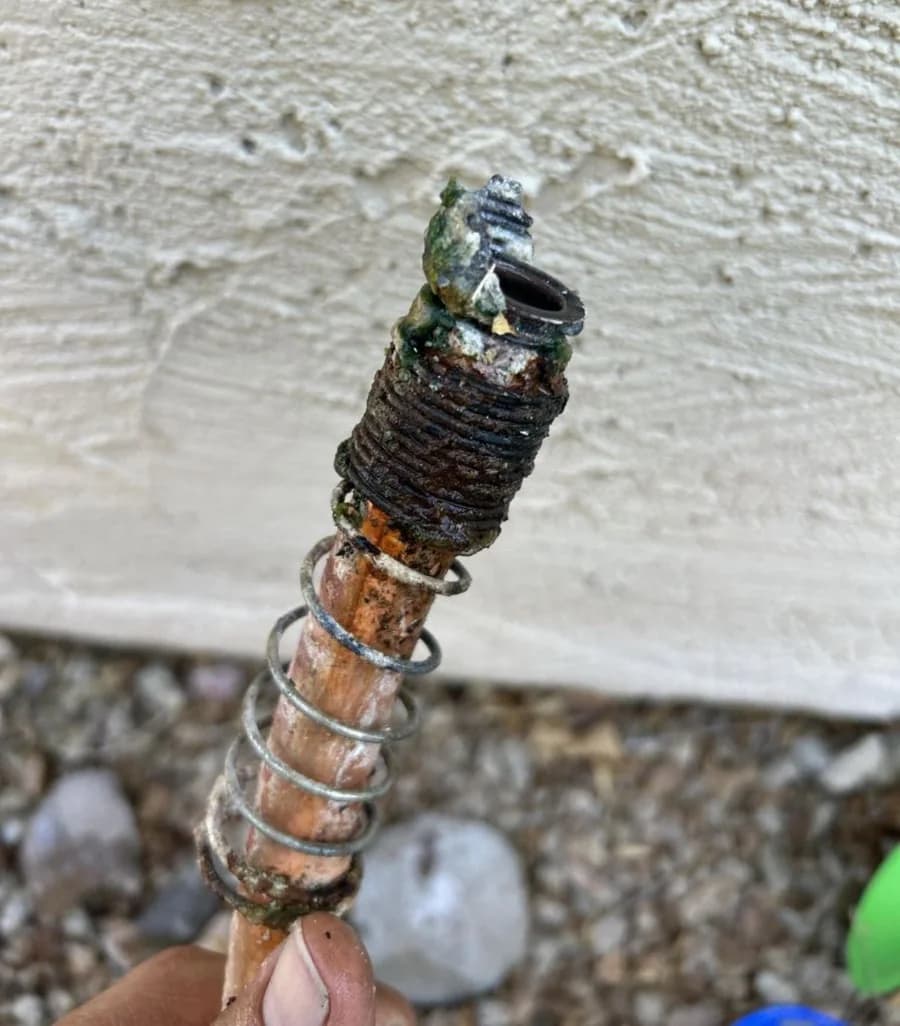
- Green or white crust on an exposed joint
- A slow weep has been evaporating there long enough to leave mineral and corrosion deposit behind. The question is whether the fitting alone is failing or the pipe body around it is thinning too.
- Pressure dropped in one part of the house
- A fall confined to some fixtures suggests a restriction or a loss on one branch rather than a supply problem at the property. The question is whether the affected fixtures share a run.
- The meter creeps with everything off
- Water is leaving the system somewhere with nothing drawing it. The question is whether the loss is before or after the house shutoff, since that decides which trade and which pipe is involved.
Where to open the finish
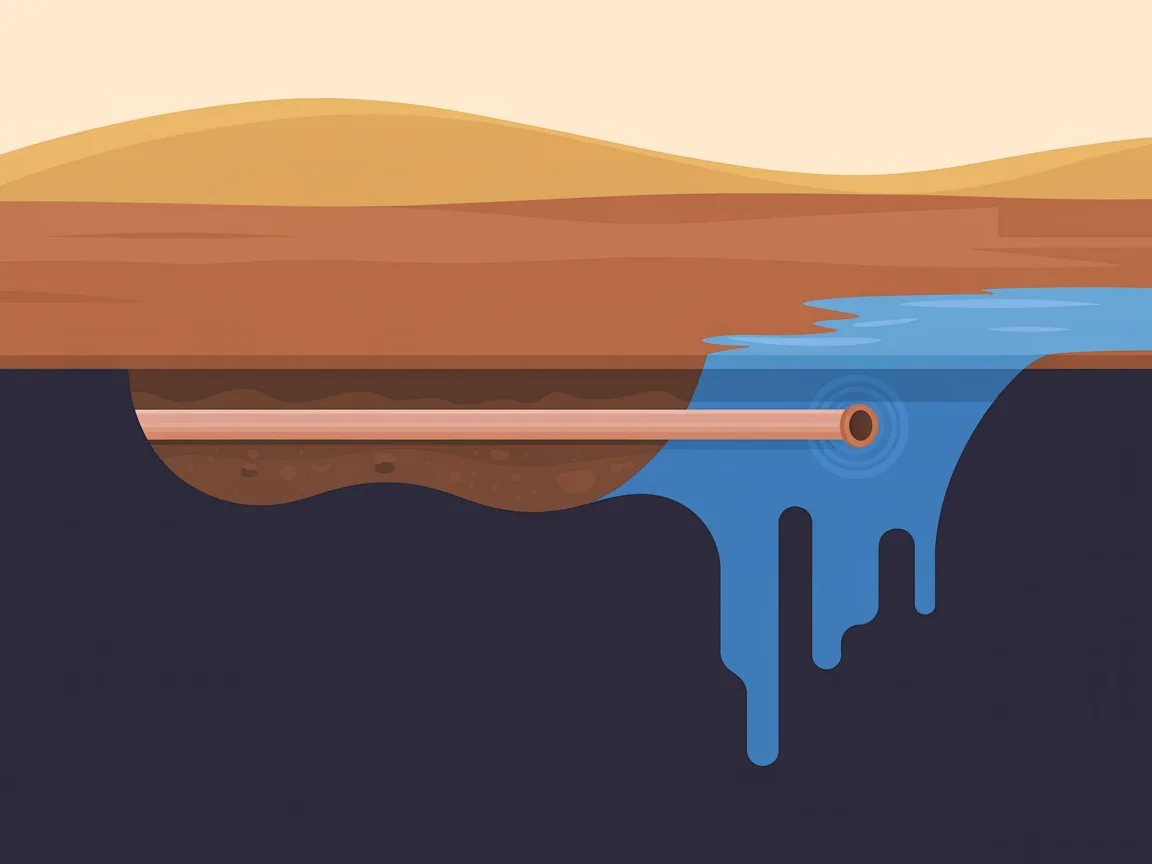
The wet point is not the failure point
Visible water may travel along framing or along the pipe itself before it appears. Toggle the two and watch where the opening actually has to land.
The stain marks the arrival, not the source.
The stain is where gravity finally brought the water out. It marks the affected area, not the pipe that failed. Reading it as the source is the mistake that opens a finish in the wrong place.
Why Pipe Fails in Mesa
Hard water works on the pipe from the inside
Valley water is hard, and Mesa blends Colorado River and Salt River Project surface water with groundwater, so the mineral load shifts with the source and the season. Scale accumulates inside supply lines, narrows the bore and holds moisture against the metal beneath it. That is the usual background to a pinhole that appears with no impact and no obvious reason. What Mesa hard water actually means for a household covers the mineral side, including what a grains-per-gallon number does and does not tell you.
Ground and slab move, and pipe does not
Caliche, the cemented hardpan layer running through East Valley soil, is hard on buried lines and sheds water sideways instead of absorbing it, so a leak can surface a long way from the pipe that failed. Most Mesa homes sit on slab on grade, and newer construction is frequently post-tensioned, which changes what can be cut and how a repair has to be planned. Monsoon rain contributes as well: soil around a service trench saturates, then dries hard, and the ground either side of a fixed connection does not move together.
Older Mesa housing carries older pipe
Parts of Mesa still run original cast iron drainage, and in places galvanized supply. Both corrode from the inside, and both fail progressively rather than at one clean point. Where the failed line is cast iron drain pipe, the condition of the rest of the run matters more than the hole in front of you.
Where the source is concealed rather than visible, slab and hidden leak detection is the step that narrows it before any finish is opened.
Method follows material and access
How a section is actually joined back in
Each carries a condition about dryness, flame clearance, cure time or room for a tool. Access is usually what decides which of them is workable in the space you have.
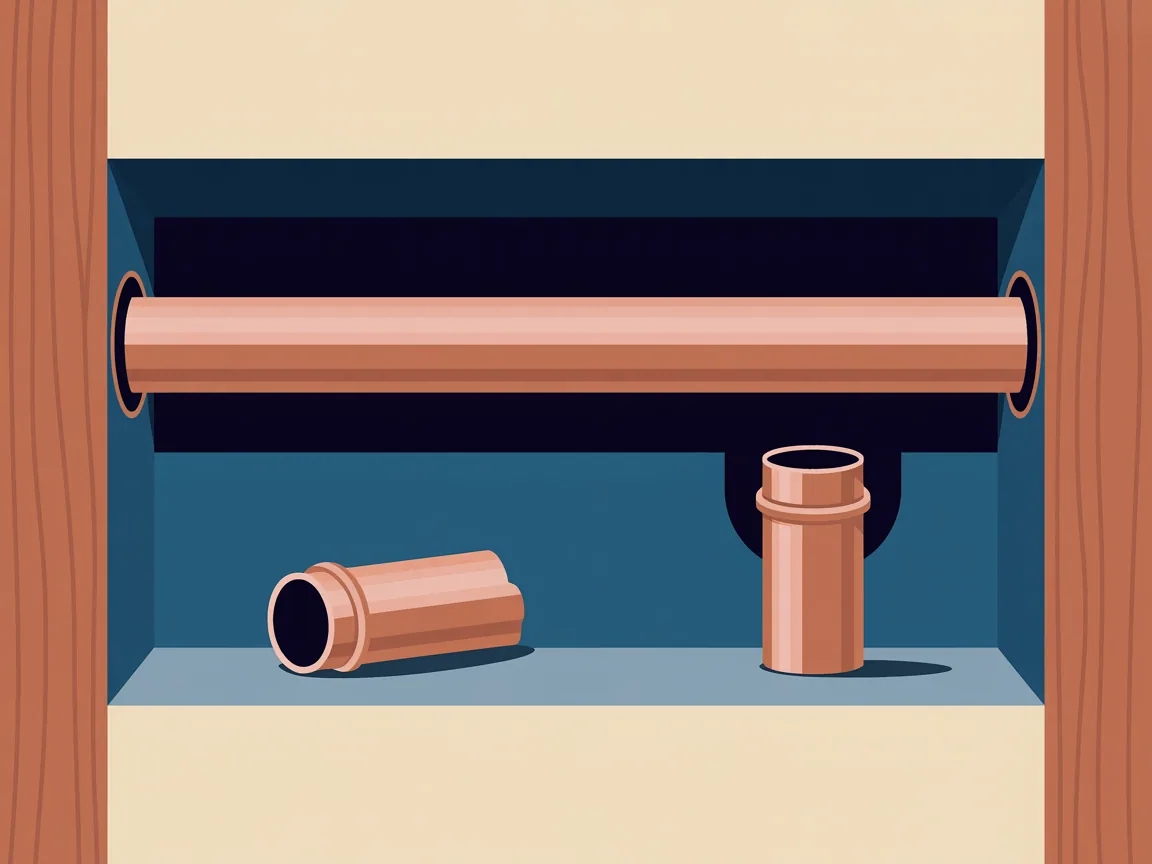
Compression or mechanical coupling
No flame and no cure time, which makes it the practical option on a line that will not drain fully or sits near insulation. It needs a clean, round pipe end and access all the way around the pipe. It is not an answer for a wall that has thinned along its length.
Soldered joint
The traditional copper connection, strong and inexpensive in materials. The conditions are the catch: the line must be dry, and an open flame needs clearance from framing, insulation and anything else in the cavity. Both are harder to satisfy inside a wall than under a sink.
Press fitting
A cold mechanical connection made with a jaw tool, so no flame and no drying wait. It depends on the correct pipe outside diameter and a properly seated sealing ring, and the real constraint is room for the tool head to close square in a tight joist bay.
Solvent weld
The method for PVC and CPVC, forming a chemical bond rather than a mechanical seal. It requires dry pipe, the cement matched to the material, and a cure period before pressure returns. That waiting time is part of the plan, not a delay.
Section replacement or reroute
Used when the failure is a length rather than a point. Under a slab, or through caliche in the yard, rerouting the line above ground or through the attic is frequently less disruptive than opening the ground to reach the original run.
Stop, find, judge, prove
How a focused repair proceeds
- Stop the water and record the sceneBefore any diagnosis, the flow is isolated at the closest valve that works, and the wet area is photographed while it is still wet. That record is the only version of the scene that survives the repair, and it matters later for both scope and any claim.
- Establish the failure point, not the wet pointWater travels before it shows. The line is traced and the source confirmed before a finish is cut, so the opening is sized to the failure rather than to the stain. Opening in the wrong place costs twice: once to cut and once to close.
- Judge the pipe either side of the failureThe new connection has to land on sound material. What the adjacent pipe looks like once it is exposed is what decides whether this stays a section repair or turns into a longer conversation, and that is the moment to look at it properly.
- Prove the joint under pressureWater is restored and the repair watched at working pressure with the area still open. A joint that is going to weep does it under load, not dry, so closing the wall before the test removes the only cheap chance to catch it.
Prove it before you close it
The repair is watched under pressure, not just finished
JB's labor on a pipe repair carries a 2-year workmanship guarantee: if the repair fails, we come back and make it right at no cost. It excludes normal wear, manufacturer defects and damage from outside causes.
Prove it before you close it
The test runs while the wall is still open
- Cavity open, joint exposedThe repair stays visible. Nothing is patched, taped or painted over until the test is done.
- Water back on, working pressureThe line is charged to normal household pressure. A weep shows under load, so the test has to run wet, not dry.
- Watched, then closedThe joint is held and observed. Only once it holds does the finish go back. Closing first would hide the one thing worth seeing.
Ask the plumber to separate
Five things a good quote keeps apart
A contractor who moves from one wet patch straight to a repipe proposal has skipped the step that decides the job. These are the questions that keep the decision honest.
- The failed pointWhere the pipe actually gave, confirmed at the opening, not inferred from where the water showed.
- The condition of the adjacent pipeWhat the run either side looks like once exposed. This is what decides whether a repair holds or the trouble returns next door.
- What is removed and what is retainedThe exact length coming out and the material being left in service, said plainly rather than left vague.
- Any concealed condition that could change the scopeWhat might be found behind the finish that turns a section repair into a larger conversation, named before work starts.
- How the repair is verifiedHow the joint is proven once water is back on, and while the cavity is still open, not after it has been closed.
Get the pipe looked at
Tell us where the water shows
Say where water appears, whether it is still flowing, which shutoff changes it, whether it is hot or cold, and any repair done nearby before. That detail decides how the visit starts, so it is worth writing down while the area is still wet. Or call (480) 969-3193.
Send it and a JB team member will call you to confirm the details and timing.
“he tested everything until he found with the problem was and the repairs he made”
Clamps and Patch Kits Are Not Repairs
A repair clamp compresses a rubber sleeve over a hole and holds pressure back. It is a holding measure, not a repair. It needs round, clean pipe to seal against, so it performs worst on the corroded or split line that usually calls for it. Epoxy putty and tape belong in the same category. They are worth having on hand so you can leave the water on overnight. They do not restore a pipe wall.
Repair, or Replace More Pipe
Pipe replacement across a longer run deserves comparison when corrosion or damage extends beyond one area, when the same run fails repeatedly, or when a patch would leave a visibly compromised section in service. A whole-home repipe is a larger decision again, and one leak is not evidence for it.
What Access and Restoration Do to a Quote
The repair and the opening needed to reach it are two different parts of the decision. A line may sit behind a cabinet, inside a wall, under flooring, beneath a slab or out in the yard, and reaching it can be a larger part of the job than the pipework itself.
A quote should itemize the access, the pipe repair, the pressure test and the restoration separately, and should say plainly what is excluded. Ask who is responsible for drywall, paint, tile, flooring, cabinetry, concrete or landscaping. If drying or remediation is needed because of water damage, confirm whether that sits outside the plumbing scope. Whether a homeowners policy responds at all turns on the policy wording and the cause, and how cause of loss is weighed in a household water claim sets out what an insurer asks first.
Questions people ask
Straight answers
How do you repair a leaking pipe?
- Isolate the water first, then find where the pipe actually failed rather than where the water appeared. A repair only holds if both cut ends land on undamaged material, so the pipe either side has to be exposed and judged before anything is joined. Method follows material and access. The joint is then watched under working pressure before the opening is closed.
How do you repair a copper pipe leak?
- The failed length is cut out and a new section joined in with a soldered, pressed or mechanical connection, depending on whether the line can be drained and whether an open flame is safe in that cavity. A pinhole is rarely alone. Where the pipe wall is thinning from the inside, one patch buys time rather than settling the question.
Do I need a plumber for a burst pipe?
- Yes for the repair, but stopping the water is yours to do first, because that is the part that limits the damage and it cannot wait for anyone. Close the nearest working valve, or the main. After that a burst is worth diagnosing rather than simply patching, since a cold snap, pressure, corrosion and impact each point toward a different scope of work.
How do you repair a PVC pipe leak?
- The damaged length is cut out and a replacement solvent welded in with couplings, which needs the pipe dry, the correct cement for that material and a cure period before pressure returns. Tape and epoxy putty over a crack are holding measures. In a wall or under a slab, access and the reason the pipe cracked matter more than the joint itself.
How do you repair a leaking pipe under the sink?
- Work out which part is wet first, because a cabinet floor collects water from the supply stops, the trap, the faucet body and the dishwasher line, and those fail for different reasons. A drain-side leak often shows only while the sink is draining. Our guide to taking apart an accessible P-trap covers what is reasonable to check yourself.
Can a leaking pipe always be patched?
- No. A repair needs sound material to connect to. Extensive corrosion, a long split, poor access or repeated failures along the same run can make section replacement the more reliable answer. The decision is usually made at the opening rather than beforehand, because the condition of the adjacent pipe is not visible until the failed piece is exposed.
Related pipe and repipe services
More on leaks from the JB team
Get the pipe looked at
Whether this is a repair or a bigger conversation depends on what the surrounding pipe looks like.