Heating & cooling · Mesa, AZ
HVAC in Mesa, from a cooling fault to a new system
JB repairs, maintains and replaces air conditioners, heat pumps and furnaces in Mesa homes. Start with what the system is doing, not the part you suspect.
- 4.9 · 580 Google reviews
- CR-39 licensedROC #341937 · CR-39
- Open 24/7
- Since 1981Family owned since 1981
What this section covers
HVAC service in Mesa covers the equipment that cools and heats a home together with the ducts and filtration in the air path, and in most Mesa houses that equipment is a split system with a gas furnace, a heat pump or a packaged rooftop unit, each of which is diagnosed and specified differently.
Handled here
The equipment that cools and heats the house, the ducts that distribute it, and the filtration in the air path. Repair is the diagnosis of a fault, maintenance is the inspection of a working system, and installation is a sizing decision.
Handled elsewhere
Gas supply to a furnace is plumbing work under gas line services. A smell or a dust complaint is a question about the air path rather than cooling capacity, so it belongs on indoor air quality.
Route the visit
Cooling problem, or planning ahead?
Repair, maintenance, replacement and air quality are four different conversations. Pick the situation closest to yours: reading what the system is doing sorts you faster, and more honestly, than guessing at the cause.
Pick the description closest to what your system is doing. Reading the behavior sorts you faster and more honestly than guessing at the cause.
Describing what the system is doing out loud takes a minute and skips the sorting entirely.
(480) 969-3193The directory
Every heating and cooling service
Eight pages, each one job. Everything on this list is performed under the same Arizona classification, CR-39, apart from gas piping, which is plumbing work.
AC repair
It will not start, it runs without cooling, it trips the breaker again, or there is water near the indoor unit.
Open the pageAC maintenance
The pre-summer inspection of a system that still works, with the operating measurements written down for you.
Open the pageAC installation and replacement
Sizing and replacement once a repair stops making sense, specified in an itemized proposal you can compare.
Open the pageHeat pump repair
One machine that cools and heats, so the first question a technician settles is which of the two modes failed.
Open the pageHeating and furnace repair
The winter side, which fails on ignition, combustion and safety rather than on cooling capacity.
Open the pageIndoor air quality
Filtration and the air path, which is a separate question from how much cooling the equipment makes.
Open the pageMaintenance programme terms
What a planned-maintenance agreement has to define in writing before it is worth enrolling in.
Open the pageCommercial HVAC
Rooftop units, tenant spaces and scheduled access on a working property, under the same two licenses.
Open the pageIdentify what you own
Four systems, told apart before you route
Most Mesa homes run one of these four. Each is diagnosed and specified differently, so naming yours makes the call shorter and the answer more accurate.
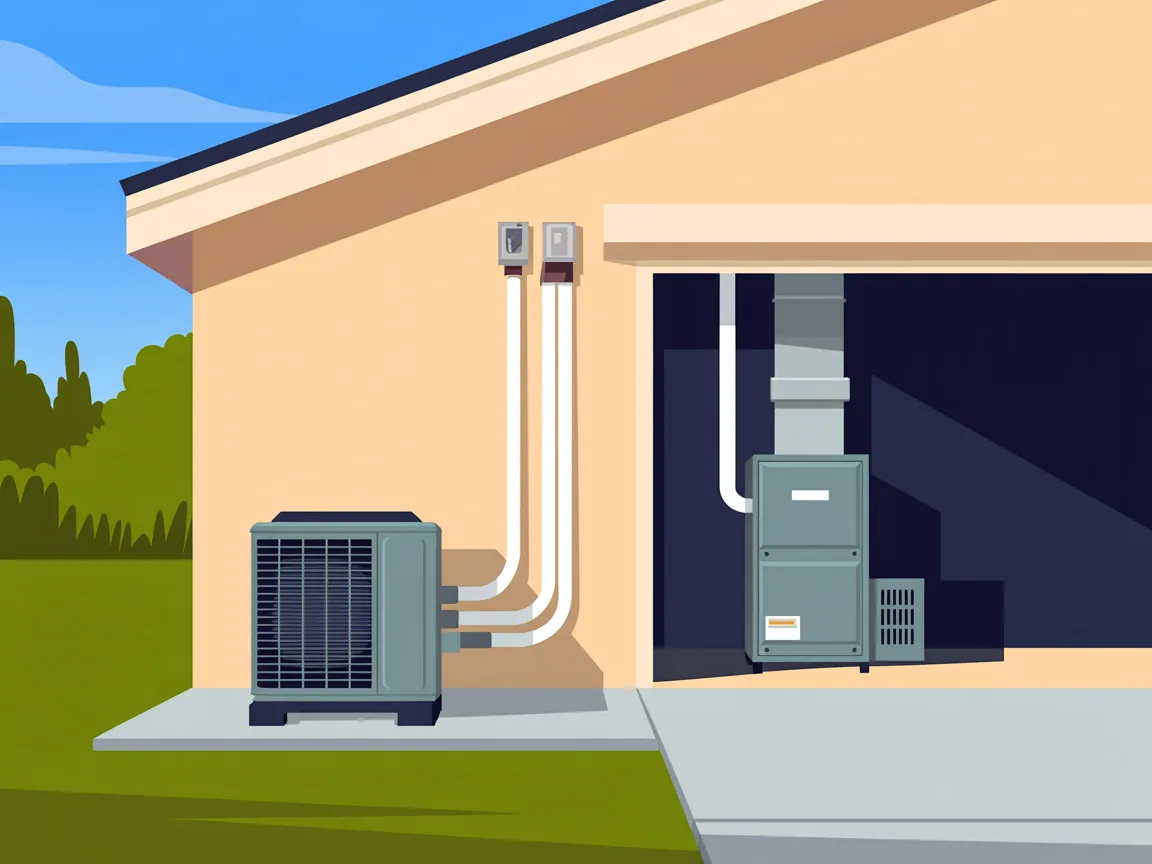
Split system with a gas furnace
How to spot it: An outdoor condenser plus an indoor furnace cabinet, usually in a closet, attic or garage, with a gas line running to it.
Why it matters: Cooling and heating are two machines sharing one blower, so a winter fault and a summer fault are diagnosed separately.
Heat pump
How to spot it: Looks like a straight air conditioner outside, but it runs in winter too, and there is no gas furnace in the air path.
Why it matters: A reversing valve lets one machine both cool and heat, so the winter checks cover defrost and backup heat, not combustion.
Dual fuel, or hybrid
How to spot it: A heat pump paired with a gas furnace that take turns depending on the outdoor temperature.
Why it matters: A narrow case in a climate this mild, and the setup question is the changeover point, which is easy to set wrong.
Packaged unit
How to spot it: One cabinet outdoors, on the roof or a slab pad, with no separate indoor equipment. Common on older Mesa homes and manufactured housing.
Why it matters: Everything is in one box, so access and the duct connection at the cabinet drive both the diagnosis and any replacement.
What the behavior points at
Read the symptom, not the part
The system runs, the house stays warm
Points at charge, compressor, capacitor, a fouled coil or restricted airflow. The question it raises is which of those was actually measured.
It cycles on and off repeatedly
Controls, a component beginning to fail, airflow restriction or equipment poorly matched to the space. Note when it happens and what the thermostat shows.
One room is much warmer
Usually distribution rather than the outdoor unit: duct leakage, insulation, solar gain or restricted return air. Raises whether the ducts were ever evaluated.
Water near the indoor unit
A blocked condensate drain or a failed pan. The question is where the water starts, because the damage is progressive.
A heat pump blows cool air in winter
Often a normal defrost cycle lasting a few minutes. If it persists, the question moves to backup heat, the reversing valve or charge.
The furnace lights, then shuts down shortly after
Points at flame sensing, airflow, or a safety limit doing its job. A repeated combustion shutdown is a question for a technician, not a reset button.
How a visit narrows a fault
A diagnosis is a sequence, not a guess
Step 1
Describe the behavior, not the diagnosis
What the system does, when it started, and whether anything changed in the house. That description narrows the inspection faster than a guess at the part does.
Step 2
Rule out the basics first
Thermostat mode and set point, filter condition, registers, breaker. These come first because they change what every later measurement means.
Step 3
Measure at the equipment
Electrical values, airflow and refrigerant-side readings taken at the machine itself. A diagnosis offered without measurements is an opinion.
Step 4
Separate the repair from the upgrade
Only once the fault is identified can required work be told apart from optional improvement, and repair weighed honestly against replacement.
What Arizona does to the equipment
Run-hours, not calendar age, are the honest input
A Mesa system can run most hours of the day for months, so ten years here is not ten years in a mild climate. Condition, repair history and what specifically failed tell you more than age alone. How long AC units last in Arizona goes through what shortens service life.
Monsoon dust on the coils
Dust settles on the indoor coil and packs the condenser fins outdoors, cutting heat rejection when the system is working hardest. Check the filter and outdoor coil after a storm, not on a calendar.
Irrigation overspray on the condenser
Overspray leaves mineral scale on condenser fins, a slow loss of capacity that goes unnoticed until cooling drops off.
Attic-routed ducts
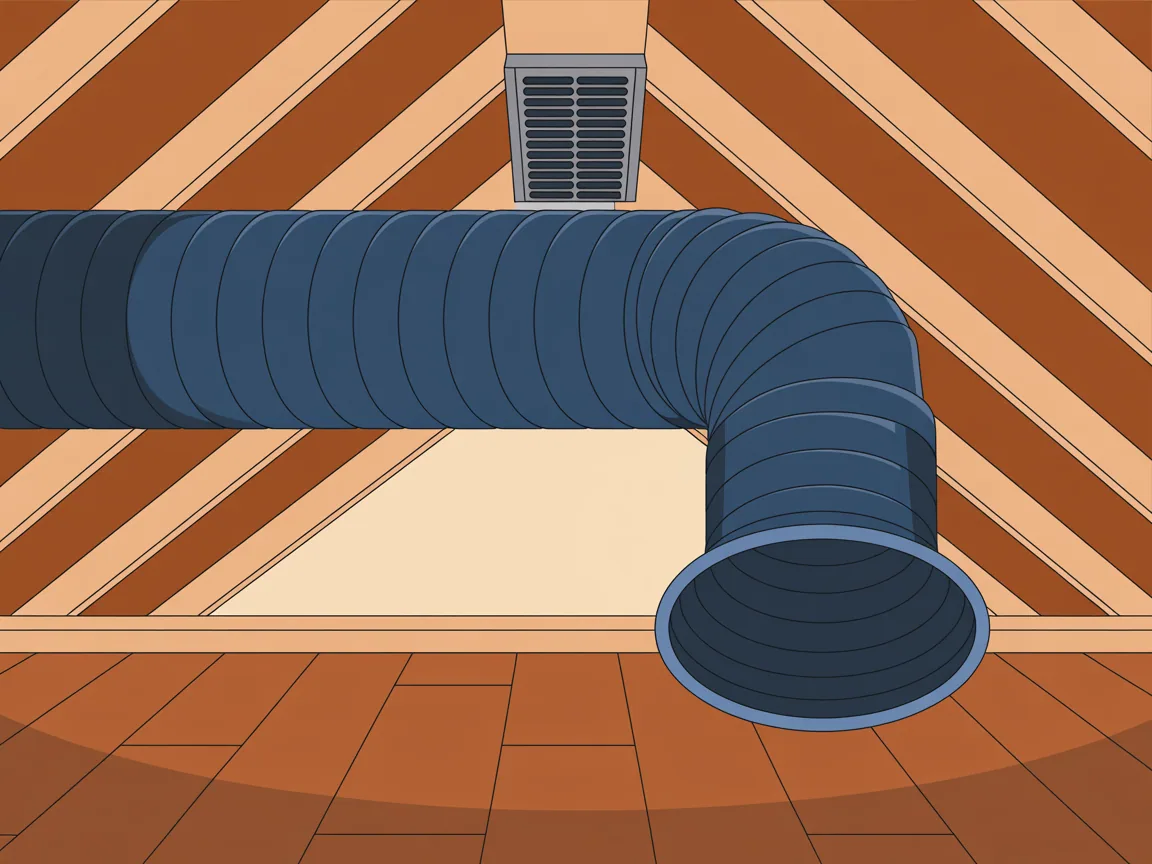
Most Mesa ducts run through an attic far hotter than outdoor air in July, so a leaking return pulls superheated attic air into the system.
Post-tension slab, older homes
Where ducts route under a post-tensioned slab, nothing is cut or cored until the tendons are located first.
When it should not wait
Faults to act on promptly
- Water near the indoor equipment
- A breaker that trips again after one reset
- A burning or electrical smell
- A furnace that lights and shuts down repeatedly
If water could reach electrical parts, switch the system off at the thermostat and at the disconnect. If you smell gas, leave the house and call the gas utility first. The pre-summer checklist for Mesa homeowners sets out which checks are safe before calling and which belong inside a panel. JB is reachable 24 hours a day, 7 days a week; scheduling and timing are settled on the call.
(480) 969-3193Worth knowing before you call
The license, the calendar and the property
What the CR-39 license actually covers
JB Water & Air holds Arizona ROC #341937 in classification CR-39, air conditioning and refrigeration. That is the state classification for installing, repairing and replacing cooling and heating equipment and the ductwork that serves it, and it is the specific thing worth asking any HVAC contractor for before work starts, because a license number on its own does not say which trade it authorizes. Gas is a separate classification: the furnace is CR-39 work, while the gas line feeding it is plumbing, held here under ROC #260511 in CR-77 and covered on gas line services. The company is family owned and has worked from Mesa since 1981. JB warrants its own labor on the heating and cooling work it performs for two years and returns to make failed work right at no cost. The guarantee excludes normal wear, manufacturer defects and damage from outside causes, and manufacturer warranties on equipment are separate, so keep the job documents alongside that paperwork.
The Mesa calendar, and when each call arrives
Cooling and heating calls do not spread evenly across the year here, and knowing which season you are in usually tells you which page to open. Spring is the maintenance window, because a weak capacitor or a fouled condenser found in April is a scheduled visit and the same part found in July is not, which is the case the AC maintenance page makes in detail. The first sustained run of triple-digit days is when marginal equipment declares itself, and that is repair season. Monsoon storms follow, and the calls after them are more often about airflow and fouled coils than about a failed component. Then the first genuinely cold week arrives and the phone rings about heat that has sat unused for eight months, which is heating repair or, on a heat pump, a different set of controls entirely.
Commercial buildings and rental property
A packaged unit on a roof over a leased suite, a tenant who cannot lose cooling during trading hours, and an owner who needs the visit documented add up to a different job from the same repair in a house, even when the wrench work is identical. JB holds the CR-39 air conditioning license and the CR-77 plumbing license, so a property carrying both a cooling fault and a plumbing fault is one contractor rather than two trips from two companies. Access, scheduling and what a site survey establishes before any number is quoted are set out on the commercial page.
More on heating and cooling from the JB team
Questions people ask
Straight answers
What is the difference between a heat pump and an air conditioner?
- A heat pump is an air conditioner with a reversing valve, so it can move heat into the house as well as out of it. In cooling mode the two behave the same way. The difference shows in winter: a heat pump heats using the refrigeration cycle, while a straight-cool system relies on a separate furnace or electric heat.
How much does replacing a furnace and air conditioner together cost?
- No honest figure exists before the house is seen. What drives it is how many systems are involved, the equipment type and capacity, whether the existing ducts and electrical service are reusable, and how accessible the equipment is. Ask for a proposal that itemizes equipment, capacity, labor, duct and electrical changes, controls, permits and exclusions, then compare like scopes.
Is an HVAC maintenance plan worth it?
- It depends entirely on what the plan defines. Compare the number of systems covered, the specific inspection and cleaning tasks, whether operating measurements are recorded and given to you, what parts and repairs are excluded, and how the plan handles a fault found during a visit. A vague scope cannot be evaluated against a defined one, and what to confirm in a maintenance agreement goes through the clauses worth reading first.
Do you handle commercial buildings as well as homes?
- Yes. JB Water & Air holds both Arizona licenses this trade needs on a commercial property, ROC #341937 in CR-39 for air conditioning and ROC #260511 in CR-77 for plumbing. What changes on a commercial site is rarely the wrench work. It is roof access, scheduling around trading hours, tenant coordination and the documentation a manager needs afterwards. Commercial HVAC and plumbing sets out what a site survey covers.
Is anyone reachable at night or on a weekend?
- The published hours are 24 hours a day, 7 days a week, so (480) 969-3193 is the right route at any hour. That means the call is answered, not that a technician is already on the way. Scheduling, timing and what can safely wait until morning are settled on the call rather than promised in advance.
Talk to a CR-39 licensed contractor
Describe what the system is doing and the team can route it to the right technician. JB answers the phone 24 hours a day, 7 days a week.
ROC #341937 · CR-39 air conditioning. Family owned in Mesa since 1981. Open 24 hours a day, 7 days a week.