Pipes & Leaks4 min read
Burst Pipe at Night: Five Safe Damage-Control Steps
A pipe burst at night? Protect people first, stop the water if safe, avoid electrical hazards, contain damage, and document the loss before repair.
By JB Water & Air · Published Jul 1, 2026 · Reviewed Sep 2, 2026
- 4.9 · 580 Google reviews
- CR-77 licensedROC #260511 · CR-77
- Open 24/7
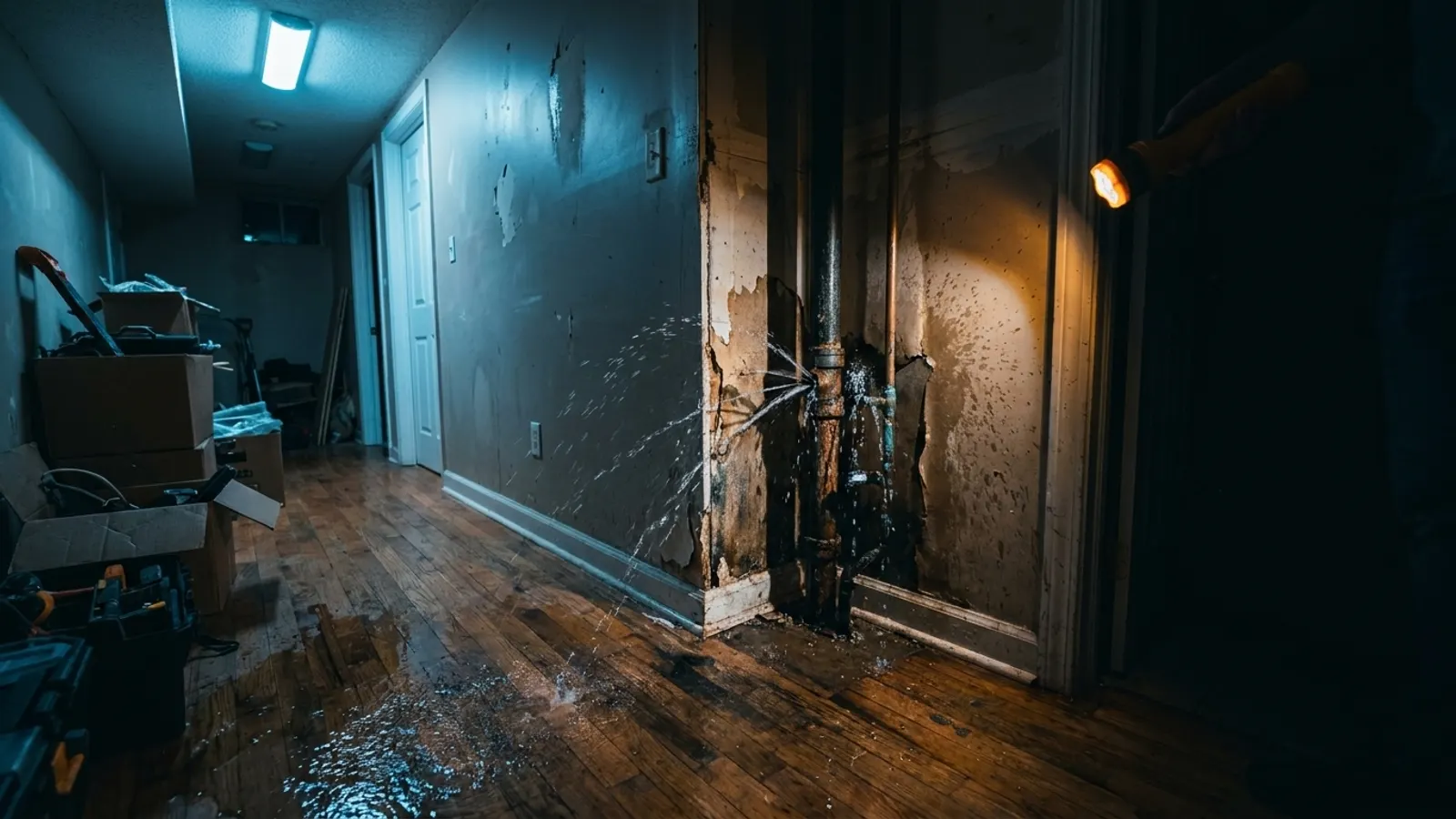
What should you do when a pipe bursts at night?
Protect people first, stop the water if you can do so safely, stay away from electrical hazards, reduce the spread of water, and document what happened. Then call a plumber and describe whether the water is controlled. Do not wait for an online form when water is actively damaging the property.
JB Water & Air is open 24 hours a day, 7 days a week, at (480) 969-3193. JB does not promise a specific arrival time, so confirm timing when you call. The emergency plumbing page is the appropriate service route for an active burst pipe in Mesa or the published East Valley service area.
Step 1: Move people away from immediate hazards
Keep children, pets, and anyone without protective footwear out of the wet area. Water near an electrical panel, receptacle, appliance, ceiling light, or exposed wiring can create a serious hazard. Do not stand in water to reach a switch or breaker.
If you see sparking, smell burning, hear electrical arcing, or cannot reach a shutoff without entering an unsafe area, leave and contact emergency services or the appropriate utility. A plumbing repair comes after life safety.
Water contaminated by a sewer backup also requires distance. Avoid skin contact and stop using fixtures that are feeding the backup.
Step 2: Stop the water without forcing a valve
Use the closest working fixture or branch shutoff when one is available. If the leak continues, close the property's main water valve only if you know where it is, can reach it safely, and can turn it without excessive force.
Do not force a corroded or damaged valve with a long tool. Breaking the valve can make the emergency worse. If the main valve itself is leaking or will not operate, tell the plumber immediately. The pipe repair service covers repair conversations for leaking, damaged, or burst piping.
After the valve is closed, confirm that the flow is slowing. Water already stored in lines may continue briefly. Avoid dismantling piping merely to relieve pressure unless a qualified person directs you.
Step 3: Limit the spread of water
Use buckets, towels, or a wet vacuum only when there is no electrical or contamination risk. Move portable belongings away from the water. Place a container beneath a controlled drip, but do not climb beneath a sagging ceiling or attempt to puncture one.
If water is entering from above, stay clear of any bowed ceiling material. Saturated drywall can fall. If water has reached flooring, walls, cabinets, or insulation, plumbing repair may be only one part of recovery. Ask the appropriate restoration and insurance professionals about drying and damage assessment.
Do not cover wet materials so tightly that moisture is trapped. Avoid running household fans in areas with sewage, suspected contamination, or electrical hazards.
Step 4: Record the condition and timeline
Take photos or video from a safe position before cleanup changes the scene. Record:
- When the water was first noticed
- Where it appeared
- Which valve was closed and when
- Whether water reached electrical equipment or finished surfaces
- Any unusual sound, freezing exposure, impact, or recent work
- The names and times of calls you make
Documentation can help the plumber understand the event and may help an insurance professional evaluate resulting damage. It does not establish coverage; the policy and cause of loss control that decision.
Step 5: Give the plumber a useful first report
Say whether the water is still running, which line or room appears affected, and whether the main valve works. Give the full address, access conditions, and a callback number. Mention if the property is vacant, if someone else must authorize work, or if a utility has already responded.
Do not label the cause unless it has been confirmed. A visible break may be obvious, but water can travel inside a wall or ceiling. If the source is not clear after the immediate event, leak detection may be a separate part of the investigation.
What not to do
- Do not enter standing water near energized equipment.
- Do not use an open flame to thaw a pipe.
- Do not force a seized main valve.
- Do not apply a permanent-looking patch and restore water without understanding the condition.
- Do not make gas, electrical, or structural repairs outside your training.
- Do not discard damaged property before documenting it when an insurance claim may be involved.
A temporary measure may slow a small, accessible leak, but it should not be represented as a completed repair. Ask what must remain shut down until the pipe is properly assessed.
After the immediate repair
Before water is restored, ask what failed, what portion was repaired, and whether nearby material showed the same condition. Confirm which fixtures should be tested and what signs would require shutting the water off again.
JB Water & Air holds Arizona plumbing license ROC #260511, classification CR-77. It warrants its own labor on the plumbing work it performs for two years and returns to make failed work right at no cost; the guarantee excludes normal wear, manufacturer defects, and damage from outside causes. The approved scope should also identify the existing piping that remains unchanged.
For a contained follow-up concern, use the contact page. For active water, call (480) 969-3193 rather than waiting online.