Pipes & Leaks5 min read
Leaking Main Water Shutoff Valve: Diagnose Before Repair
Learn where a main shutoff valve can leak, which small adjustment may help, when replacement is safer, and how to limit damage.
By JB Water & Air · Published Oct 24, 2025 · Reviewed Sep 2, 2026
- 4.9 · 580 Google reviews
- CR-77 licensedROC #260511 · CR-77
- Open 24/7
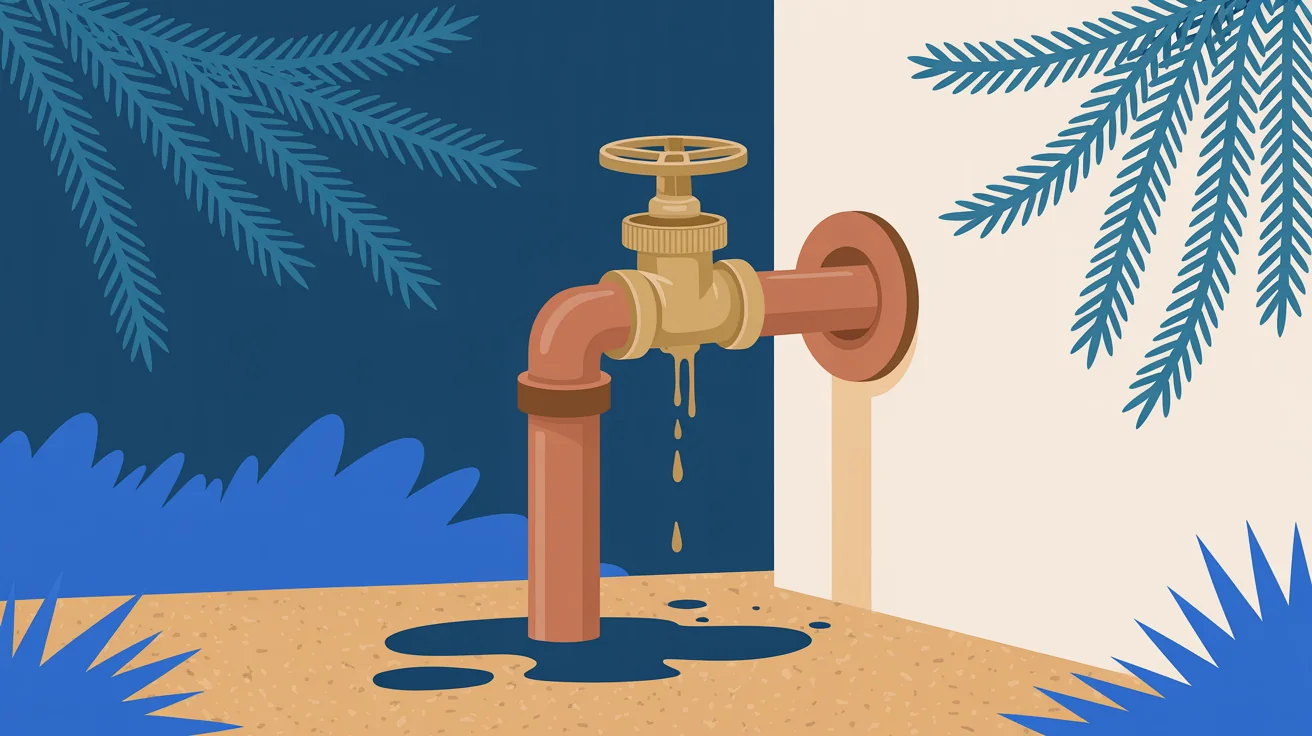
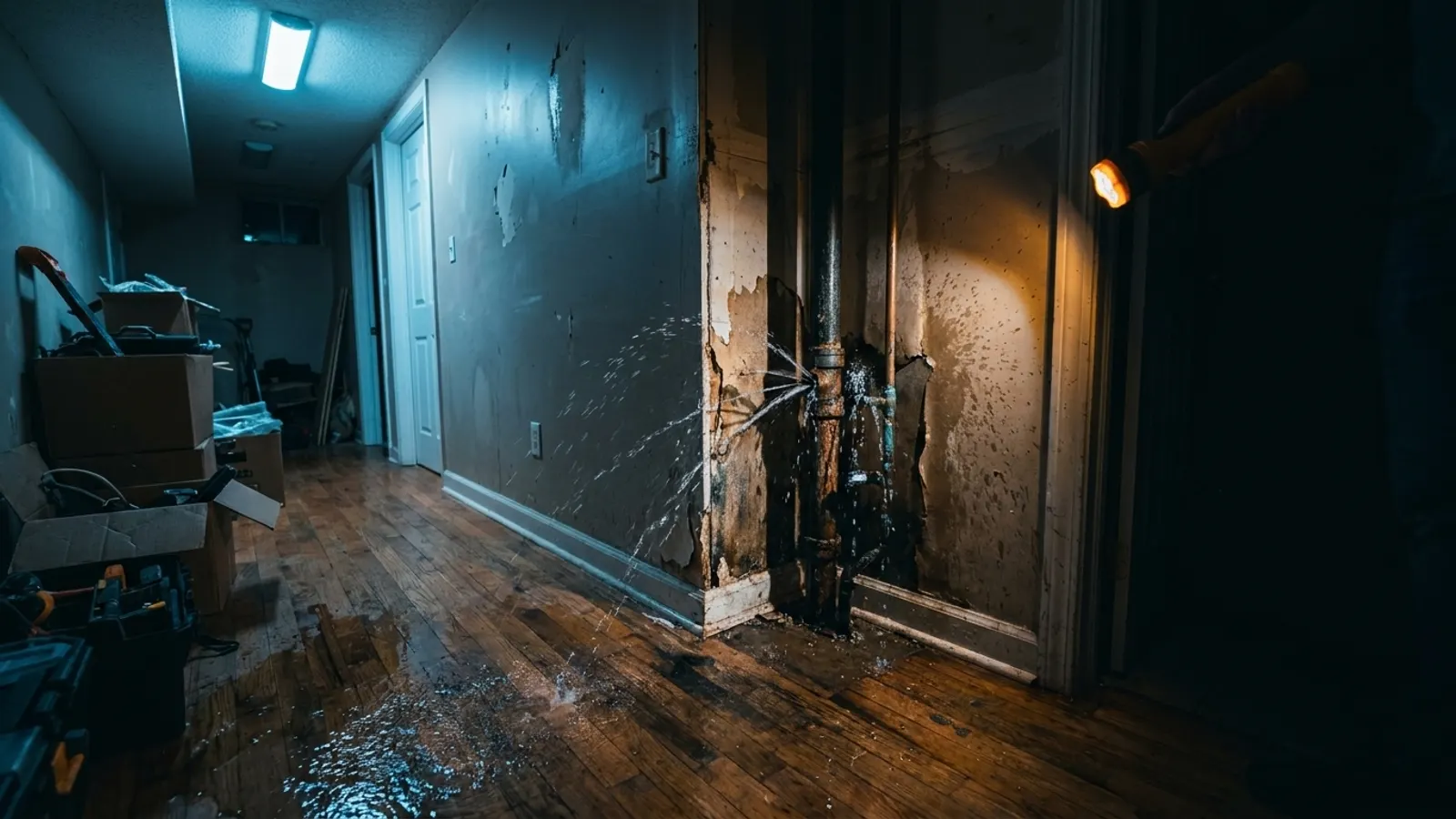
A leaking main water shutoff valve is not one repair. Water may be escaping around the operating stem, at a threaded or soldered connection, through the valve body, or from nearby piping. A slight stem seep may sometimes respond to a careful packing-nut adjustment. A cracked body, corroded connection, or valve that will not control flow usually needs professional replacement.
Because this valve is supposed to protect the entire home during a plumbing failure, do not force it, dismantle it under pressure, or assume the street-side valve belongs to the homeowner. If water is flowing rapidly or approaching electrical equipment, use the appropriate emergency response and call for emergency plumbing help.
First identify which valve you are looking at
A home may have more than one important shutoff:
- A customer-side main valve where water enters the building
- A utility or meter valve that may be restricted to authorized personnel
- An irrigation shutoff
- A fire-sprinkler control that should not be confused with the domestic main
- Fixture valves below sinks and behind toilets
If you are not sure which system the valve controls, stop. Closing the wrong valve may fail to protect the home or may disable a safety system. The water utility can explain responsibility at the meter; a licensed plumber can identify the customer-side plumbing.
Dry the area and locate the first point of moisture
Water travels along pipes, so the wettest spot is not always the source. Without operating a questionable valve, dry the body and nearby pipe. Use a clean tissue to check these locations:
- Where the handle shaft enters the valve
- The packing nut immediately around that shaft
- Threaded, compression, soldered, or pressed connections on each side
- Seams or defects in the valve body
- The pipe above the valve, where water could run downward
Also check whether condensation is forming on cold piping. Condensation can wet the area without a failed pressure connection, but it should not be assumed when drops consistently begin at a joint or stem.
Leak at the valve stem or packing nut
Older multi-turn gate-style valves and some other valves seal around a moving stem with packing. If a small seep appears only at that stem, a very modest packing-nut adjustment may compress the seal enough to stop it.
This is not an instruction to apply maximum force. Corroded valve bodies and rigid pipe can break. A qualified, prepared homeowner may support the valve against twisting and gently snug the packing nut only enough to test whether seepage stops. Do not remove the nut, back it off, or disassemble the stem while the line is pressurized. Stop immediately if the pipe moves, the valve deforms, or leakage increases.
Packing replacement requires isolating and depressurizing the correct section. If the leaking component is the home’s only main shutoff, that may require coordination at the meter and is usually professional work.
Leak at a pipe connection
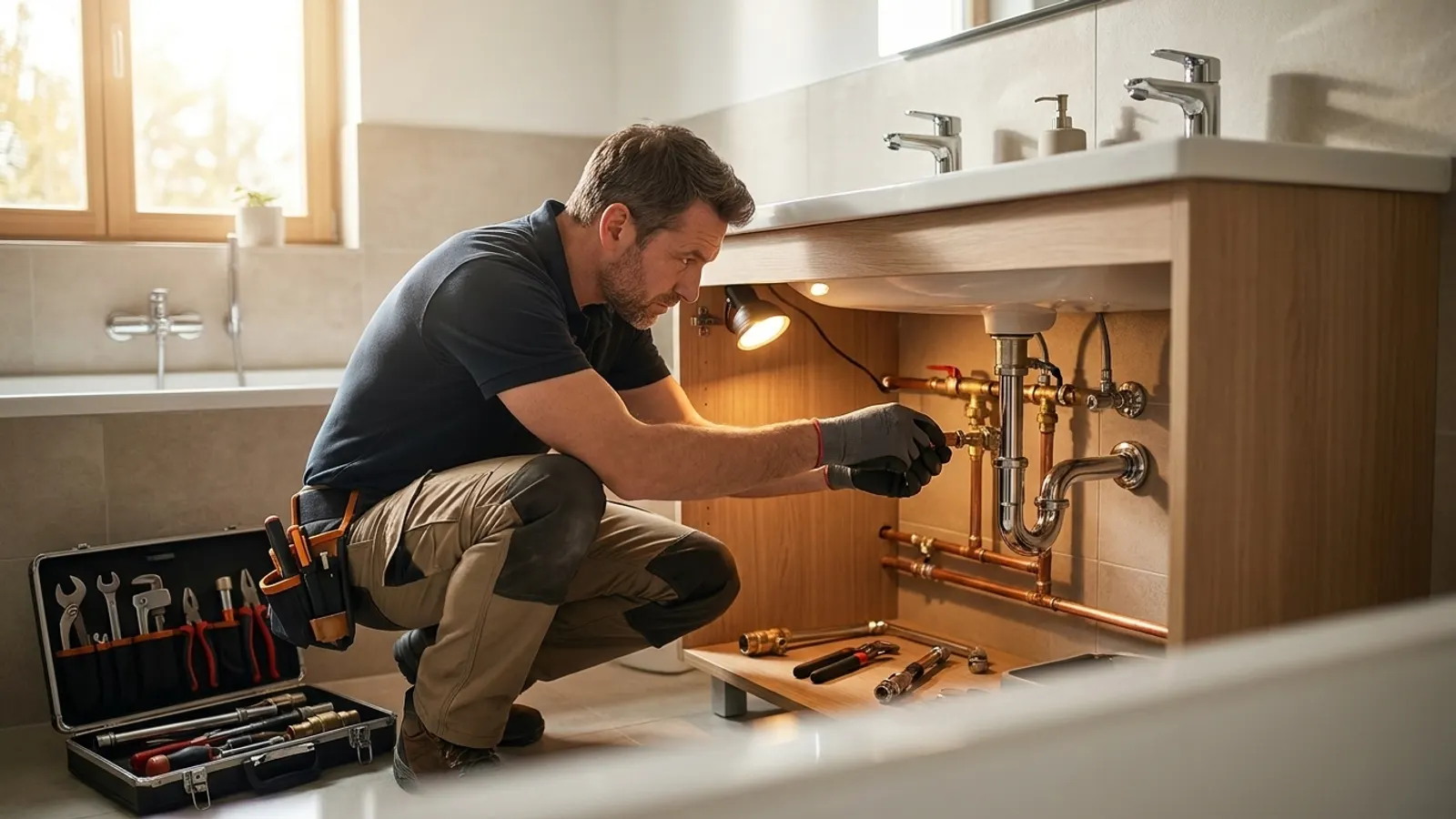
Water at a threaded, compression, soldered, or pressed joint is not fixed by tightening the handle. The line may need to be isolated, drained, separated, prepared, and reconnected using a method appropriate to the pipe and valve materials.
Blindly tightening a compression or threaded connection can twist concealed piping or split an old fitting. Heating a valve with a torch adds fire and material risks and should not be attempted without the training, preparation, and permissions required for the location. A plumber can determine whether the joint alone is serviceable or whether the valve and adjacent material should be replaced.
Leak from the valve body
A crack, pinhole, split seam, severe corrosion, or freeze damage in the body calls for replacement. Epoxy, tape, clamps, and sealant on the outside should not be treated as a permanent pressure-pipe repair. They may hide continued deterioration and leave the home without a dependable shutoff.
Place a container or protective material only if it can be done safely and will not interfere with electrical equipment. Do not leave an active leak unattended simply because the water is temporarily contained.
Valve does not close or will not reopen correctly
A main valve can fail internally without leaking externally. A gate may separate from its stem, deposits may restrict movement, or a worn seal may allow continued flow. Do not repeatedly force a stuck handle. Breaking the stem can eliminate the limited control you still have.
If work elsewhere in the home depends on a complete shutdown, confirm that flow has actually stopped before disconnecting anything. Opening a faucet may relieve pressure, but it does not prove the main valve is holding if water continues to enter the system.
When replacement is the better repair
Replacement is commonly evaluated when:
- The valve body or connection is cracked or deeply corroded
- The valve leaks again after a cautious packing adjustment
- It cannot reliably stop the water
- The handle or stem is damaged
- The valve is inaccessible during emergencies
- Nearby piping must be repaired at the same time
Valve style, pipe material, space, local requirements, and the way water will be isolated all affect the scope. A quarter-turn ball valve may be appropriate in many modern installations, but it is not a universal drop-in choice. The plumber should confirm compatibility and explain how the new valve will be supported and accessed.
Limit damage while arranging service
Move belongings away and catch a minor drip if safe. Photograph the valve and surrounding piping without disturbing them. Note whether the leak changes when fixtures run or when the valve is touched. Do not operate a utility-owned valve without authorization, and never enter water near energized equipment.
If the source is hidden or moisture appears away from the valve, leak-detection service may be more appropriate than assuming the main shutoff is at fault. Plumbing repair should address the confirmed source.
Main shutoff repair in Mesa
JB Water & Air is a family-owned Mesa plumbing company serving the area since 1981 under Arizona license ROC #260511 (CR-77). A technician can identify the leak point, determine how the water can be safely isolated, and provide a scope for repair or replacement.
For a controlled leak, contact JB Water & Air or call (480) 969-3193. For active uncontrolled water, call and state that clearly so the team can discuss availability and immediate steps; no arrival time should be assumed until confirmed.