
Black iron pipe
Threaded steel pipe, the common interior distribution material. Strong and long lived, but rigid, so the route has to be planned around fittings rather than bent to suit the building.
Open 24/7Open 24 hours a day, 7 days a week · Since 1981Family owned in Mesa since 1981
(480) 969-3193Smell gas? Leave the building first. Call 911 and the gas utility from outside, and switch nothing on or off.
JB installs and repairs gas lines in Mesa for grills, pool heaters, ranges and tankless heaters, permitted and pressure tested before service.
For planned or non-emergency gas line work:
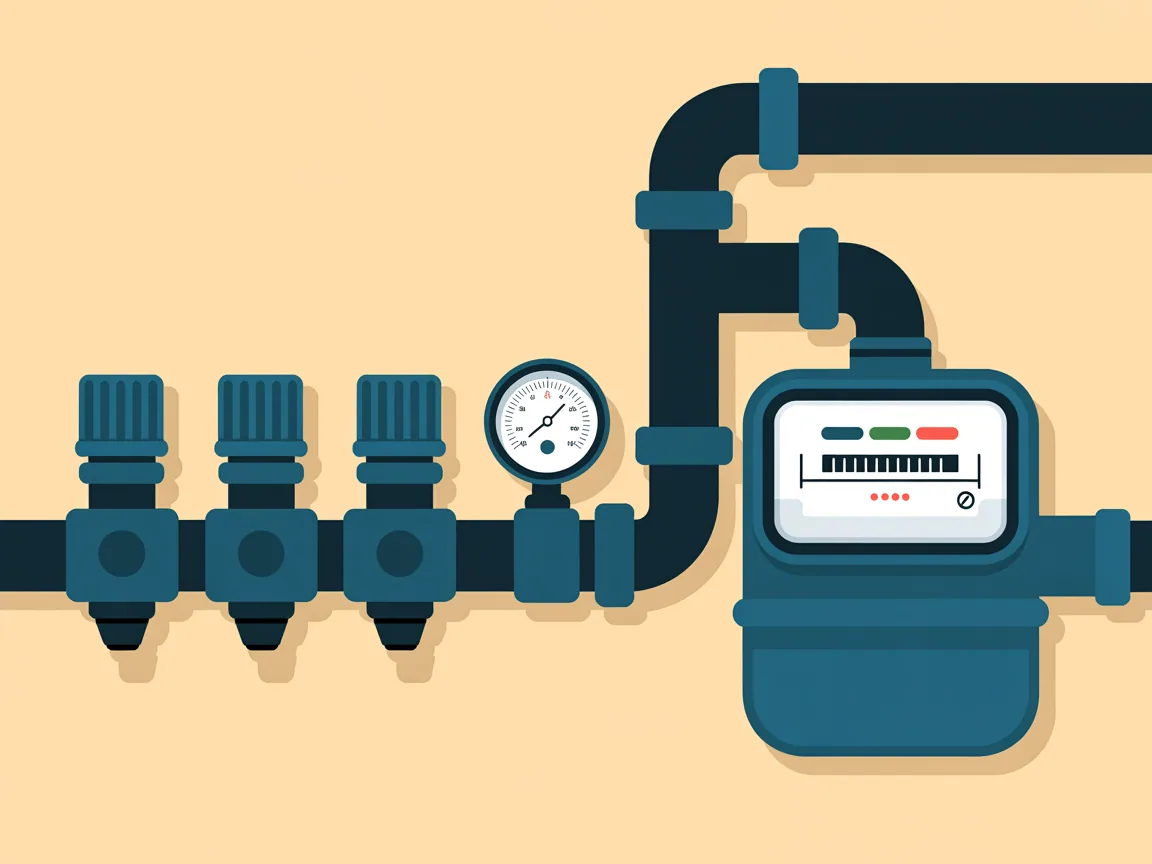
JB Water & Air installs, repairs, replaces and inspects residential gas piping in Mesa and the East Valley. Plumbing work is performed under Arizona ROC #260511, classification CR-77. The company has been family owned since 1981, works from 3932 E Presidio St in Mesa, and answers the phone 24 hours a day.
Most calls that reach this page are planned work: an appliance being added, an appliance being moved, or a written proposal somebody is trying to judge. Furnace supply belongs here too, alongside heating repair, and so does the gas side of a water heater replacement. For the full local scope, see the Mesa plumbing and HVAC page.
An active gas smell is not that conversation. Leave the building first and call 911 and the gas utility from outside. The protocol is set out further down this page, and emergency plumbing covers what happens once the utility has made the property safe.
Start with demand, not the pipe you can see
A capped stub in the right wall proves nothing about whether the system behind it can carry another appliance. Add up everything the line would feed, assume it can all run at once, and the real question comes into view. The conversion that most often reroutes a job is a tank water heater going tankless.
The figures below are typical rated inputs shown for illustration. Your appliance data plate carries the real number. This picture is a conversation starter, not a code sizing calculation: true sizing also needs the gas type, the delivery pressure, the allowable pressure drop, the pipe material and the developed length to the farthest outlet. It does not output a pipe size and it is not a price.
Connected demand picture
Nothing selected yet. Add the appliances the line would serve and watch the combined demand build. The point is the total, not the single stub you can see in the wall.
The total, not the stub, decides whether a new run is needed.
Talk it through: (480) 969-3193Not sure whether the line you have can carry another appliance? That is a phone call, not a form.
(480) 969-3193Permit, pressure test, then connect
Gas line work is a capacity and safety job: connected appliance demand, run length, route, materials, shutoffs, the permit and a witnessed pressure test all have to agree before the line is put into service.
Every appliance the line will feed is added at its rated input, on the assumption they can run together. That total is the starting number for everything that follows it.
Sizing follows the developed length from the meter to the farthest outlet and the pressure drop the system is allowed to lose. Load without length sizes nothing.
Where the pipe travels decides material, support, sleeving, depth of cover and corrosion protection. The route is settled before pipe is bought, not after.
The line is tested and inspected under permit before anything is put into service. A scope that connects appliances first has the order wrong.
Before a new or altered line goes into service it is isolated, charged, and watched on a gauge. The holding is what matters, not the pressure: a gauge that loses any reading over the full period has found something, and the line is not released until it holds and the inspector has seen it hold. Ask when the test happens, who witnesses it, and whether appliances are connected before or after.
Ask for the connected load used for sizing and the length it was sized over, the route, the materials, who pulls the permit, when the test happens, and who restores what gets opened. A scope that never mentions permitting or testing is not a cheaper version of the same work. The permit also outlives the job: it is the record a buyer's agent asks for years later. Comparing Mesa plumbing proposals works through scopes that are not describing the same job.
Materials, organised by where the pipe travels
Under a slab is a last resort, and caliche changes how a trench is opened, not the rule for what goes in it. What a run passes through is settled before pipe is bought, not after. Where a run feeds a furnace, it is planned with the heating side rather than as a standalone stub.
Threaded steel pipe, the common interior distribution material. Strong and long lived, but rigid, so the route has to be planned around fittings rather than bent to suit the building.
Corrugated stainless steel routes through framing far more easily than rigid pipe, which is why newer homes use it. It carries a bonding requirement to the electrical system that rigid pipe does not.
Used where steel has to survive exposure or contact with soil. The coating is the protection, so how the pipe is handled and what it is backfilled against decides how long that protection lasts.
The usual choice for a buried yard run out to a grill, fire pit or pool heater. It is not used above grade, so it needs a transition fitting and a tracer wire so the line can be found again later.
The short flexible link at the appliance only. Connectors are not distribution pipe, are not run through walls, and are replaced rather than reused when equipment is moved.
Corrugated stainless steel has to be bonded to the electrical system in line with the manufacturer instructions and the code. In a season that delivers lightning and haboob dust in the same evening, that bonding is not a formality. If a home has CSST and nobody can say whether it was bonded, that is worth an inspection on its own.
There is no single national number. Codes state a minimum depth of cover, and the figure applied to your trench depends on the code edition the jurisdiction has adopted, whether vehicles cross the route, and what the plan review approved. Utility-owned service piping and the customer-owned piping past the meter are not always held to the same requirement. If you want the answer for your own property, the permit record and the inspection are the only places it genuinely exists.
Much of the Valley sits on caliche, a cemented hardpan that behaves closer to soft rock than to soil. It does not change the required cover, but it changes how the trench is opened, how long that takes, and what goes back in. Caliche broken out in chunks makes poor bedding, and sharp fill packed against coated pipe is how corrosion protection gets damaged on the first day. Ask what the trench is bedded and backfilled with, not just how deep it is.
Excavation calls for a locate request through Arizona 811, and that marks utility-owned facilities. Private piping past the meter, including the run someone added out to a grill or a pool heater years ago, is generally not included. Undocumented private lines are common in older Mesa housing stock, so treat an unmarked yard as unproven rather than clear. The same ownership boundary logic that governs sewer line responsibility applies here.
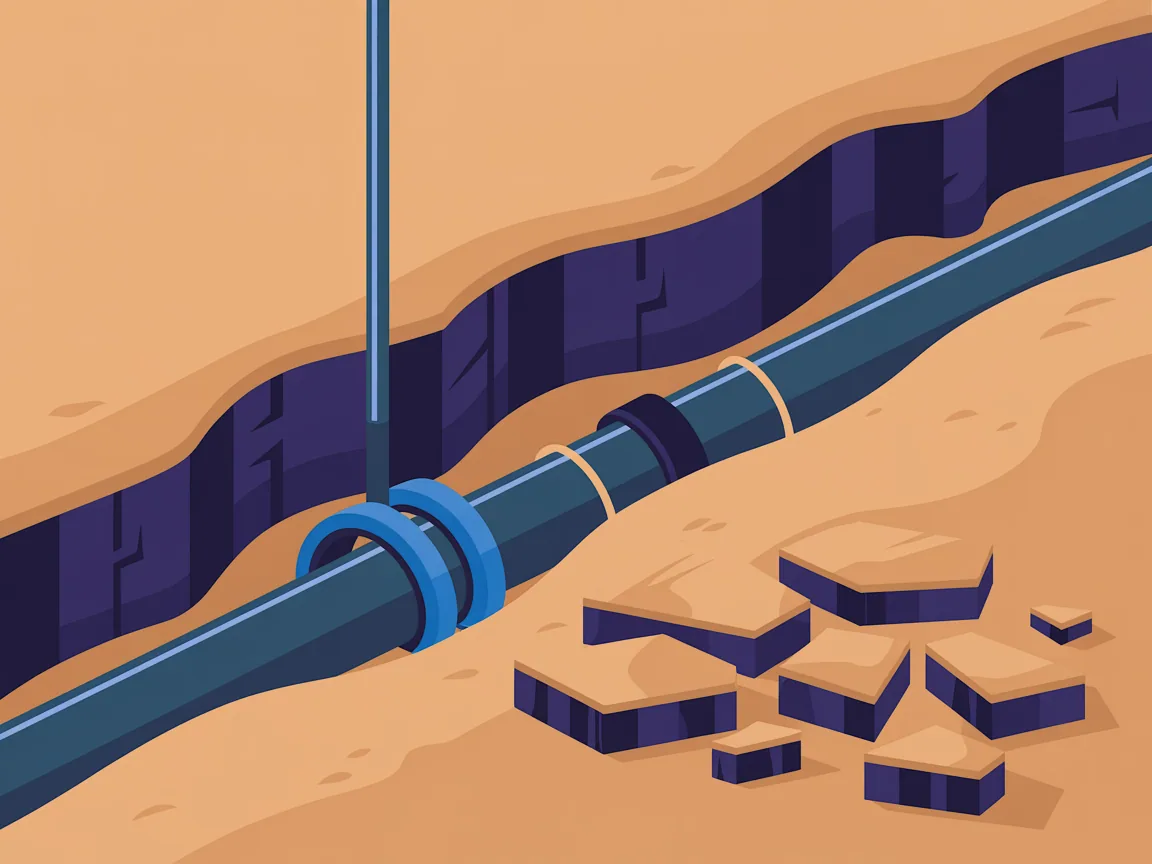
A repair suits an isolated defect with serviceable pipe around it. The scope should name the affected area and state how the completed work will be tested before the line returns to service.
Replacement earns its place when deterioration is not confined to one point, when the layout no longer supports the appliances connected to it, or when a prior installation cannot be corrected where it sits. Age on its own is not a diagnosis.
An inspection evaluates accessible piping, valves, connectors, and the relationship between the supply and the appliances it feeds. It is worth doing before an appliance change, after concerns about earlier work, or when a home has been altered without records. Ask what it covers and what stays concealed.
What the sign is telling you
Finding the source is the utility's job, not the homeowner's. Do this first, in order, and read nothing further until everyone is out.
JB is the licensed piping-repair contractor for after the utility makes the property safe: locating the defect, correcting it, and pressure testing the line under permit before it returns to service. That role is sequential, not a substitute for the emergency call. For what follows the utility visit, see emergency plumbing.
Questions people ask
Tell us which appliance
An appliance move, a new run, or a line that needs repair. Each one is a different conversation. Tell us whether it is new or being relocated, and what you know about the existing supply.
An active gas smell is not a form. Leave the building and call 911 and the gas utility from outside first. This request is for planned installs, repairs, replacements and inspections.
Open 24 hours a day, 7 days a week · Family owned in Mesa since 1981 · ROC #260511 · CR-77 plumbing