Drains & Sewer5 min read
Sewer Line Repair Responsibility: Start With the Boundary
Sewer responsibility depends on the failed pipe, utility boundary, property documents, and local rules. Learn how to locate the problem first.
By JB Water & Air · Published Nov 14, 2025 · Reviewed Sep 2, 2026
- 4.9 · 580 Google reviews
- CR-77 licensedROC #260511 · CR-77
- Open 24/7
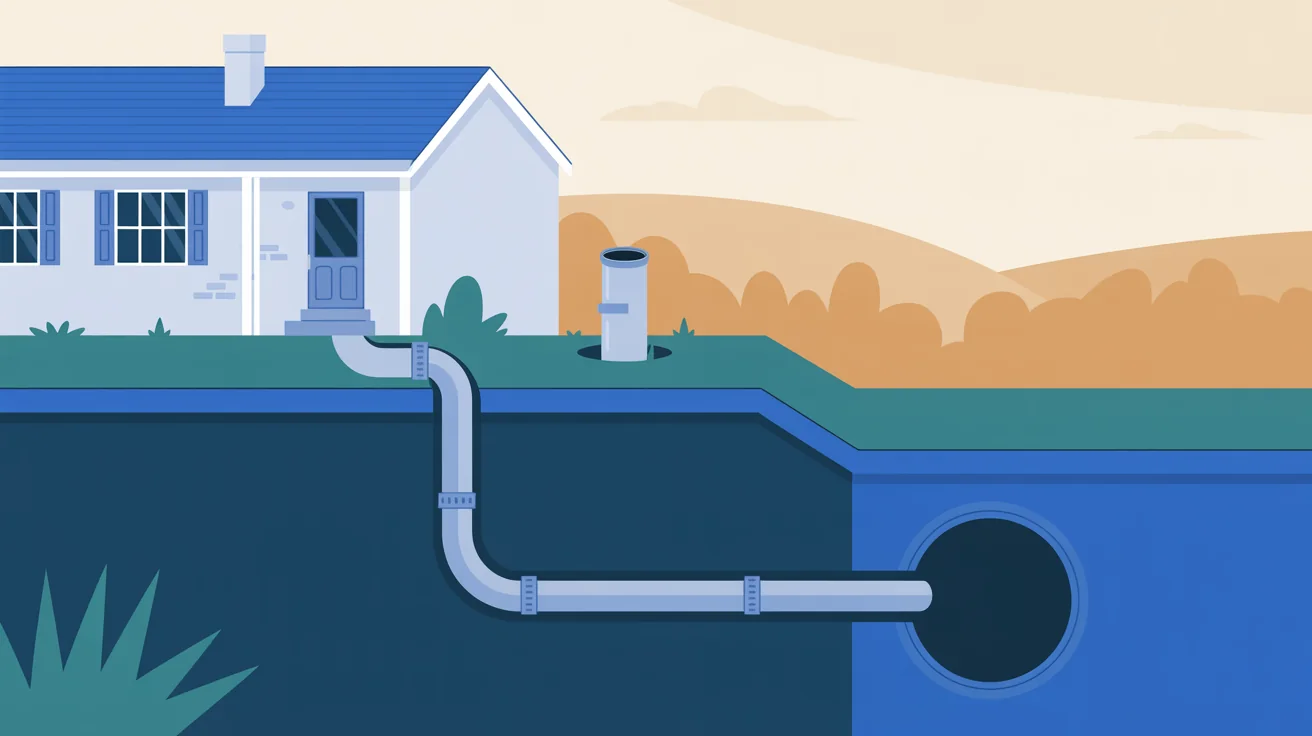
Responsibility for a sewer repair usually follows the location of the failed pipe, but the dividing line is not identical everywhere. The private building drain, private lateral, connection, easement, public right-of-way, and municipal main can be treated differently by local rules and agreements.
That means “it is under the street” or “it is past my property line” is not enough to decide who pays. First establish the service provider, applicable boundary, and documented location of the defect. Then review ownership, lease, association, warranty, and insurance documents as needed.
For help investigating a private line in Mesa, see JB Water & Air’s sewer-line service page. A plumber can document plumbing conditions; the utility, governing documents, insurer, or legal adviser decides responsibilities within its authority.
Understand the pieces of a sewer system
Inside a building, fixture drains join larger branch and building drains. Those pipes connect to a private sewer lateral or building connection that carries wastewater toward a public sewer main. A cleanout provides access at one or more points.
Where ownership changes depends on the utility and local rule. Potential boundaries include the building, property line, easement, connection at the main, or a defined location in a street or alley. Private systems such as septic tanks have a different ownership and regulatory structure.
Do not assume that a city mailing address identifies the wastewater provider. Confirm the actual provider for the service address.
A current Mesa example
The City of Mesa wastewater page says the property owner is responsible for maintaining and cleaning the lateral line, while the city is responsible for its main line. Mesa’s published materials also describe special details for damaged or broken building connections in some off-property street or alley locations.
Those details matter. Homeowners should read the current city information and contact Mesa directly before authorizing work on the assumption that any one sentence settles a particular case. Policies, code text, evidence requirements, and fees can change.
The City of Mesa advises contacting its wastewater operation when a licensed plumber determines that the problem lies in the public main. The city may require specific documentation or a signed form. A statement from a contractor that “it looks like the city” is less useful than a located and recorded finding that follows the utility’s current process.
The plumber’s job is to locate and document
A sewer backup shows that flow is obstructed; it does not reveal ownership by itself. A plumber may begin by identifying affected fixtures, checking accessible cleanouts, attempting to restore flow, and inspecting the accessible line.
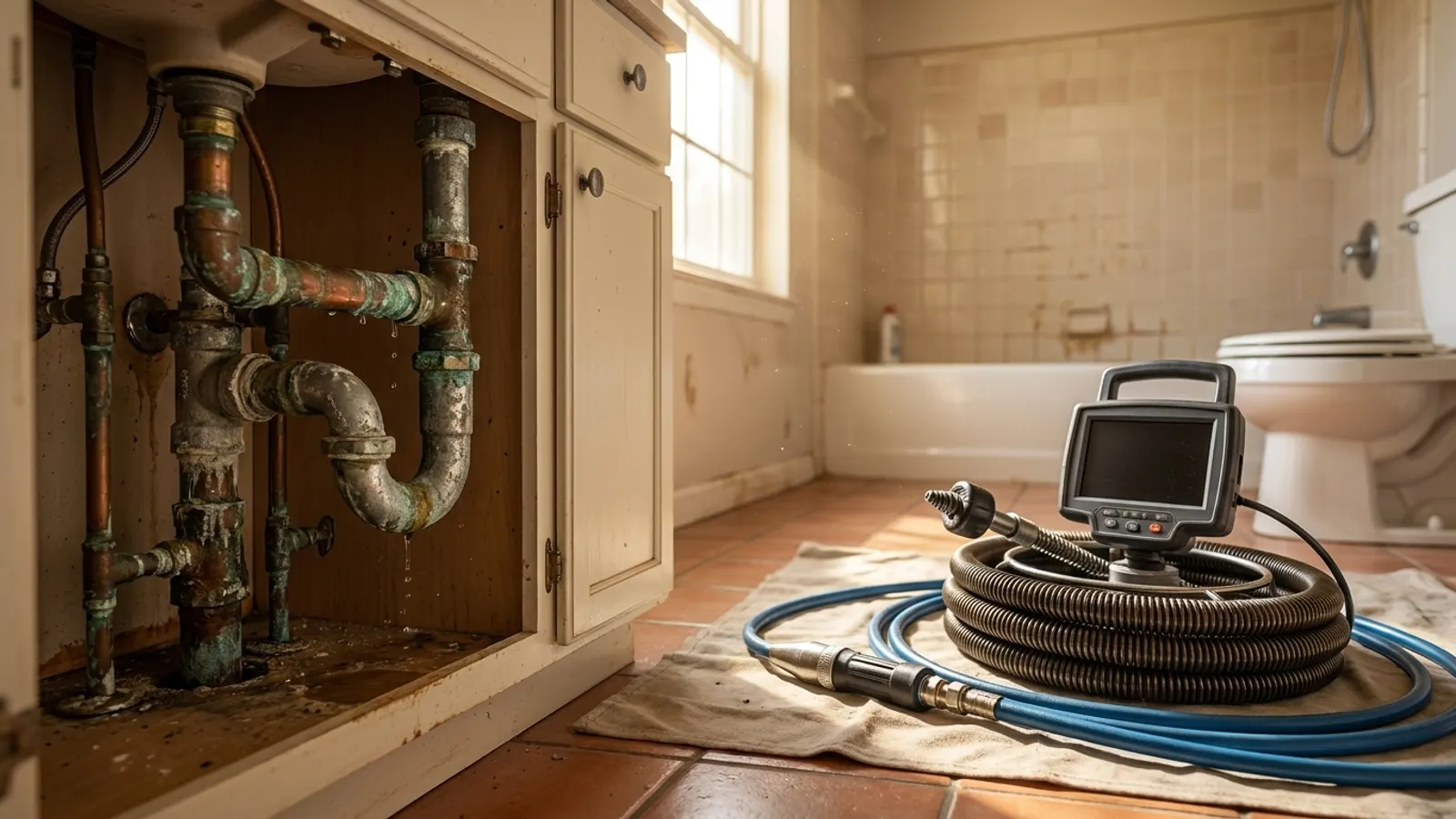
Camera inspection can sometimes show roots, a break, offset, collapse, buildup, or another condition. Locating equipment may help estimate where an observed defect sits relative to the surface. Limitations should be documented: standing water, a fully blocked line, bends, poor access, and pipe condition can prevent a complete inspection.
If evidence is needed for a utility, insurer, association, seller, landlord, or warranty provider, ask what format that party requires before paying for documentation. JB Water & Air’s video-inspection page explains the service category, but inclusion, recording, locating, and current price must be confirmed for the job.
Homeowner, landlord, tenant, or association?
Ownership adds another layer. A single-family homeowner may control the private lateral. In a rental, the lease and landlord-tenant law affect who must arrange and pay for repairs, while tenant-caused damage may be handled separately. In a condominium or planned community, declarations and maintenance maps may divide responsibility among the owner and association.
Commercial properties may share laterals or have recorded utility and access agreements. A buyer or seller may also have obligations in a purchase contract.
These are legal and contractual questions. A plumbing company should not issue a universal ruling about liability. When documents conflict or the amount is significant, consult the utility, property manager, association, insurer, or a qualified Arizona attorney as appropriate.
Does insurance or a service-line plan pay?
Responsibility for maintaining a line and insurance coverage for a loss are separate questions. A homeowner can be responsible for a private lateral even when a particular repair or resulting damage is covered by an endorsement or service-line plan. Conversely, ownership does not guarantee coverage.
Review the policy, exclusions, deductible, endorsements, notice duties, and mitigation requirements. Some contracts distinguish pipe repair, excavation, landscaping, sewage cleanup, and resulting interior damage. Contact the carrier before permanent work when safe and practical, while still taking reasonable steps to prevent additional damage.
Mesa publishes information about an optional third-party service-line warranty program, but participation, eligibility, current terms, and claim decisions belong to that provider. Do not describe the program as city-funded insurance or assume that every repair qualifies.
What to do during a sewer backup
Stop using water if additional flow is worsening the backup. Keep people and pets away from wastewater and contaminated surfaces. Avoid running appliances, flushing toilets, or adding drain chemicals in hopes of forcing the line open.
If a strong sewer-gas odor creates an immediate concern, leave the building and contact the responsible utility or emergency service from a safe location. Do not enter a confined space or sewer structure.
Document affected areas before cleanup when safe, then follow qualified sanitation and restoration guidance. Drain clearing, pipe repair, and contaminated-material cleanup may involve different providers and scopes.
A responsibility checklist
Before approving a major repair, confirm:
- The actual wastewater utility for the address
- The utility’s current published maintenance boundary
- The pipe segment and defect location
- The evidence and format required by the utility
- Property, lease, association, or shared-line documents
- Permit and right-of-way requirements
- Insurance, endorsement, or service-contract notice requirements
- The proposed repair boundary and restoration scope
JB Water & Air is a family-owned Mesa plumbing company founded in 1981. For a private drain or sewer concern, review drain-cleaning services and contact JB Water & Air with the address, affected fixtures, cleanout location, and any utility instructions. Confirm current scope and pricing directly. Final responsibility should be based on the located defect and authoritative documents, not a generalized online answer.