Heating & Cooling5 min read
Pre-Summer HVAC Maintenance Checklist for Mesa Homeowners
Use this 10-point Mesa HVAC checklist to handle safe homeowner checks, document changes, and know which tasks require a licensed technician.
By JB Water & Air · Published May 12, 2026 · Reviewed Sep 2, 2026
- 4.9 · 583 Google reviews
- CR-39 licensedROC #341937 · CR-39
- Open 24/7
A useful pre-summer HVAC checklist separates safe homeowner observation from work that belongs inside electrical, refrigerant, combustion, or equipment compartments. Before Mesa’s longest cooling runs, confirm airflow paths are open, the thermostat behaves normally, the outdoor unit is unobstructed, drainage shows no obvious trouble, and a qualified technician has time to investigate anything unusual.
The U.S. ENERGY STAR maintenance checklist recommends pre-season professional checks and regular filter attention. The exact work and frequency should follow the equipment manufacturer and the condition of your system, not a one-size-fits-all tune-up claim.
1. Identify the filter and check its condition
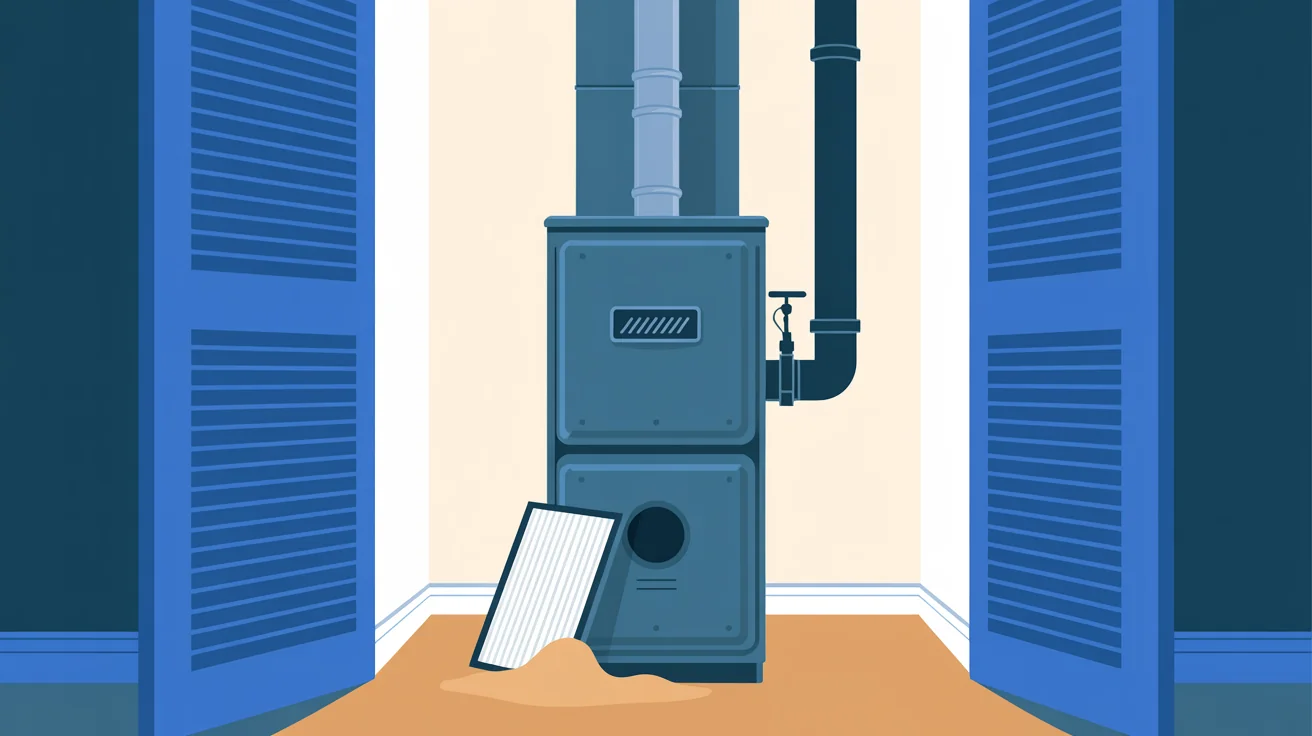
Find every filter location; some homes have one at a central return, others at the air handler, and some have more than one. Record the exact dimensions, orientation arrow, type, and installation date. Use a filter approved for the system rather than choosing solely by the highest rating on the shelf.
Inspect it more often during heavy use until you learn how quickly it loads in your home. Pets, remodeling, dust, occupancy, and filter area all affect the interval. A filter that collapses, whistles, does not fit its rack, or becomes dirty unusually fast deserves attention because airflow matters to both comfort and equipment operation.
2. Make sure returns and supply registers are open
Walk the home and look for furniture, rugs, boxes, or closed doors blocking return grilles or supply registers. Do not close multiple registers as an improvised zoning strategy unless the system was designed for it. Restriction can change pressure and airflow.
Note rooms with clearly different airflow, new whistling, or doors that move when the blower starts. Those observations can help a technician evaluate the distribution system rather than focusing only on the outdoor unit.
3. Test the thermostat before peak conditions
Check that the thermostat display is stable, the date and schedule are correct, and batteries are replaced if the model uses them. Set a modest cooling call and observe whether the indoor blower and outdoor unit start normally. Do not force rapid on-off cycles; many controls intentionally delay restart to protect equipment.
Compare the displayed temperature with the comfort in the area, but do not treat a phone or inexpensive room sensor as a calibrated diagnostic instrument. If the system does not respond, review the thermostat manual and arrange AC repair diagnosis rather than opening equipment panels.
4. Clear the area around the outdoor unit
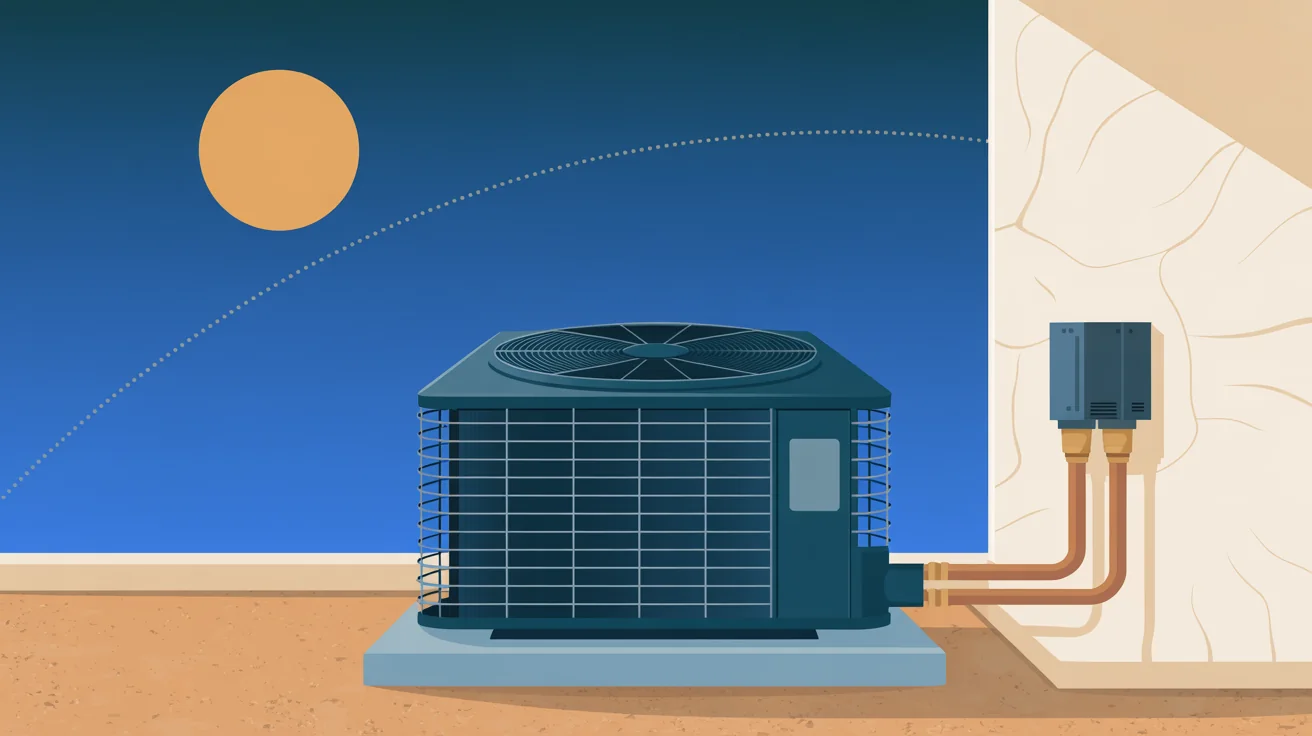
With the unit operating only from a safe distance, or turned off using the normal thermostat control for closer visual work, remove loose leaves, bags, or stored items from the surrounding area. Trim vegetation according to the manufacturer’s clearance guidance. Maintain access for service.
Do not reach through the grille, bend fins, remove cabinet panels, or place objects on top of the unit. The fan can start automatically, and electrical components may remain energized even when the thermostat is off.
5. Inspect the outdoor coil without pressure washing it
Look through the protective grille for heavy debris, matted material, damaged fins, oil-like residue, or physical impact. A garden hose, pressure washer, household cleaner, or improvised chemical can damage fins, electrical parts, coatings, or landscaping when used incorrectly.
Professional coil cleaning should follow the equipment manufacturer and site conditions. If cleaning is proposed, ask which coil surfaces are included, how sensitive components will be protected, and whether the observed condition actually restricts heat transfer.
6. Look for condensate and water warnings
Identify the visible condensate drain termination and any accessible drain pan without opening sealed or energized compartments. Watch for standing water, ceiling staining, algae-like residue, rust, a wet equipment platform, or water where the system has not normally produced it.
Do not pour bleach, acid, or another cleaner into an unknown line. Drain configurations and manufacturer guidance vary, and mixing products can create exposure risks. Water near wiring or energized equipment is a reason to shut the system down only if it can be done safely and call a professional.
7. Check visible duct and insulation condition
From safely accessible areas, look for disconnected sections, crushed flexible duct, torn outer jackets, loose registers, darkened gaps, or damaged insulation. Do not crawl into a hot, confined, or structurally unsafe attic. Do not assume that dust near a grille proves toxic contamination or that sealing visible gaps will solve every comfort problem.
Duct concerns should be evaluated in the context of airflow and the home. A technician may need measurements to distinguish leakage, restriction, insulation, return-air, or equipment issues.
8. Listen, smell, and observe a normal cycle
Record what the system does rather than trying to name the failed part. New rattling, grinding, buzzing, squealing, repeated starting, weak airflow, ice, smoke, or a burning odor deserve attention. A brief dusty smell at seasonal startup differs from persistent electrical or combustion odor, but homeowners should not enter equipment to investigate either one.
Turn the system off and seek appropriate help for smoke, visible wiring damage, breaker trips, water near electrical components, or a strong burning odor. For suspected gas or carbon-monoxide danger, leave the area and contact the utility or emergency services.
9. Assemble the service history and baseline
Write down model and serial numbers, filter details, thermostat settings, prior repairs, warranty documents, and the date symptoms changed. Compare energy use only after accounting for weather, occupancy, rate changes, and thermostat settings; a bill alone cannot identify a failed component.
This record makes a professional visit more useful. It can also reveal patterns such as repeated drain trouble, recurring electrical-component failure, or rooms that have never been comfortable.
10. Schedule qualified pre-season maintenance
A professional AC maintenance visit should have an agreed scope. Depending on the equipment, that may include checks of airflow, temperature change, controls, drainage, electrical condition, refrigerant-circuit operation, indoor and outdoor coil condition, and safety functions. Ask what will be measured, what is visual only, and how any recommendation will be documented.
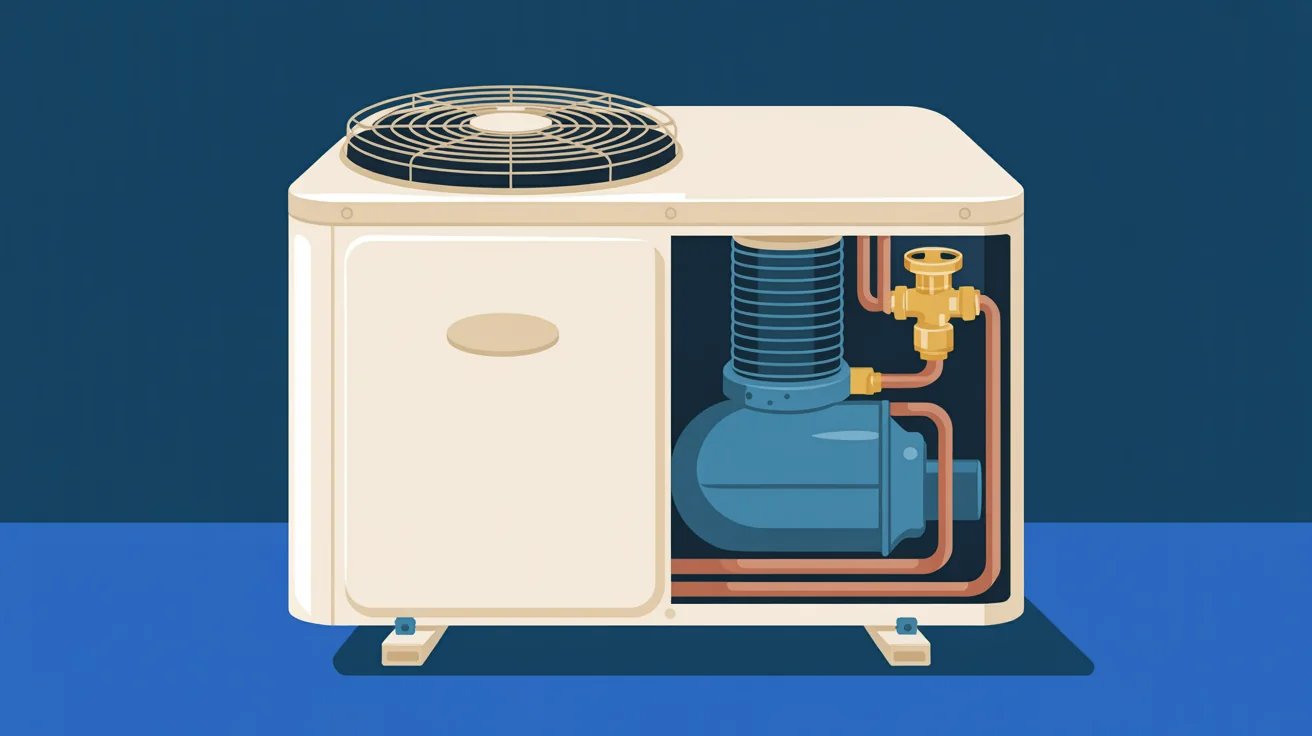
Refrigerant handling, live electrical testing, capacitors, contactors, motors, sealed components, fuel controls, and internal cleaning are not homeowner checklist items. They require appropriate training, tools, and licensing.
Use the visit to distinguish maintenance from repair
Maintenance is inspection and routine system care. Repair corrects a confirmed fault. Replacement is a separate design and installation decision. If a tune-up uncovers trouble, ask for:
- The symptom and measurement that support the finding
- Whether the issue is urgent, developing, or optional
- The repair scope and what it is expected to change
- Any remaining known problems
- A separate AC installation proposal only if replacement is genuinely being considered
A maintenance visit cannot guarantee no summer breakdown. It can create a better baseline and give the homeowner evidence for planning.
Mesa HVAC maintenance with a clear scope
JB Water & Air is a family-owned Mesa company serving the area since 1981 under Arizona HVAC license ROC #341937 (CR-39). A technician can assess the system and explain findings without turning a generic checklist into an automatic repair list.
To plan pre-summer service or discuss a change in operation, contact JB Water & Air at (480) 969-3193. Provide the system type, age if known, recent symptoms, and service history. Appointment availability and timing are confirmed when you call.