Water Quality5 min read
Are Water Softeners Banned? What Restrictions Usually Target
Some local rules restrict self-regenerating softeners or brine discharge, not every softener statewide. Learn why and what to verify before buying.
By JB Water & Air · Published Feb 5, 2026 · Reviewed Sep 2, 2026
- 4.9 · 582 Google reviews
- CR-77 & CR-39 licensed
- Open 24/7
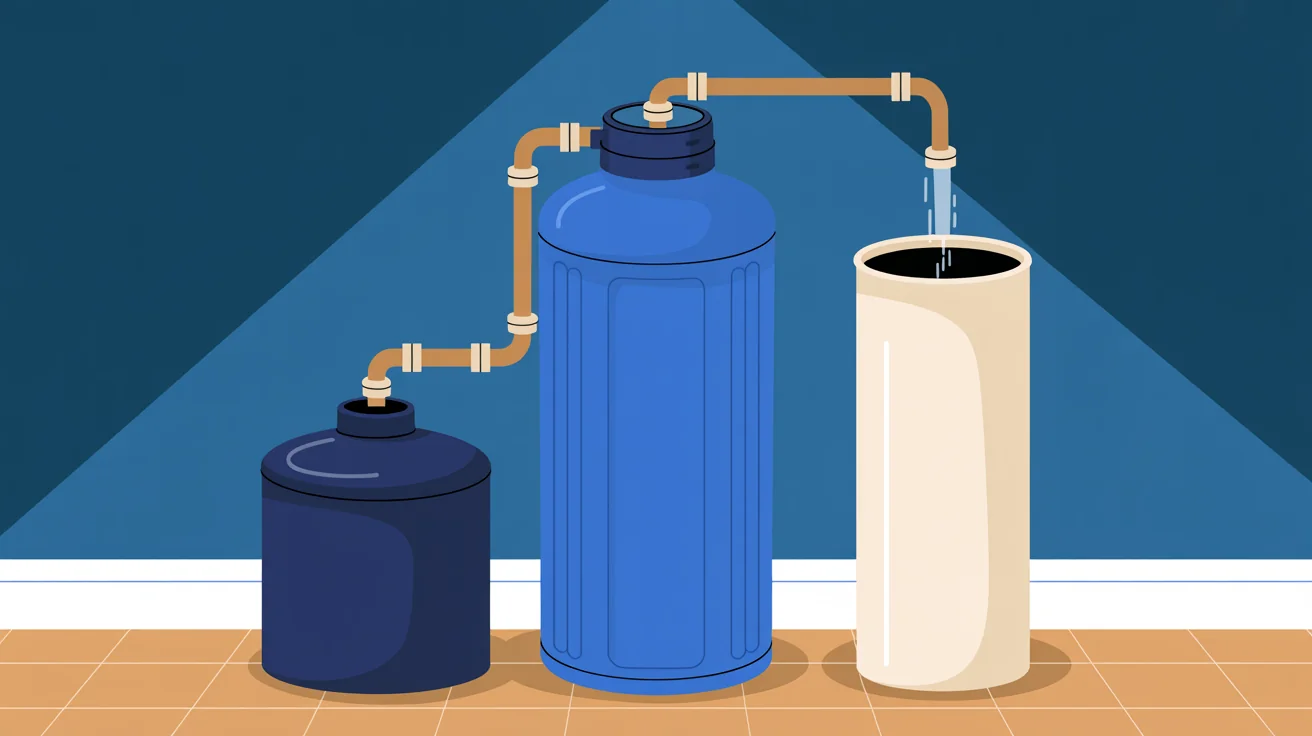
“Water softeners are banned in some states” is too broad to be useful. Restrictions often apply at the city, utility, wastewater district, or regional level, and they may target a particular kind of self-regenerating ion-exchange softener or the discharge of regeneration brine, not every device sold as a softener.
Rules can change. Before purchasing equipment, confirm the current requirements for the service address, wastewater provider, and discharge method. A national article cannot issue a code or legal determination for a local installation.
JB Water & Air’s water-treatment service page explains the equipment category. This guide explains why some jurisdictions regulate it.
What a conventional softener does
A cation-exchange softener reduces calcium and magnesium hardness by exchanging those ions with sodium or potassium ions held on resin. When the resin reaches its working capacity, the unit regenerates with a brine solution and sends a wastewater stream to an approved discharge point.
The U.S. EPA’s WaterSense information on cation-exchange softeners notes that regeneration can use both water and salt. The amount depends on hardness, household water use, system capacity, settings, and equipment efficiency.
This regeneration process is the center of many restrictions. The rule is usually not based on the idea that softened water is universally dangerous inside the home.
Why wastewater agencies care about brine
Regeneration wastewater contains the hardness minerals removed from the water along with chloride and sodium or potassium from the regenerant. In some wastewater systems, those dissolved salts are difficult to remove through ordinary treatment.
Higher salinity can complicate wastewater treatment, water reuse, discharge compliance, and management of receiving soils or waters. The importance varies by local source water, treatment plant, discharge permit, reuse goals, and the number and efficiency of connected softeners.
That is why one community may permit demand-initiated equipment, another may set efficiency standards, another may restrict new self-regenerating units, and another may impose discharge conditions. A statewide yes-or-no list can quickly become inaccurate.
What a restriction might regulate
A local requirement may address one or more of these points:
- installation of new self-regenerating ion-exchange softeners;
- replacement of an existing unit;
- salt or water efficiency;
- regeneration controls and settings;
- connection of backwash or brine to a sewer or septic system;
- use of portable exchange tanks regenerated off site;
- required permits, notices, or inspections; or
- commercial equipment separately from residential equipment.
Read the definitions. Marketing terms such as “salt-free softener,” “conditioner,” “descaler,” and “filter” may not match the legal categories or provide the same treatment result.
Salt-free equipment is not automatically equivalent
Some products marketed as salt-free conditioners aim to alter scale behavior rather than remove calcium and magnesium through ion exchange. That can reduce brine discharge, but it does not mean the treated water has the same measured hardness or behaves identically in every application.
Sediment and carbon filters do not soften water. Reverse osmosis usually treats a smaller drinking-water stream and has its own reject-water and maintenance considerations. Portable exchange systems still use ion exchange, but regeneration occurs elsewhere.
Choose among these options by defining the desired outcome: lower measured hardness, less scale formation, taste or odor improvement, particle reduction, or a named contaminant claim. The Pure Water overview compares treatment roles without treating them as interchangeable.
Efficiency can matter even where softeners are allowed
A correctly sized, demand-initiated system can regenerate based on measured use and capacity rather than an unnecessarily frequent timer schedule. Settings should reflect actual hardness and household demand. Oversizing, incorrect programming, leaks, and fixed cycles can waste water and regenerant.
Ask for the model’s rated capacity and efficiency information, the assumptions used for sizing, and the expected regeneration behavior. Follow the manufacturer’s maintenance instructions. Do not alter discharge plumbing or program settings solely to evade a rule or sales objection.
Septic systems require separate review
A property not connected to a public sewer has different wastewater considerations. Onsite wastewater systems are regulated through state and local programs, and proprietary septic designs may have their own requirements.
Arizona’s Department of Environmental Quality onsite-wastewater page directs property owners to the relevant program and delegated county authority. It does not support a blanket claim that every softener discharge is permitted into every septic system. Confirm the septic design, permit, manufacturer instructions, and current county or state requirements before planning a drain connection.
What to verify in Mesa and the East Valley
Do not rely on the statement “Arizona does not ban softeners” as installation approval. Confirm:
- The actual water and wastewater providers for the address
- Whether the property uses public sewer or an onsite system
- Current local rules for the equipment and discharge
- Permit and inspection requirements
- Any efficiency or regeneration standards
- The approved drain location and air-gap or backflow provisions
- Manufacturer installation requirements
City boundaries, utility boundaries, and wastewater service areas can differ. If a contractor recommends a specific arrangement, ask who verified the applicable rule and when.
Avoid health and performance overclaims
A restriction is an environmental or infrastructure policy, not proof that softened water causes a particular health outcome. Conversely, permission to install a system does not prove that it is the right treatment for a home.
People with medically directed sodium or potassium restrictions should ask a clinician about drinking-water choices. Health questions are outside a plumber’s role. Any contaminant-reduction claim should be tied to the exact treatment product and documented conditions.
JB Water & Air has water and air test information, but the current method, measurements, cost, turnaround, and interpretation need confirmation. A hardness test can inform softener sizing; it cannot establish that water is safe or identify every contaminant.
Ask before equipment is ordered
JB Water & Air is a family-owned Mesa company founded in 1981 and provides plumbing and water-treatment services across its published East Valley area. That does not establish that every softener type or discharge method is approved at every address.
To discuss an installation, contact JB Water & Air with the service address, utility and wastewater provider, septic information if applicable, measured hardness, household demand, and proposed equipment. Confirm current legal requirements with the responsible authority and obtain the installed scope before purchasing a system.