Water Quality5 min read
Hard Water Stains in Mesa: Safe Removal and Prevention
Learn how to identify and clean hard-water scale on glass, fixtures, and tile without damaging surfaces, and how to reduce the deposits that return.
By JB Water & Air · Published Aug 31, 2026
- 4.9 · 580 Google reviews
- CR-77 & CR-39 licensed
- Open 24/7
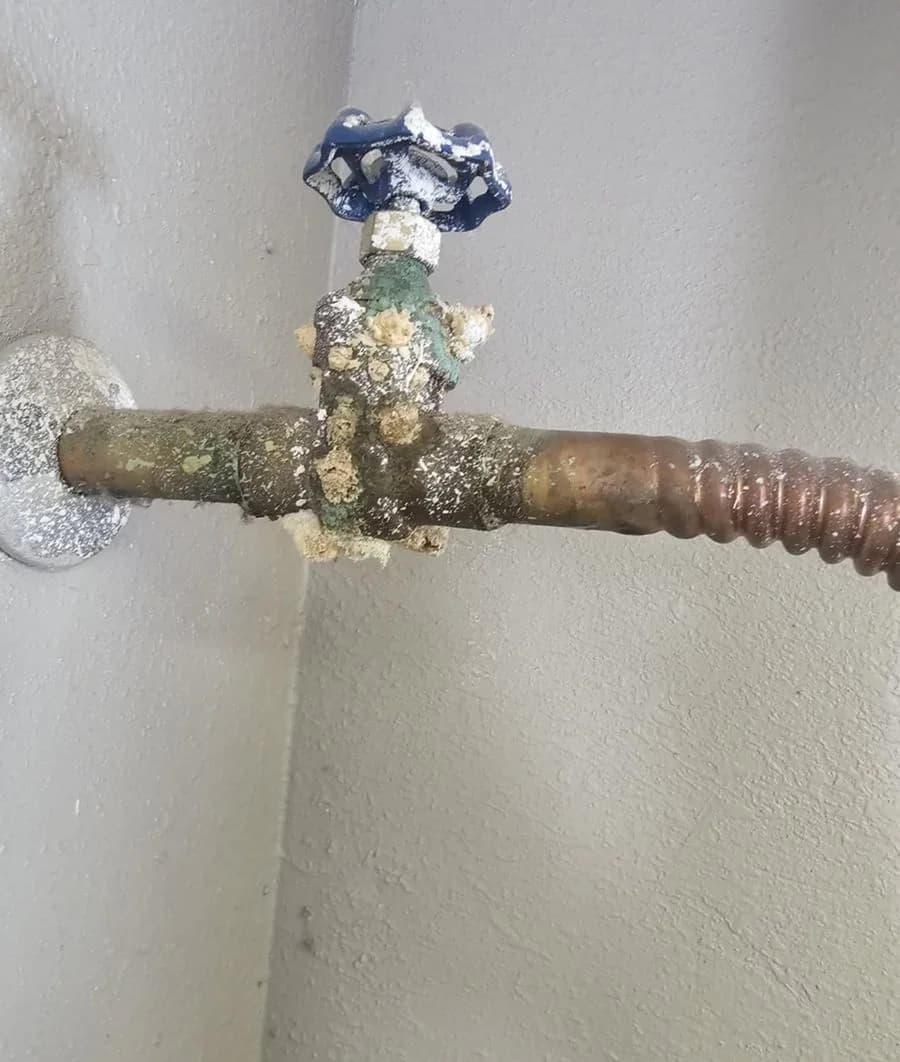
White residue on a shower door or faucet may be hard-water scale, but appearance alone does not prove it. Soap film, cleaning-product residue, corrosion, damaged plating, and permanently etched glass can look similar. The right cleaning method depends on both the deposit and the surface beneath it.
Start gently. Read the surface or fixture manufacturer’s care instructions, test an inconspicuous area, and do not mix cleaning products. Acidic cleaners, including vinegar, can react dangerously with bleach and can damage natural stone, grout, metal finishes, seals, and other materials. More scrubbing is not always more effective.
What hard-water scale is
Hardness comes mainly from dissolved calcium and magnesium. When a droplet dries, some dissolved material can remain as a white or cloudy deposit. Repeated wetting and evaporation can build a crust around an aerator, glass edge, shower fitting, or valve.
Hardness is different from a contaminant-specific safety concern. It can affect cleaning, scale, and wetted equipment without telling you whether the water meets drinking-water requirements. If safety is the question, consult the current water-provider report and use testing appropriate to the concern. The water evaluation guide explains why a simple hardness demonstration is not comprehensive laboratory analysis.
Confirm the surface before choosing a cleaner
The same product can be reasonable on one surface and destructive on another:
- Glass: Light mineral film may respond to a manufacturer-approved acidic cleaner, but scratches or chemical etching will not wash away.
- Chrome or plated fixtures: Some finishes can discolor, pit, or peel after prolonged acid exposure. Use the fixture maker’s directions.
- Ceramic or porcelain tile: The face may tolerate products that the grout, caulk, trim, or surrounding stone cannot.
- Natural stone: Marble, travertine, limestone, and some other stone can etch when exposed to acid. Use a stone-specific method.
- Acrylic, fiberglass, or coated glass: Abrasives and strong chemicals may haze or scratch the coating.
- Outdoor valves and plumbing: White or green buildup can involve scale, corrosion, or a slow leak. Cleaning the outside does not repair a failing valve.
If you cannot identify the material or finish, pause before cleaning it.
A low-risk cleaning sequence
For a surface whose manufacturer allows a mild descaling product:
- Ventilate the area and use the label’s protective-equipment directions.
- Remove loose dust with water and a soft cloth rather than grinding it into the finish.
- Apply the least aggressive compatible product for the label’s stated contact time.
- Keep cleaner away from nearby materials that are not compatible.
- Wipe with a nonabrasive cloth or pad approved for the surface.
- Rinse as directed and dry the surface.
- Repeat only if the care instructions allow it.
Avoid razor blades, pumice, steel wool, or abrasive powder unless the surface manufacturer explicitly permits the method. A tool that removes a deposit can also remove a coating or leave scratches that become more visible in sunlight.
Never combine vinegar, a descaler, toilet-bowl cleaner, bleach, ammonia, or another household chemical. Mixing products can release dangerous gases or create unpredictable reactions. If a mixture has already produced fumes, leave the area and contact emergency or poison-control resources as appropriate rather than trying to neutralize it yourself.
Shower glass: scale or permanent etching?
A chalky film that changes when wet may be a removable deposit. Cloudiness that remains after compatible cleaning may be etched glass or a damaged coating. Continuing with stronger acid or harder abrasives can worsen the surface without restoring clarity.
After cleaning, drying the glass and repairing drips can reduce repeated wetting; neither changes the incoming water.
Faucets, aerators, and shower heads
Scale near an outlet can restrict an aerator or spray nozzle. Before removing anything, close the fixture, protect the finish, and consult its manual. Some aerators contain plastic flow regulators or seals that should not sit in acid. A plated shower head may have a different care method than an uncoated removable insert.
If a fitting is corroded, seized, leaking, or difficult to isolate, do not force it. Twisting a weakened valve or connection can turn a cleaning task into a plumbing leak. JB Water & Air’s licensed Mesa plumbing service can assess a fixture or valve problem; the company’s plumbing license is ROC #260511, classification CR-77.
Why the stains return
Cleaning addresses residue already deposited. New droplets can leave more when they evaporate. You can reduce visible recurrence by drying surfaces, fixing drips, following equipment maintenance, and using rinse products only when compatible with the material.
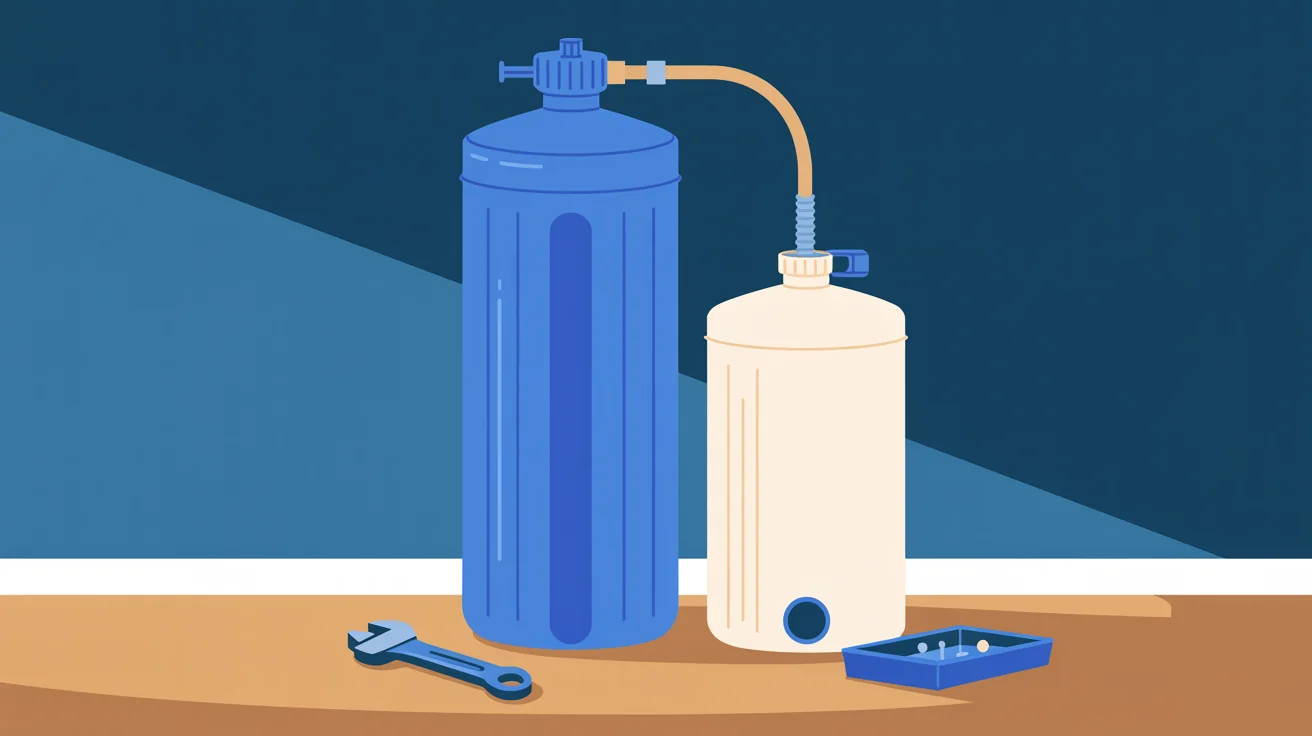
Changing the water requires a separate decision. A conventional ion-exchange softener is designed to reduce calcium and magnesium hardness. It can reduce hardness-scale formation, but it does not clean existing deposits, remove every dissolved substance, or guarantee that every glass dries without a mark. Sodium or other exchanged ions and any untreated substances can still remain.
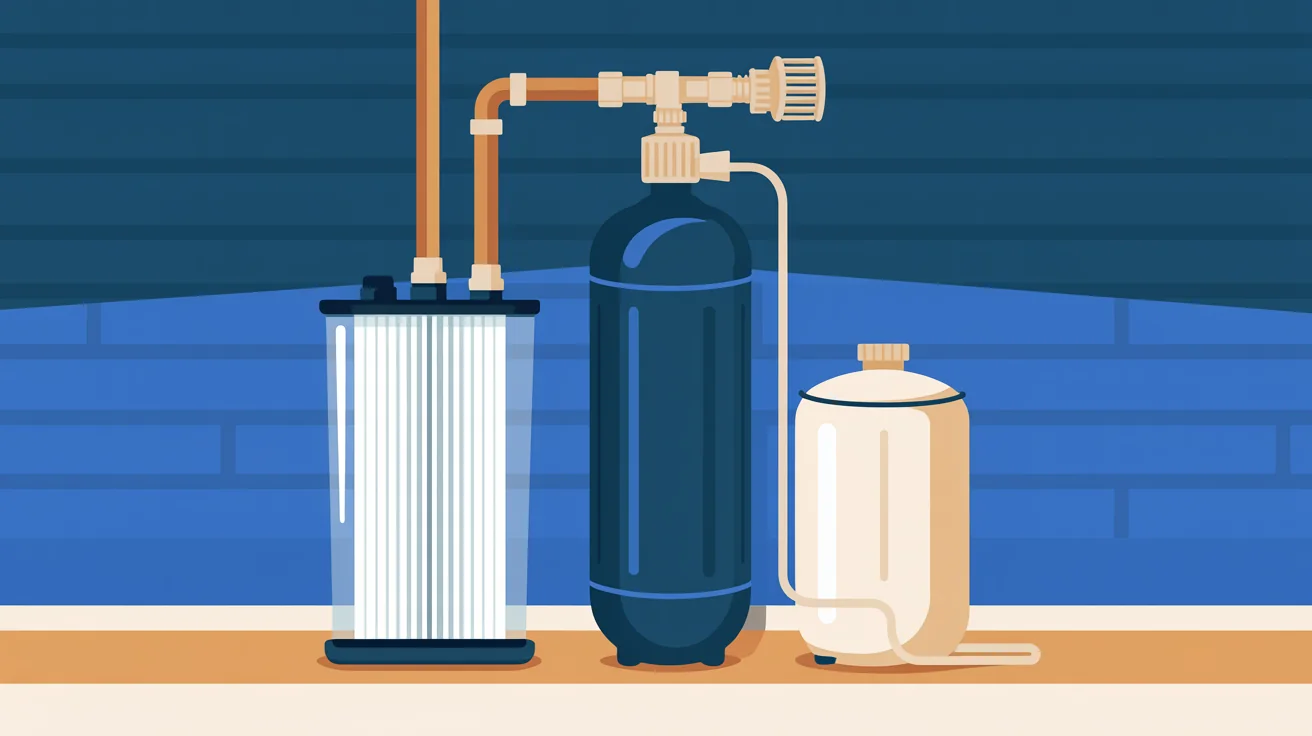
Whole-home filtration is not automatically a hardness solution. Carbon, sediment media, membranes, softening resin, and distillation perform different jobs. JB Water & Air’s water-treatment overview and Pure Water comparison describe the distinctions.
When to consider treatment
Look beyond one shower door. Treatment may be worth comparing when scale appears repeatedly across the property, aerators clog, soap performance is frustrating, or deposits affect water-using equipment. Before choosing a system, ask for:
- The incoming hardness result and test method
- The treatment target and how performance will be verified
- Flow, pressure, regeneration, drain, and power requirements
- Salt, water, filter, cleaning, and service needs
- Product-specific reduction claims and certifications
- A written installation scope and warranty terms
JB Water & Air began with John Bevell’s water-distillation work in 1981, but no single method is right for every goal. The site does not establish a free test, a particular test panel, or instant results. Contact JB Water & Air at (480) 969-3193 to describe the deposit, affected surfaces, water source, and any treatment equipment, then confirm what evaluation is currently available.
Bottom line
Identify the material before treating the stain. Use the least aggressive cleaner allowed by the manufacturer, never mix chemicals, and stop if a finish changes. Cleaning removes existing residue; drying and leak repair reduce new deposits; correctly selected softening can reduce hardness scale at the source. A drinking-water safety question, however, needs official information and appropriate testing, not a judgment based on spots.
Frequently asked questions
- What removes hard water stains?
- A compatible mild acidic cleaner may dissolve light mineral scale on an acid-resistant surface. Follow the fixture or surface manufacturer's instructions, test a hidden area, and use a product labeled for the material. Heavy buildup or etched surfaces may need professional assessment.
- Why do hard water stains keep coming back?
- Cleaning removes deposits already on the surface but does not change the minerals in incoming water. Droplets can leave new residue as they dry. Wiping surfaces dry, fixing drips, and appropriately selected hardness treatment can reduce recurrence.
- Can vinegar damage fixtures?
- Yes. Acid can etch natural stone and may harm grout, finishes, plated metals, seals, or other components. Do not assume vinegar is safe for a surface; check the manufacturer's care instructions and never mix it with bleach or another cleaner.
- Will a water softener remove existing stains?
- No. A conventional softener is designed to reduce hardness minerals in water going forward. It does not clean deposits already bonded to glass or fixtures, and it does not guarantee spot-free surfaces under every condition.
- Is hard water unsafe to drink?
- Hardness describes dissolved minerals, mainly calcium and magnesium; it is not itself a complete drinking-water safety assessment. Use the current utility report and appropriate testing for safety questions rather than judging water by scale alone.