Water Quality5 min read
Water Softener vs. Filter in Mesa: Which Fits the Problem?
Compare water softeners and filters by what they actually treat, where they install, and which questions Mesa homeowners should answer first.
By JB Water & Air · Published Apr 3, 2026 · Reviewed Sep 2, 2026
- 4.9 · 580 Google reviews
- CR-77 & CR-39 licensed
- Open 24/7
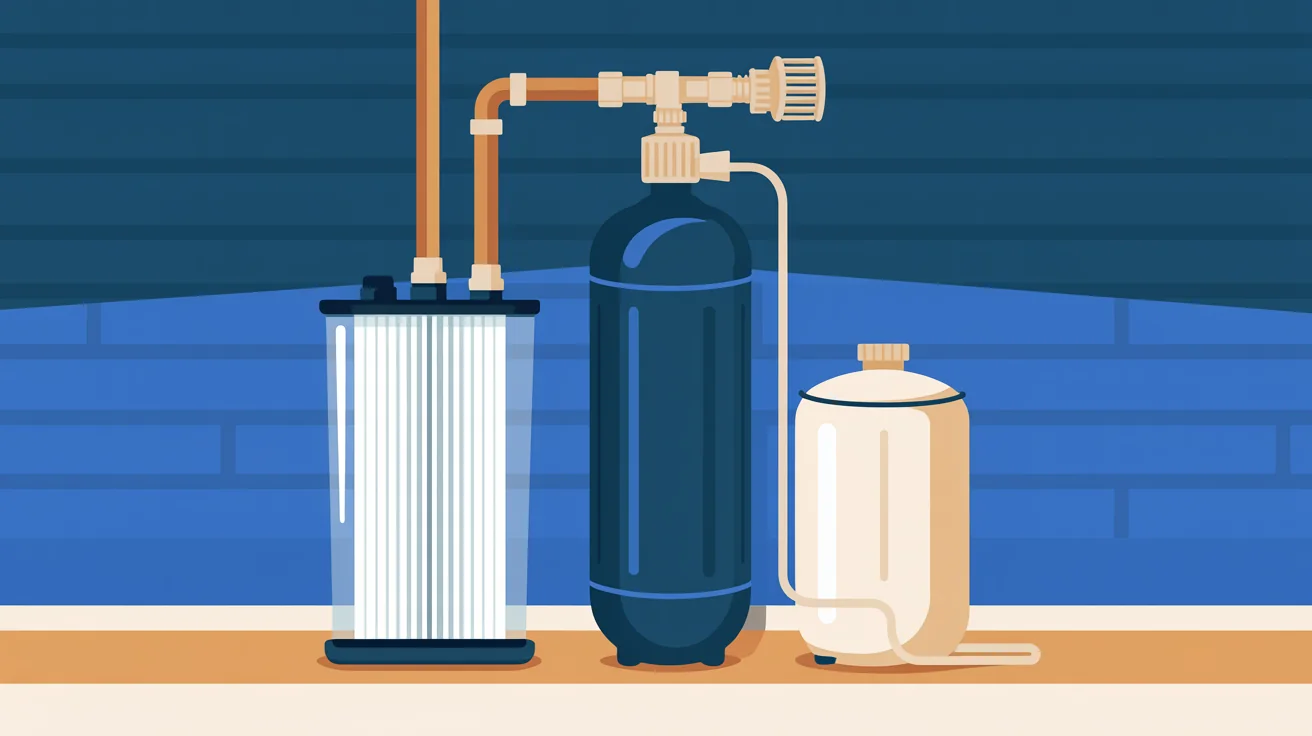
A water softener and a water filter are not competing versions of the same machine. A softener is selected mainly to address hardness minerals. A filter is selected for a particular particle, taste, odor, or contaminant-reduction goal supported by that filter’s design and documentation.
Some Mesa homes may benefit from one, both, or neither. The useful question is not “Which system is better?” It is “What is happening in this water, and which treatment method is designed for that specific condition?”
JB Water & Air’s water-treatment overview describes the available categories. This guide helps you prepare for a more disciplined comparison.
What a water softener does
Conventional ion-exchange softeners reduce calcium and magnesium hardness by exchanging those ions with another ion supplied by the regenerant. That changes how water behaves with soap and reduces the minerals available to form scale.
Common reasons a household investigates softening include:
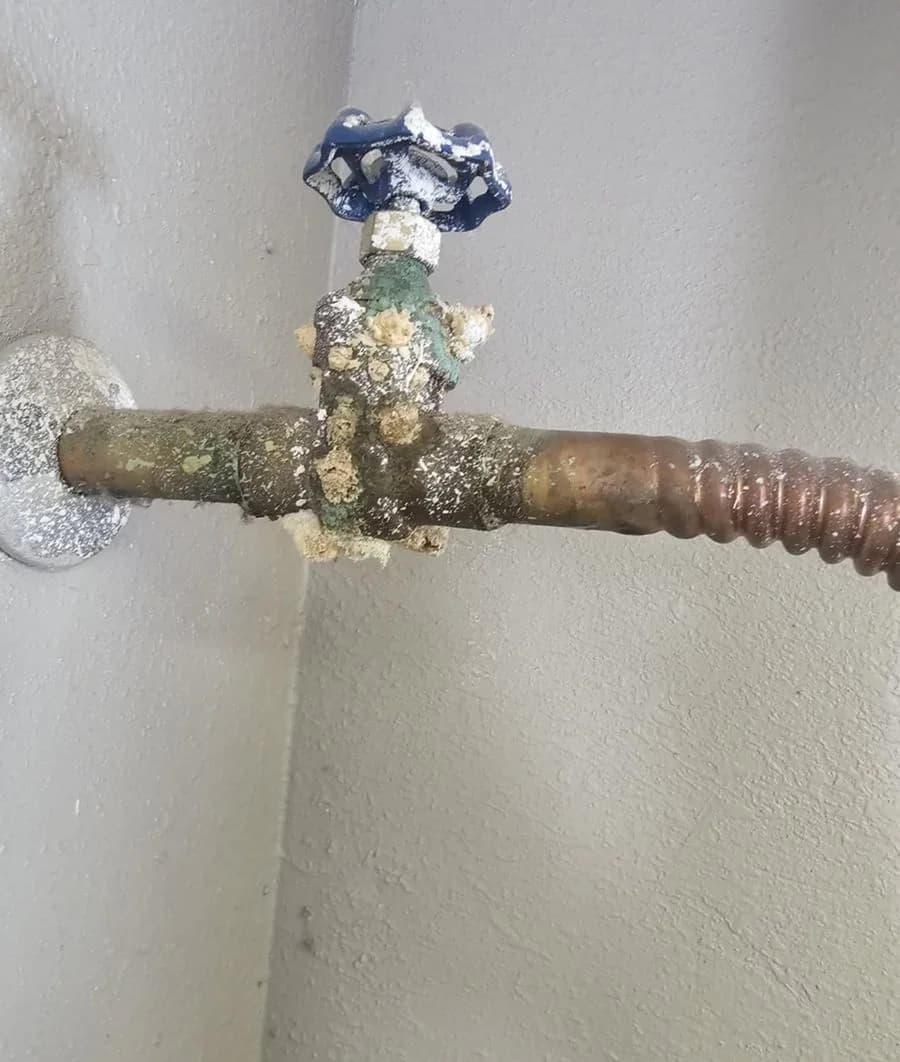
- scale on faucets, shower glass, or heating surfaces;
- spotting after water dries;
- soap or detergent performance concerns;
- mineral accumulation in fixtures or equipment; and
- a measured hardness level the household wants to manage.
A softener is not automatically a drinking-water purifier. It should not be represented as removing every chemical, microorganism, odor, or health concern. Its effect on drinking water and any dietary considerations should be discussed with the appropriate clinician when a person has a sodium-restricted diet or other medical need.
Softener sizing is not just the number of bedrooms on a sales chart. Incoming hardness, household demand, peak flow, regeneration strategy, available drain and power, plumbing layout, and local discharge rules all matter.
What a water filter does
“Filter” is a broad label. Different media and technologies perform different jobs.
Sediment filtration
Sediment filters capture particles within a specified size range. They may protect downstream equipment or address visible material, but they do not establish that water is free from dissolved contaminants or microorganisms.
Activated carbon
Carbon is often used for taste and odor improvement and for specific reduction claims documented for the product. Capacity, flow, contact time, feed-water conditions, and cartridge replacement all affect performance. Carbon does not soften hard water.
Reverse osmosis
Reverse osmosis uses a membrane, usually at a dedicated drinking-water point. It has feed-pressure, drain, storage, prefilter, postfilter, membrane, and maintenance considerations. The exact model’s documentation, not the words “RO system” alone, defines its reduction claims.
Other treatment technologies
Ultraviolet equipment, specialty media, distillation, and other systems have narrower or different purposes. They may require pretreatment and monitoring. No single treatment method should be assumed to solve every water concern.
The Pure Water page provides additional context on softening, reverse osmosis, filtration, and distillation without treating their functions as interchangeable.
Point-of-use versus whole-house treatment
The treatment location matters as much as the technology.
Point-of-use equipment treats water at one fixture, commonly a kitchen drinking tap. It can be practical when the objective is limited to drinking and cooking water. Capacity and flow are designed around that smaller demand.
Point-of-entry or whole-house equipment treats water as it enters the building. It may be appropriate when the concern affects bathing, laundry, fixtures, or downstream equipment. Whole-house systems must handle the home’s peak flow without creating unacceptable pressure loss.
Do not install whole-house treatment simply because “more treatment” sounds better. It adds equipment, maintenance, space, and possible plumbing changes. The scope should follow the goal.
A side-by-side decision table
| Household concern | Softener | Filter or other treatment |
|---|---|---|
| Measured hardness and scale | Designed for this purpose | Standard sediment or carbon filtration does not soften |
| Visible particles | Not the primary function | A correctly selected sediment filter may help |
| Chlorine-like taste or odor | Not the primary function | Certain carbon systems may have relevant documented claims |
| A named dissolved contaminant | Do not assume removal | Match a documented treatment claim to the identified substance |
| One drinking tap only | Often broader than needed | Point-of-use treatment may fit, depending on the goal |
| Scale plus a separate taste concern | Softener may address hardness | A separate filter may address the other defined goal |
This table is a screening tool, not a prescription. A smell, stain, total-dissolved-solids reading, or sales demonstration does not identify every water constituent.
Can a home use both?
Yes, when two defined problems call for two different treatment functions. For example, softening may address measured hardness while point-of-use filtration addresses a separate drinking-water preference. The correct order and sizing depend on the equipment, source water, flow, pressure, plumbing, and manufacturer instructions.
Combining equipment also combines maintenance. Salt or other regenerant, filters, membranes, sanitation, drain flow, bypass operation, and periodic service all need a realistic plan. Ask what happens if a cartridge is left in service too long or a softener runs out of regenerant.
Avoid bundled claims such as “protects every appliance and removes every contaminant.” Ask for the function of each component and the evidence for each reduction claim.
How Mesa homeowners should evaluate the need
Start with the source. A public-water customer can review the utility’s current consumer information and notices. A private-well owner should use location- and risk-appropriate guidance from qualified agencies or laboratories.
Then document the household pattern:
- Is the issue present on hot and cold water?
- Does it occur at every fixture or only one?
- Is it scale, staining, sediment, taste, odor, or a named contaminant?
- What treatment equipment is already installed?
- Has recent plumbing or utility work changed the water?
- What flow and daily volume must the proposed system support?
If testing is appropriate, define the question before sampling. JB Water & Air has a water and air test information page, but homeowners should confirm the current method, analytes, cost, turnaround, and interpretation. A hardness demonstration is not equivalent to a certified safety analysis.
Compare equipment beyond the purchase price
Ask for the installed scope, model number, capacity assumptions, operating requirements, maintenance schedule, consumables, drain needs, warranty categories, and exclusions. Estimate ownership effort as well as price.
Product performance may depend on pressure, temperature, influent concentration, flow, and replacement timing. If a seller makes a contaminant-reduction statement, ask for documentation tied to the exact model and conditions. Do not rely on a generic certification logo without checking what the certification covers.
JB Water & Air is a family-owned Mesa company founded in 1981, with plumbing and water-treatment services across its published East Valley area. To discuss whether a softener, filter, combined system, or no new equipment fits the observed problem, contact JB Water & Air with the water source, symptoms, existing equipment, and any laboratory or utility information. Confirm the current assessment scope and pricing directly.