Plumbing Guidance4 min read
Vinegar and Baking Soda for Drains: What the Fizz Does
Vinegar and baking soda fizz, but that reaction is not a reliable fix for hair, grease, objects, roots, or damaged drain lines.
By JB Water & Air · Published Apr 7, 2026 · Reviewed Sep 2, 2026
- 4.9 · 580 Google reviews
- CR-77 licensedROC #260511 · CR-77
- Open 24/7
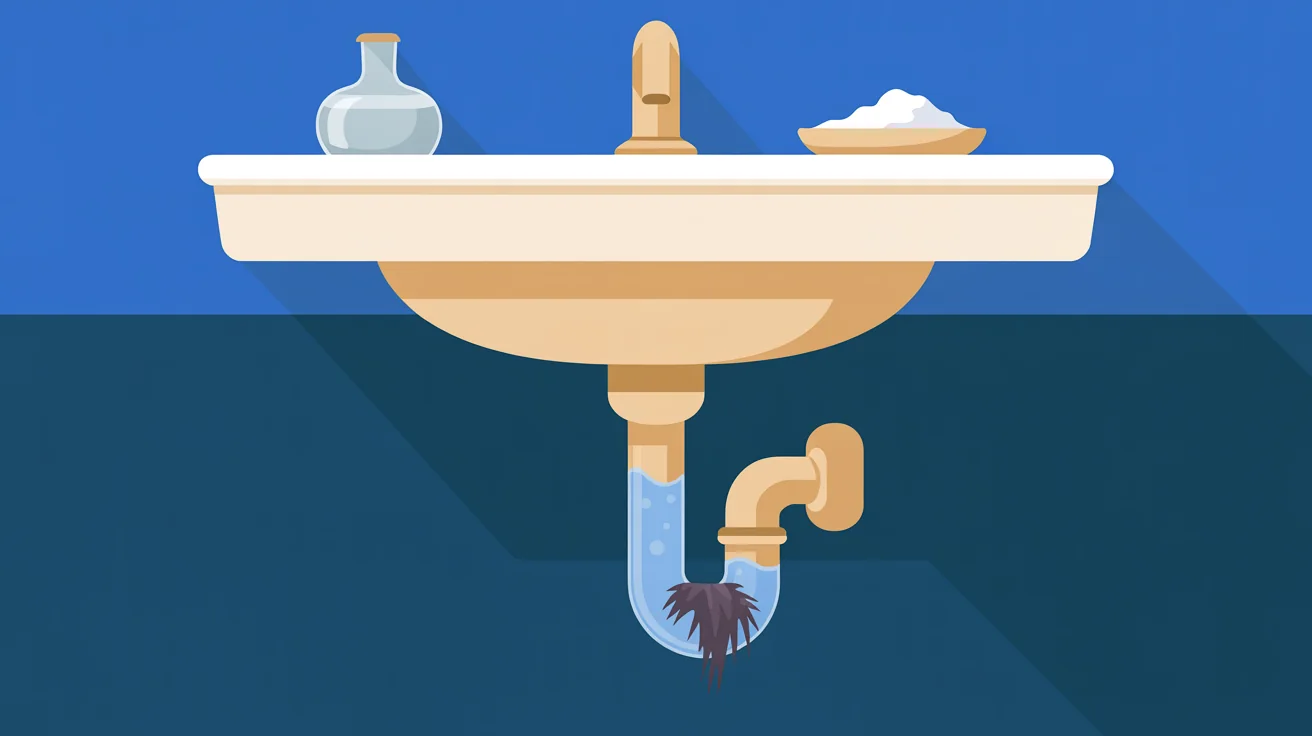
Vinegar and baking soda make an impressive fizz. That visible reaction is why the combination is often presented as a natural drain-clearing method. But fizz is not the same as evidence that a clog has been removed.
The mixture may move light residue in some situations, especially when paired with flushing and mechanical cleaning. It is not a reliable answer for hair mats, dense grease, solid objects, roots, mineral restriction, or broken pipe. It can also complicate matters if another drain chemical is already present.
For a slow or blocked line in Mesa, JB Water & Air’s drain-cleaning page explains how the fixture pattern guides the service method.
What happens when they are combined
Baking soda is sodium bicarbonate, a base. Household vinegar contains acetic acid in water. When combined, they react and form carbon dioxide gas, water, and dissolved sodium acetate. The bubbles and foam are mainly escaping carbon dioxide.
The acid and base also neutralize much of each other. That means the finished mixture does not retain the full cleaning character of either ingredient. The reaction may agitate loose material near the opening, but it does not create a controlled pipe-cleaning force deep in a vented plumbing system.
Claims that the reaction always “pushes the clog deeper” are also too absolute. Drain pipes are vented and contain branches, traps, and open fixture paths; pressure and movement depend on the specific setup. The better criticism is simpler: the method provides little control or evidence about what happened to the obstruction.
Why many common clogs remain
Hair and soap accumulation
Hair forms a physical mesh that catches soap and debris. Fizz may pass around it without pulling the mass out. Removing accessible hair or using an appropriate mechanical tool is more direct when the fixture and safety conditions allow.
Kitchen grease
Grease can coat a longer section of pipe and collect food particles. A brief household reaction is unlikely to restore a heavily restricted line. Repeatedly sending hot water or remedies into a grease problem may move some material without cleaning the full section.
Foreign objects
Caps, toys, wipes, hygiene products, utensils, and other solid items do not dissolve because vinegar and baking soda bubble. They may require fixture removal or mechanical retrieval.
Roots or damaged sewer pipe
No pantry mixture repairs a crack, offset, belly, collapse, or root entry. Multiple fixture backups or recurring main-line symptoms need system-level investigation through a qualified sewer-line service.
The biggest safety rule: do not mix cleaners
Never add vinegar and baking soda, or any home remedy, to a drain that contains a commercial cleaner, bleach, ammonia, acid, alkali, solvent, or unknown product. Mixing chemicals can create heat, splashing, fumes, or other hazardous reactions.
If anything has already been used, keep the container and tell the plumber the exact name, amount, and time. Do not plunge, disassemble the trap, or insert a cable into standing chemical unless the product instructions and appropriate safety guidance support that action.
For exposure, follow the product label and contact poison control or emergency services as appropriate. Do not rely on another household chemical to “neutralize” an unknown product.
Is the mixture ever useful?
It can be a low-stakes cleaning demonstration or may help loosen light, accessible residue when the fixture manufacturer and materials tolerate the ingredients. It may also temporarily change an odor near a drain opening.
Odor can return if the cause is a dry trap, biofilm, a leaking seal, blocked vent, food in a disposal, sewer issue, or another source. Covering the smell is not a diagnosis. Avoid using the mixture on natural stone, specialty finishes, rubber components, or appliances without checking the manufacturer’s care instructions.
Most importantly, do not treat a little faster flow as proof that the line is clean. Watch whether the symptom recurs and whether other fixtures react.
Use the fixture pattern to choose the next step
One slow sink or shower often suggests an obstruction near that fixture. If no chemical is present and the components are in sound condition, removing accessible stopper debris or using a suitable plunger may be reasonable.
One toilet calls for a toilet-specific plunger or auger, not a sink chemistry experiment. Stop if other drains gurgle or back up.
Several affected fixtures can indicate a shared branch or main-line problem. Stop using water if continued flow worsens a backup.
Recurring clogs justify asking why the line blocks rather than repeating the same remedy. A plumber may recommend cable cleaning, water jetting, camera inspection, or pipe repair depending on access and pipe condition. JB Water & Air’s plumbing-services page gives the broader context.
Questions to ask a plumber
Before work begins, report every affected fixture and ask:
- Where does the symptom suggest the obstruction is?
- What access point will be used?
- Which clearing or cleaning method fits the suspected pipe and material?
- Is the goal restored flow, broader cleaning, inspection, or repair?
- What would justify camera inspection or a different method?
- How will additional work be explained and approved?
Disclose vinegar, baking soda, boiling water, commercial products, and any tool already used. That history can change the safest approach.
A practical conclusion
Vinegar and baking soda are not guaranteed pipe destroyers, and they are not dependable drain openers. Their fizz is real chemistry, but it does not identify the clog, document a clean line, or repair damaged plumbing.
JB Water & Air is a family-owned Mesa company founded in 1981. To discuss a persistent or multi-fixture drain problem, contact JB Water & Air at (480) 969-3193. Confirm current availability, scope, and price directly, and tell the team exactly what has entered the drain before service.