
Every drain backing up at once?
Sewer line replacement and repair in Mesa
We repair and replace sewer lines across Mesa, camera first: the line is cleared, filmed and the defect located to a spot and a depth before anyone quotes a dig.
- Open 24/7
- 4.9 · 580 Google reviews
- CR-77 licensedROC #260511 · CR-77
Sewage coming up a drain? Stop running every fixture: toilets, sinks, showers, the dishwasher and the washer. Keep people and pets clear of it, then call. Each fixture you run adds to what is already coming back.
Read the pattern first
One fixture, or all of them
A sewer line repair addresses a fault in the buried building drain that carries waste from the house to the public main, and the right fix depends on where the defect sits, what the pipe is made of, and whether the line around it is still sound.
The most useful question is how many fixtures are involved. It separates a problem local to one room from one shared line seen from three rooms, and it decides what kind of job this is before anything is opened.
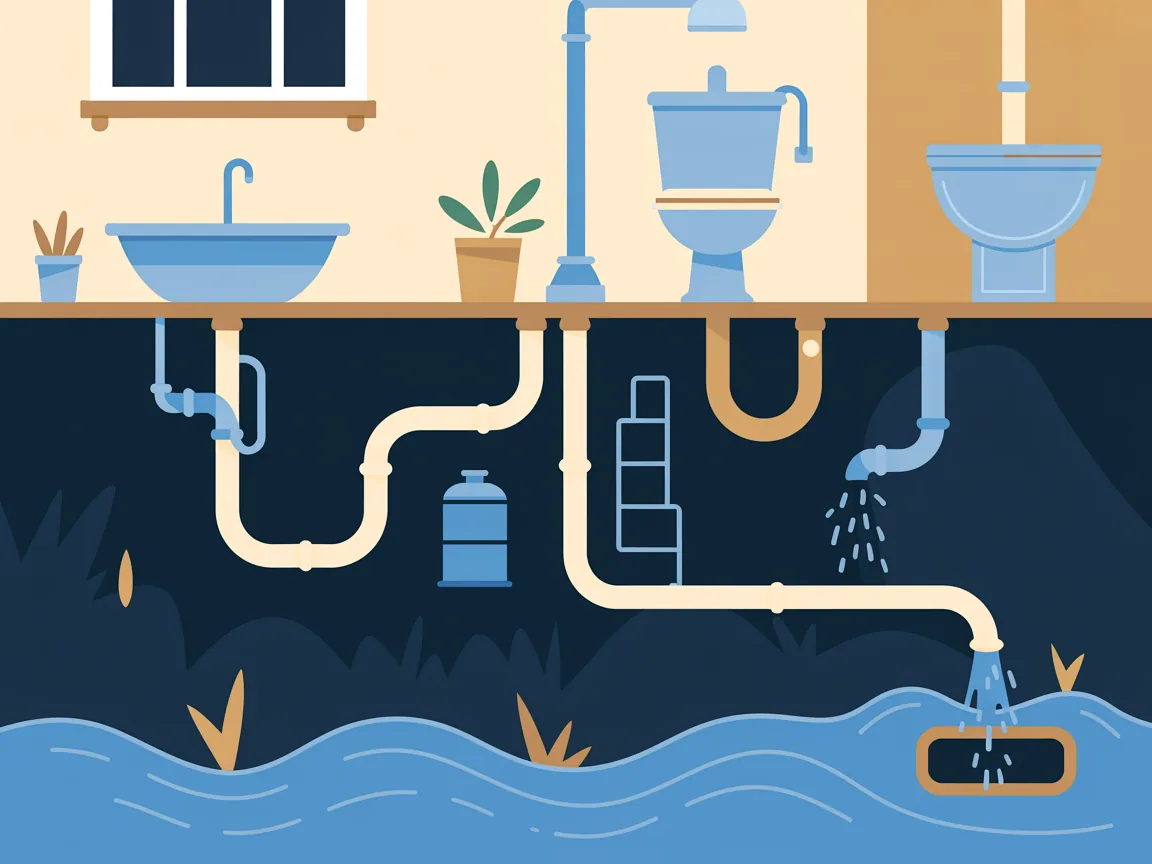
How many fixtures react
A slow bathroom sink with everything else draining normally is usually a trap or branch local to that room. A slow sink, a gurgling shower, and a toilet that pushes water into the tub are one problem, and it sits downstream of all three. Water surfaces at the lowest opening it can find, so the first sign often shows in a room nobody was using.
The signs outside
Along the route, look for ground that stays damp, a patch noticeably greener than everything near it, or a strip of settled soil. That evidence locates the symptom, not the defect. Much of the Valley sits over caliche, a cemented hardpan water does not pass through easily, so water leaving a cracked joint can travel sideways before it surfaces well away from the break.
Timing that points at the line
Note when the backup happens. If it appears when the washing machine dumps, when a softener regenerates overnight, or during the first heavy monsoon rain, the line is failing at high volume rather than at normal flow, which is typical of a partial restriction rather than a fully blocked one.
What symptoms cannot tell you
They cannot tell you the cause. Grease, wipes, roots, a low section, scale, or a broken pipe all produce the same slow drain, and none of them can be fixed from a bottle. Baking soda and vinegar react in the top few inches of a fixture drain and stop there, and chemical drain cleaner standing in a full line becomes a hazard for whoever opens it next. Why plumbers warn against vinegar and baking soda sets out the reasoning.
A symptom narrows the question, it does not close it
- More than one fixture is slow at the same time
- A restriction shared by several branches sits downstream of all of them. The question is how far downstream, and whether anything upstream is still draining normally.
- Flushing a toilet moves water in a nearby tub
- Two fixtures are reacting to each other through a line they share. The question is which of them sits lowest, because that is where it will surface first.
- Gurgling when another fixture drains
- Air is being pushed back through a trap because it cannot pass the restriction. The question is whether the cause is a venting fault or a partial blockage.
- The same clog returns after clearing
- Something at that spot is holding material: roots, an open joint, a low section, or lost pipe wall. The question is what the camera finds at the exact distance where it recurs.
- Sewer smell indoors or along the yard
- The system is open somewhere it should be sealed. The question is whether that is a dried out trap, a loose cleanout cap, or a break in the buried line.
- A wet, sunken, or unusually green patch outdoors
- Water is leaving the pipe underground. The question is where, because caliche can carry water sideways for some distance before it shows at the surface.
Camera first, then locate
The locate is the part that decides the dig
Clearing is a first step, not a verdict. Mechanical clearing or hydro jetting restores flow without putting structure back, so what follows it is what settles the scope.
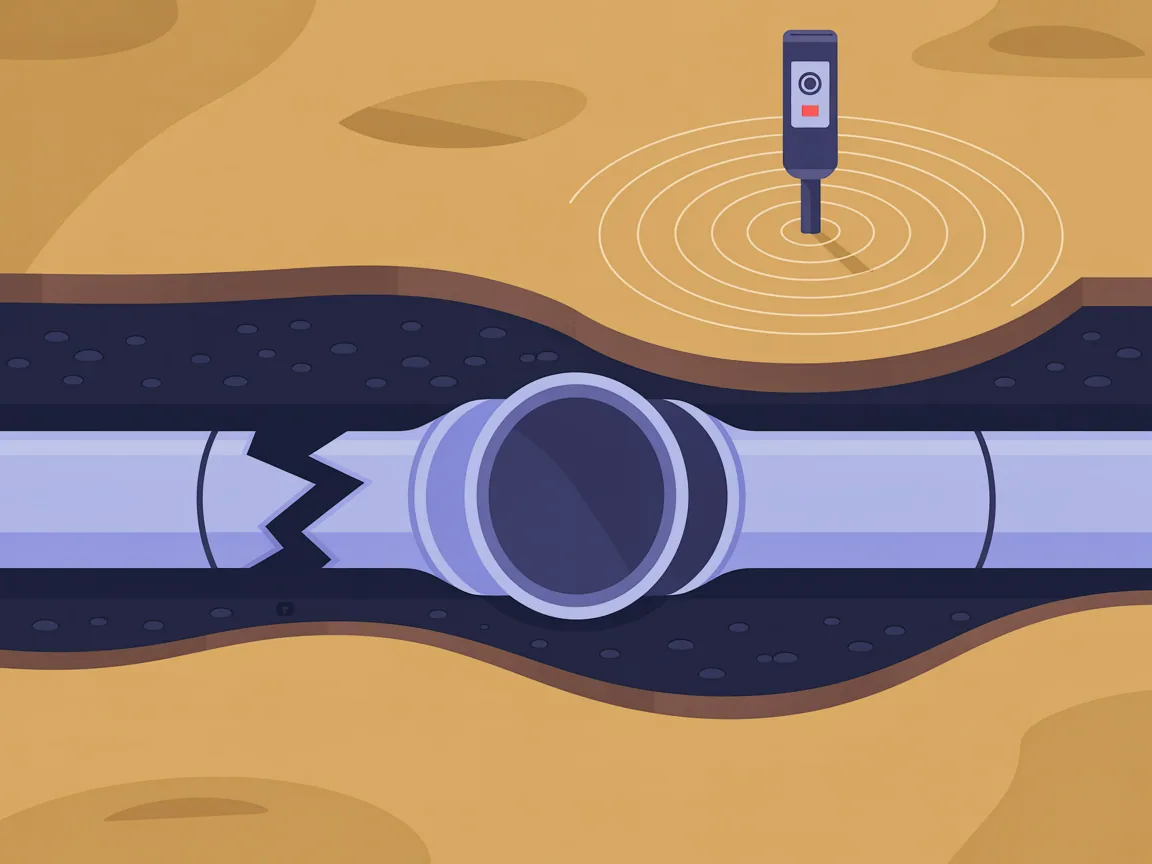
Step one
Open, then inspect
A camera cannot see through a solid plug or standing water. Clearing comes first so the footage shows the pipe wall itself rather than the front face of the blockage, and it should record how far the camera traveled and where it stopped.
Step two
Locate and measure depth
The camera answers what is wrong. A transmitting sonde tracked from the surface answers where it is and how deep. Ask for the depth, not only the distance down the line: in caliche the gap between a shallow line and a deep one is the gap between hand work and heavy equipment.
Step three
Scope to the located defect
Only once the fault has a position, a depth, and a length can anyone say whether this is a spot repair, a section, or the full run. Valley homes built from roughly the mid 1980s are frequently on post-tension slabs, where tensioned cables hold the concrete in compression, so any opening in the floor has to be planned around them. Establish which foundation the house has before an under slab repair is scoped.
Tell us what every fixture is doing and we will tell you what the camera has to settle. Open 24 hours a day, 7 days a week, family owned in Mesa since 1981.
(480) 969-3193Material predicts failure
What is likely under a Mesa house of this age
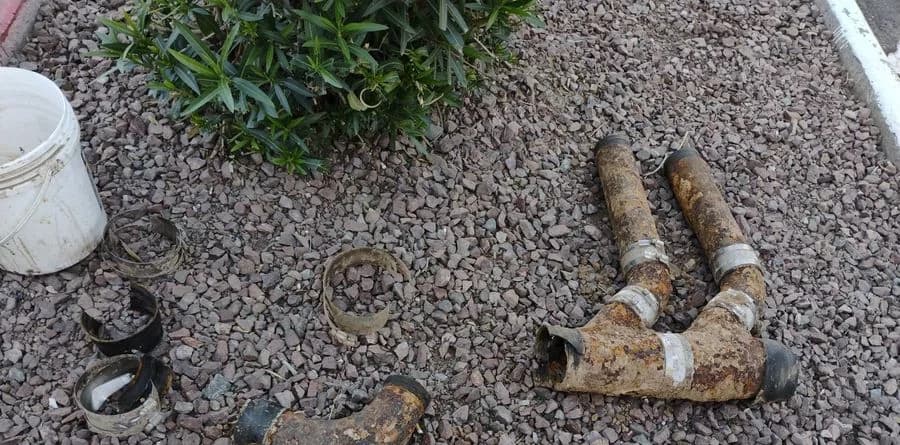
In Mesa the pipe material tracks the age of the house, and material predicts how a line tends to fail. Houses built before roughly the mid 1970s often still have cast iron under the slab, and it corrodes from the inside, losing wall along the bottom of the pipe first. Cleaning improves flow but puts no wall back, which is why footage of the invert matters more than footage of the joints.
Pick the era below and see the pattern, then read why only footage and a located, measured defect can settle what is actually buried under any one property. Additions, re-pipes and previous repairs mix eras on a single lot.
Choose the era the house was built in to see what tends to be buried beneath Mesa properties of that vintage, and what an inspection has to confirm.
Before you approve anything
What drives a sewer line repair cost in Mesa
No one can price a sewer repair from a description of the symptoms, and we will not pretend otherwise. Seven things drive the number. Ask for them itemized separately, on every quote you compare.
Length of line involved
A spot repair and a full run from the house to the connection are different jobs.
Depth and route
In caliche the gap between a shallow line and a deep one is hand work versus heavy equipment.
Pipe material
Cast iron, clay, ABS, PVC and fused HDPE each carry a different repair set.
What sits over the line
Open ground, a driveway, hardscape, mature landscaping or a slab all change access.
The method the condition allows
Lining, bursting and open excavation are not interchangeable. The pipe decides.
Permit and inspection
Which side of the connection the work falls on, and who carries the paperwork.
Surface restoration
Concrete, landscaping, flooring and interior finish are frequently quoted separately.
What a sewer proposal should spell out
Comparing quotes is only meaningful when the scopes match. One can read lower simply because it replaces less line, or because it excludes concrete, landscaping, flooring, or interior finish restoration. Confirm all eight before signing.
- The footage and locate marks supporting the recommendation.
- The exact segment repaired or replaced, with its endpoints.
- The method chosen, and why it fits the condition found.
- Access points, excavation depth, and property protection.
- Pipe material, connections, and any retained sections.
- Which side carries permit and inspection responsibility.
- Testing before the line returns to service.
- Cleanup, restoration boundaries, and how concealed conditions get authorized.
A replaced segment corrects the defined defect. It says nothing about a retained branch, older pipe left elsewhere, or the trees along the route, so ask for a record of the new route and endpoints and for the condition of whatever old line remains. If this is a house you are buying rather than one you own, scope the sewer before closing rather than after. A camera run and a locate are a far smaller undertaking than an excavation.
The building sewer is the one buried line every fixture in the house depends on, which is why a fault in it shows up as several problems at once rather than one. JB Water & Air handles sewer cleaning, inspection, repair, and replacement across Mesa, family owned here since 1981, working under Arizona CR-77 plumbing license ROC #260511 and backing its labor with a two-year workmanship guarantee that excludes normal wear, manufacturer defects and damage from outside causes.
Root intrusion, and why a cleared line comes back
Roots grow toward moisture and oxygen. In a desert yard watered on a drip schedule, a sewer line weeping at a bad joint can be the most reliable water source available, which is why intrusion concentrates at defects instead of spreading evenly along a run. Roots rarely need to break into sound pipe. They exploit an opening that already exists: an open clay joint, a corroded cast iron connection, a crack, or a previous repair.
Once fine roots are inside they catch paper and solids, and the combined mass restricts flow. That is why a root stoppage recurs. Clearing removes the mass, it does not close the opening that admitted it. Tree roots in sewer lines covers the sequence from clearing to inspection to repair.
Mechanical clearing and hydro jetting both cut roots and buildup back to the pipe wall and restore flow. Neither puts structure back. What they do, besides ending the immediate mess, is leave the line clean enough to be inspected honestly.
Sewer line replacement in Mesa: repair, reline, or replace
Focused repair
One accessible defect on otherwise sound pipe can support a sectional repair. The scope should give the start and end points, the access required, and how the new work ties into retained pipe.
Trenchless rehabilitation or replacement
Lining and pipe bursting work through limited access points instead of a continuous trench, and they suit a line whose host pipe and route still qualify. Neither removes excavation entirely: both need an opening at defined points, and bursting normally needs a pit at each end. Review trenchless sewer repair in Mesa for the eligibility questions.
Open excavation
Traditional access is often necessary when the line has collapsed, cannot support a liner, or needs regrading. In caliche the excavation is a real part of the scope, so surface restoration has to be stated rather than assumed.
Request sewer service
Tell us what the whole house is doing
Describe every fixture affected, when the trouble started, what the backup does when the washing machine runs, any previous clearing or repairs, the age of the house, and whether anyone has camera footage or a locate already marked on the ground. The more of that we have, the more useful the first visit is.
Prefer to talk it through? Call (480) 969-3193. Open 24 hours a day, 7 days a week.
Questions people ask
Ownership, insurance, and lining versus replacement
Who is responsible for repairing the sewer line to the house?
- Responsibility usually splits at a defined point. The property owner is generally responsible for the building sewer running from the house to the connection at the public main, and the utility for the main itself. Confirm the local boundary before a scope is written, because it decides which side of the connection the work falls on. Who owns the sewer line to your house covers the split.
Does homeowners insurance cover sewer line repair?
- It depends on the policy and the cause. Many policies treat gradual deterioration differently from sudden accidental damage, and separate service line endorsements exist. Read the wording and speak to the insurer before authorizing work, and keep the inspection footage, because a claim usually turns on documented cause. Are blocked drains covered by insurance goes further.
Is relining a sewer pipe better than replacement?
- Neither is better in general. Lining creates a new interior inside a host pipe that is still continuous and correctly graded, so it suits corrosion, cracking, and root entry at joints. Replacement becomes the more defensible choice when the pipe has collapsed, lost its shape, or sits in a belly that a liner would simply reproduce. Trenchless sewer repair sets out the eligibility questions.
Find out where the sewer line stands
If flushing a toilet moves water in a nearby tub, the problem is usually the main line rather than one drain.
Open 24 hours a day, 7 days a week · Mesa, Gilbert, Chandler and Tempe · Family owned since 1981