Drains & Sewer5 min read
How Often Do Drains Need Professional Cleaning?
There is no universal annual drain-cleaning rule. Use symptoms, history, pipe condition, and recurring use patterns to set a sensible schedule.
By JB Water & Air · Published Mar 25, 2026 · Reviewed Sep 2, 2026
- 4.9 · 580 Google reviews
- CR-77 licensedROC #260511 · CR-77
- Open 24/7

Drains do not all need professional cleaning once a year. A home with free-flowing fixtures, no backup history, and serviceable piping may not benefit from cleaning on an arbitrary calendar. A busy kitchen line, a property with recurring roots, or a drain that is beginning to slow may need a deliberate maintenance plan. The right interval is based on evidence from that drain, not a blanket rule.
Professional drain cleaning makes sense when symptoms, prior findings, or a known use pattern justify it. The goal should be clear: restore flow, remove recurring buildup, inspect a problem area, or reduce a documented risk before a predictable high-use period.
Start with symptoms, not the calendar
Schedule an evaluation when you notice:
- A sink, tub, or shower draining more slowly than it used to
- Recurring clogs at the same fixture
- Gurgling combined with slow drainage
- Odor that persists after confirming traps contain water
- Water rising in one fixture when another drains
- Multiple fixtures slowing or backing up together
- A kitchen line that repeatedly collects grease despite careful use
An active sewage backup or cross-fixture reaction is not routine maintenance. Stop using connected fixtures and treat it as a current fault. JB Water & Air is available around the clock, every day, though arrival timing must be confirmed when you call. Its emergency plumbing service page explains the call route and safe first steps.
When preventive cleaning can be reasonable
Condition-based preventive service may be useful in several situations.
A documented recurring interval
If a line has blocked more than once and prior service records show a consistent pattern, cleaning before that interval may reduce disruption. But repeated cleaning should not substitute forever for asking why the obstruction returns.
A known source of buildup
Some kitchen, laundry, or high-use drains accumulate material faster. The better first step is to reduce what enters the line. If buildup still recurs, a plumber can discuss whether planned cleaning is more sensible than waiting for a complete blockage.
Roots or rough pipe confirmed by inspection
If previous work documented roots, deposits, or deteriorated interior surfaces, the provider may recommend monitoring or maintenance. Ask how the interval was chosen and what result would trigger repair instead of another cleaning.
A property where a backup has unusual consequences
A business, rental, multigenerational home, or property with a vulnerable low drain may have a lower tolerance for disruption. That affects the maintenance decision, but it does not prove every line needs annual service.
Why “once a year” is not a universal standard
A drain system is a network of fixtures, branches, vents, traps, and a building sewer. Each section carries different material and may be made from different piping. Cleaning every drain on the same date can mean treating pipes that have no demonstrated problem while missing a defect that cleaning cannot solve.
The method also matters. Removing hair from a shower branch, cabling a kitchen line, and jetting a suitable sewer are different services. A scheduled visit should identify which line is being treated, why, and how success will be evaluated.
A practical way to choose an interval
Use this decision framework:
- No symptoms and no history: focus on good use habits and observation rather than automatic cleaning.
- First slow drain: address the fixture-level cause early; visible hair or a removable stopper may be manageable without machine cleaning.
- Recurring single-line clog: document the time between events and ask whether buildup, configuration, or pipe condition is contributing.
- Multiple affected fixtures: evaluate the shared branch or main sewer rather than scheduling generic whole-home cleaning.
- Known structural condition: follow an evidence-based monitoring, cleaning, or repair plan created for that condition.
After service, keep the invoice and note the access point, method, obstruction found, and outcome. That record is what allows a provider to recommend a meaningful future interval.
Habits that reduce avoidable drain buildup
Maintenance begins with what goes down the drain:
- Keep fats, oils, and grease out of the kitchen sink, even when hot.
- Scrape food into the trash or compost before washing dishes.
- Use removable strainers where appropriate and clean them regularly.
- Remove accessible hair from shower and tub stoppers.
- Flush only human waste and toilet paper; “flushable” marketing does not guarantee compatibility with every sewer system.
- Keep paint, solvents, medication, litter, and construction debris out of drains.
- Address dripping fixtures that keep a problematic area constantly wet without assuming extra water will clean the pipe.
Do not use repeated chemical drain treatments as preventive maintenance. Products differ, can create exposure risks, and may not address the cause. Never mix chemicals, and tell a plumber what has already been used.
What professional cleaning can and cannot do
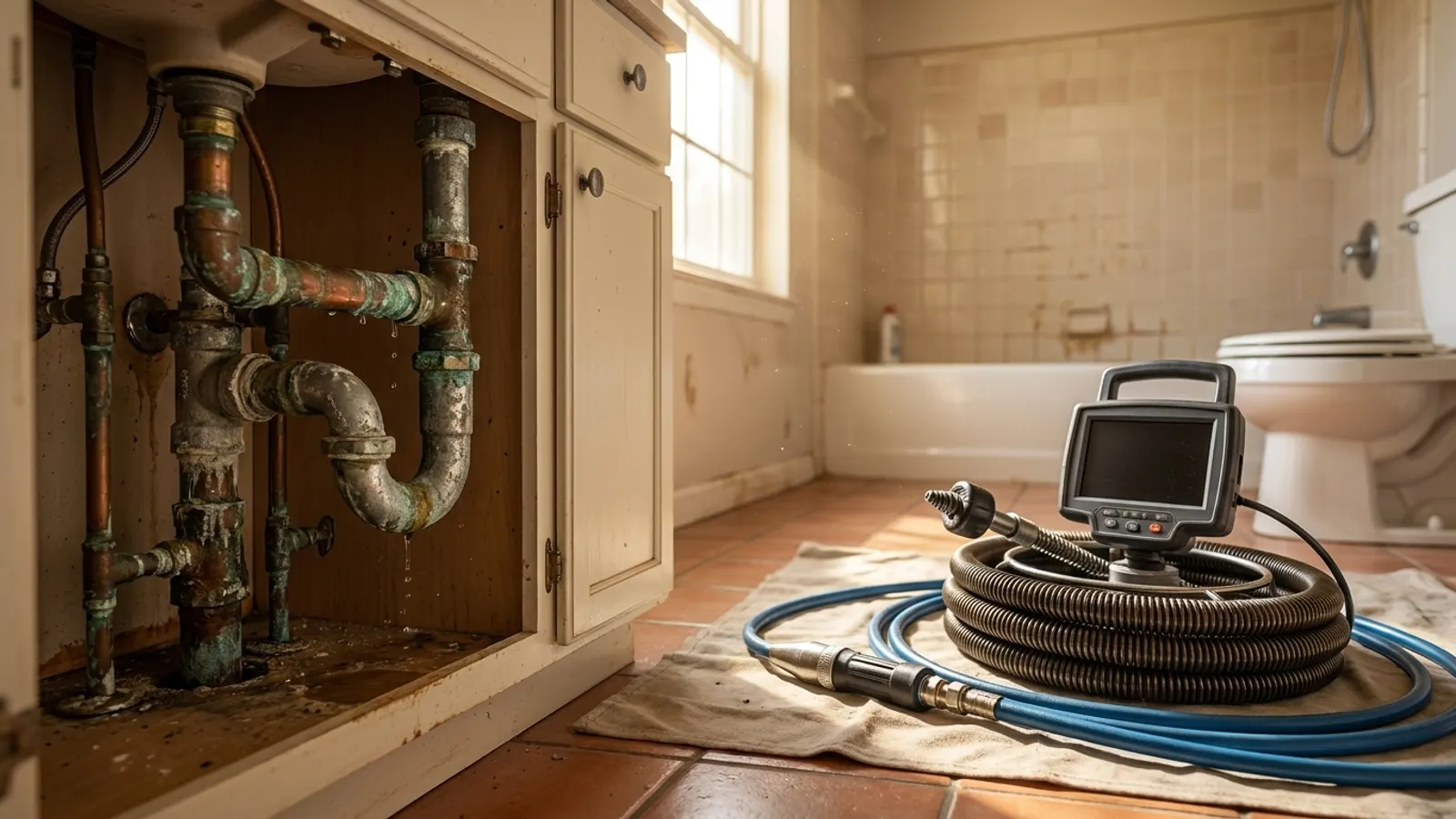
A cable machine may retrieve or create a path through certain obstructions. Hydro jetting can scour buildup from suitable piping when access and pipe condition support it. A camera may help document recurring trouble after enough flow is restored for a useful view.
None of these methods can reverse a collapsed line, correct poor slope, permanently close a root entry point, or guarantee that a drain will never clog again. If the same sewer repeatedly fails, ask whether the evidence supports sewer-line repair or replacement rather than another identical service.
Before authorizing preventive cleaning, ask:
- Which exact line will be cleaned?
- What evidence supports doing it now?
- Which access point and method will be used?
- Is inspection included or separate?
- What result counts as complete?
- What finding would change the recommendation from cleaning to repair?
Mesa drain maintenance based on your system
JB Water & Air is a family-owned Mesa company serving the area since 1981 under Arizona plumbing license ROC #260511 (CR-77). The team can evaluate symptoms and history, then explain whether cleaning, diagnosis, or a different repair path fits the condition.
To discuss a recurring drain or create a system-specific plan, contact JB Water & Air at (480) 969-3193. Bring prior invoices or camera findings if you have them; they are more useful than an arbitrary calendar date.