Drains & rooter · Mesa, AZ
Mesa clogged drain repair, 24/7 when a line backs up
We clear clogged sinks, tubs, toilets and main lines across Mesa. Tell us which fixtures are backing up: one points at a branch, several at the line they share.
- 4.9 · 580 Google reviews
- CR-77 licensedROC #260511 · CR-77
- Since 1981Family owned since 1981
Which is it? Map it below
Start with the fixtures
One branch, or the line they share?
Which fixtures are backing up, and since when? One fixture points to a local branch, several at once to the line they share, and a clog that keeps coming back to something the last clearing left in place. Map them here.
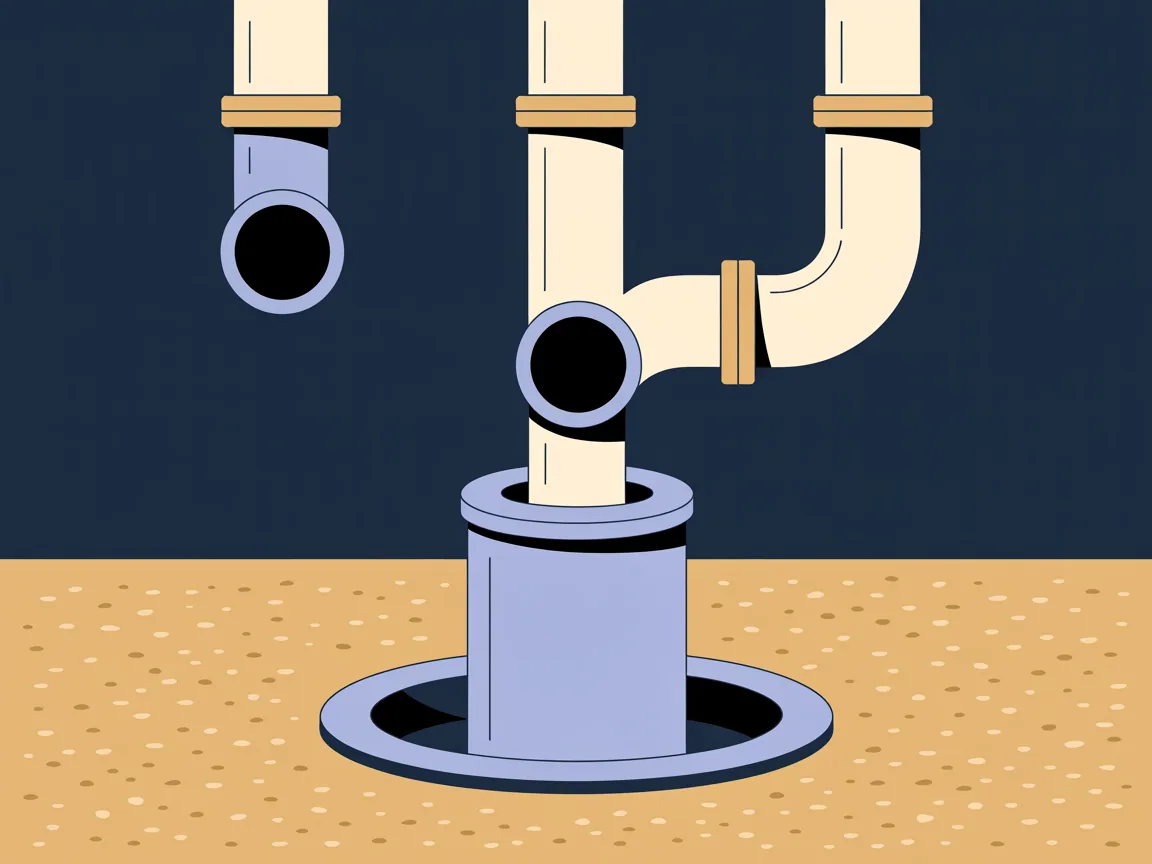
Tap every fixture that is slow or backing up
Select the fixtures involved and this will read the grouping the way a plumber reads it on the phone: whether the evidence points to one branch or the line several fixtures share. It names the likely access point. It does not book a visit or promise a time.
What each pattern usually means
- One fixture is slow, the rest are normal
- Usually a local restriction in that trap or the branch behind it. The question is whether it sits within reach of the fixture or further along.
- Two or more fixtures slow together
- The shared line rather than any single fixture. The question becomes which fixtures are grouped on that line, and where the group ends.
- The toilet bubbles when the tub or washer drains
- Air being pushed back through a restriction downstream of both. The question is how far downstream, because that separates a branch from a main.
- Wastewater rising in a tub, shower or floor drain
- The system is using the lowest opening as relief, which points to a shared line. The question is what else is still discharging into it.
- It cleared, then came back within weeks
- The blockage was opened rather than removed, or the pipe holds a condition that keeps catching debris. The question is which of the two.
- Sewer odor or gurgling with no visible backup
- Air moving where water should be sealing the system. The question is whether a trap has dried out or a line is partially restricted.
Wastewater rising, or several fixtures down at once? That is the one to phone in rather than type out.
(480) 969-3193Why Mesa drains block the way they do
The failure pattern here is local
Three conditions do most of the work across Mesa and the East Valley, and they are the reason a clog here rarely behaves like a clog anywhere else.
Scale and soap, building for years
East Valley supply is hard and its mineral load shifts through the year. Inside a drain that means deposits narrowing the bore and giving hair and grease something to catch on. It is why a line can slow for years, then block over one weekend.
Original cast iron in older neighborhoods
Much of central Mesa was drained with cast iron. It corrodes from the inside, the bore roughens, and debris that would pass smooth pipe snags instead. A cable opens a path, but a channeled pipe blocks again sooner.
What corroded cast iron shows on cameraRoots tracking caliche to one joint
Desert trees follow moisture. Where a buried sewer crosses caliche, a small seep at a joint concentrates instead of dispersing, and roots track straight to it. The result is intrusion at one repeating point, not along the whole run.
Why root clearing is a schedule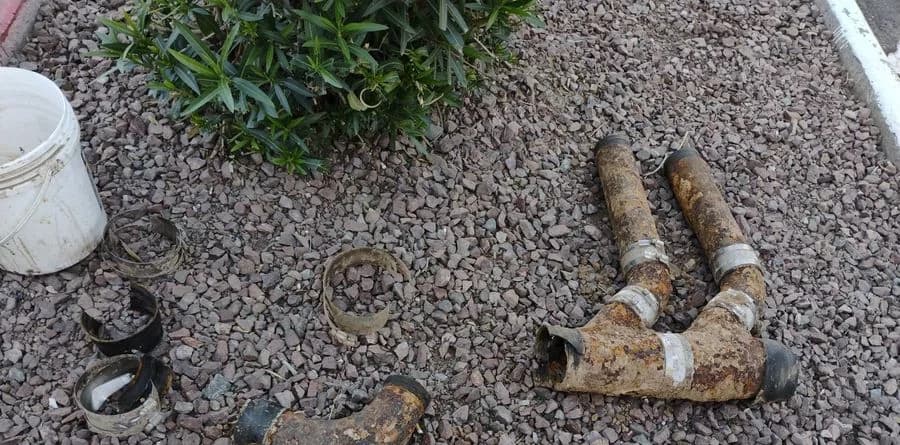
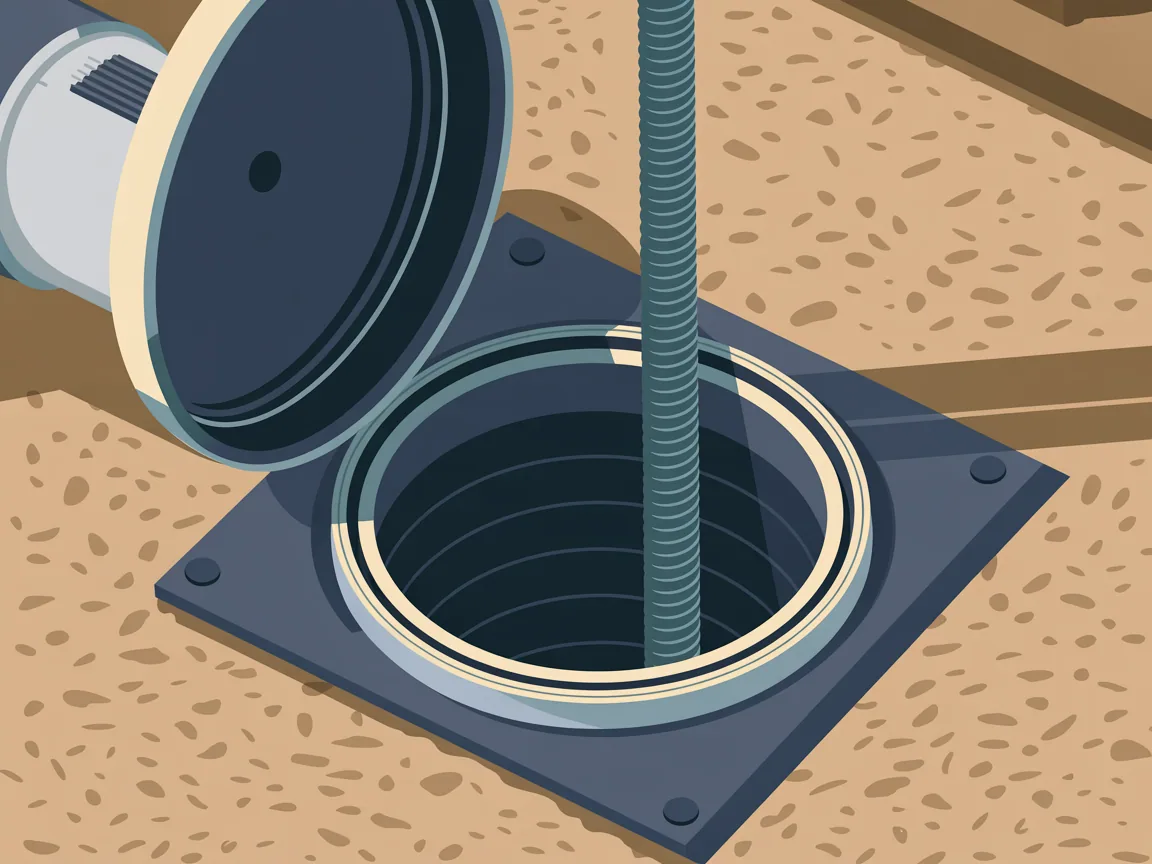
Monsoon adds a seasonal version. Haboob dust and washed grit collect in yard drains and around a cleanout cap, and the first heavy runoff moves that silt into the line.
How the line gets opened
Grouping first, tool second
Map the affected fixtures
Which fixtures share the symptom is established before any tool is chosen, because that grouping is what identifies the line to open.
Choose and open an access point
The entry point is selected next: a cleanout, a fixture trap, or a pulled fixture. Reach and cable size follow from that choice, not the reverse.
Clear the blockage
A cable or water jet is run from that access to restore flow. Resistance, what comes back, and where it stops are all recorded as findings.
Retest, then decide whether to look further
The original symptom is retested under real volume. Only then is it worth deciding whether inspection or a structural conversation is warranted.
Request service
Get the drain looked at properly
Tell us which fixtures are affected and whether more than one is slow. That difference changes where the blockage is.
If wastewater is rising or several fixtures are down, calling is faster than a form. Nothing here schedules a visit or sets an arrival time. For a line already overflowing, start at the emergency plumbing page.
Faster than a form
(480) 969-3193Open 24 hours a day, 7 days a week. That is when a person answers, not a promise of when a plumber is on site.
2-year workmanship guarantee on our labor. It excludes normal wear, manufacturer defects and outside damage.
ROC #260511 · CR-77 plumbing. Family owned in Mesa since 1981.
Before work begins
What drives the quote
The number follows the line, not the calendar. A quote should itemize these three separately, because similar-sounding drain services produce different outcomes. Nobody can price a blocked line from symptoms alone, which is why no figure appears on this page.
Clearing the blockage
Restoring flow from the chosen access point. This is the part that ends the backup.
Cleaning the pipe wall
Scouring buildup off the bore, a separate outcome from punching a hole through it, and the reason a cleared line can block again in weeks.
Camera inspection
Locating the condition once the line is open. Decision support rather than a clearing method, so it is quoted on its own.
JB documents what was found and done on the job paperwork, so a recurring problem builds a record rather than a series of unrelated visits.
One blocked sink may be a local obstruction. Several slow fixtures, gurgling, or wastewater rising at a lower drain can point to a shared line or the main sewer. JB Water & Air handles drain cleaning and clogged drain repair in Mesa and across the East Valley under Arizona CR-77 plumbing license ROC #260511.
This page is for a blockage happening right now. The separate Mesa drain cleaning page covers maintenance intervals and how to compare cleaning methods when nothing is currently backing up.
Opening an Active Blockage
Mechanical clearing
A cable or rooter can break through or retrieve most localized obstructions, and it is often the direct way to reopen a line. What matters afterward is whether it opened a hole through the blockage or removed the blockage. Test at the affected fixtures under real volume rather than a trickle, and treat repeat history as evidence.
Hydro jetting
Pressurized water scours material off the pipe wall instead of punching through it. That suits grease, sludge, mineral buildup and root fiber, but the condition of the pipe has to be understood first. The decision criteria are on the hydro jetting in Mesa page.
Camera inspection, after the line is open
A camera locates roots, separated joints, low sections, corrosion and damage. It clears nothing by itself, and standing water or a full blockage hides the very thing you are looking for, which is why inspection usually follows clearing rather than preceding it. The sewer camera inspection guide explains what footage can and cannot establish.
When the Problem Is More Than a Clog
Repeated clearing at the same location is a reason to ask what the pipe itself looks like. Cleaning restores flow. It cannot repair a crack, a collapsed area, a missing pipe wall or a poor slope.
Conditions that may justify a structural repair discussion include:
- roots returning through the same joint or defect;
- significant cast iron corrosion;
- a camera that cannot pass a damaged section;
- repeated backups affecting several fixtures;
- visible separation or collapse; or
- wet or settled ground associated with a buried line.
Access shapes that conversation here more than it does in most places. Mesa homes built from the late 1970s onward often sit on post-tension slabs, where tensioned cables hold the concrete in compression and the slab cannot be cut casually to reach a drain beneath it. Where a line runs under that kind of foundation, a re-route or a trenchless method is normally evaluated before open excavation, and caliche adds to what any excavation involves. Compare the findings with the options on the sewer line repair and replacement page.
After the Drain Is Open
Retest the original symptom without creating another overflow. Connected fixtures should drain without changing one another's water level and without sending wastewater to a lower opening. If the line was inspected, ask to see the condition that was found and where it sits along the run.
Keep the findings. For a recurring problem, a record of where and why the line blocks is worth more than treating each visit as unrelated. Keep grease, wipes, hygiene products and hard solids out of drains. Strainers reduce hair and food debris, but no household habit prevents roots or corrects damaged pipe.
Questions people ask
Straight answers
Is a clogged drain an emergency?
- It becomes urgent when sewage enters the property, when several essential fixtures are unusable, or when continued water use would cause an overflow. A single slow sink usually is not. JB Water & Air is open 24 hours a day, seven days a week, though that does not fix when a plumber can be on site.
Does baking soda and vinegar clear a clogged drain?
- Rarely, and never a main line. The reaction fizzes, neutralizes itself inside the trap, and travels almost no distance, so it generates no useful pressure. It may loosen light film in a kitchen trap. It does nothing to hair, a foreign object, roots, or a section of pipe that has failed structurally. Why a plumbing expert warns against vinegar and baking soda covers the rest.
Do enzyme drain products work on an active blockage?
- No. Enzymes digest organic film slowly, over repeated doses and days, which makes them a maintenance habit rather than a response to water standing in a sink right now. They also do not act on mineral scale, roots, or solids. Something already blocked has to be cleared physically.
Can I use an auger for drain cleaning myself?
- A short hand auger can clear a trap and a little beyond, and a closet auger can reach a toilet trap. Both have a few feet of reach. Forcing a longer cable without knowing the pipe material risks damaging older cast iron, or packing the obstruction tighter against a fitting where it is harder to retrieve.
How should I compare drain cleaning companies?
- Compare the scope rather than the headline. Ask which line is believed to be blocked, what evidence supports that, which access point will be used, and whether the quote separates clearing from cleaning the pipe wall and from camera inspection. Vague scopes are what produce a surprise second visit.
Do I always need a camera inspection?
- No. A straightforward local clog may be cleared without one. Inspection earns its place when a main line is involved, when the clog recurs, when roots or structural damage are suspected, or when evidence of pipe condition is needed before a repair decision. It is decision support, not a clearing method.
How do I request clogged drain repair?
- Call (480) 969-3193 or use the contact page. Say which fixtures are affected, whether more than one is slow, whether wastewater is visible anywhere, and whether this has happened before. That detail is what separates a branch problem from a main line before any access point is opened.
Chemical opener is the one to avoid on a full line. It sits in the standing water, stays caustic, and becomes an exposure risk the moment a trap or cleanout is opened. If something has already gone down the drain, say so before work starts.
Why plumbers caution against drain cleanerWhere a clog leads next
Blocked now? Describe what is backing up
Which fixtures, whether wastewater is visible, and whether it has happened before. That detail separates a branch from a main before any access point is opened.