Drains & Sewer5 min read
Plumbing Due Diligence for Arizona Real Estate Transactions
An Arizona real-estate plumbing checklist for findings, sewer scopes, repair proposals, documentation and follow-up during a property transaction.
By JB Water & Air · Published Oct 21, 2025 · Reviewed Sep 2, 2026
- 4.9 · 580 Google reviews
- CR-77 licensedROC #260511 · CR-77
- Open 24/7

Plumbing information is most useful in a real estate transaction when it turns an observed condition into a documented next step. Buyers, sellers, agents, property managers, and contractors have different roles. A plumber can evaluate and scope plumbing work, but should not replace a qualified home inspector, appraiser, real estate professional, attorney, insurer, or other specialist.
This guide is an organizational checklist, not legal, financial, inspection, or valuation advice. Contract deadlines, disclosure duties, repair negotiations, and responsibility for work depend on the transaction and should be addressed with the appropriate professionals.
Start With Findings, Not Assumptions
An inspection note such as “slow drain,” “water stain,” or “older water heater” identifies an observation. It does not necessarily establish the source, severity, remaining service life, repair method, or cost.
Before asking for a quote, assemble:
- the inspection report and relevant photographs;
- the exact property address and access instructions;
- seller disclosures or known repair history, when available through the transaction;
- the location and age information visible on relevant equipment;
- the deadline for evaluation, proposal, repair, and any reinspection; and
- the name of the person authorized to approve diagnostic or repair work.
Send the actual excerpt instead of paraphrasing it from memory. If a report recommends further evaluation, ask what question the specialist needs to answer.
Separate Four Different Deliverables
Confusion often starts when participants treat every service document as interchangeable.
1. General home inspection
A home inspector observes systems within the inspection scope and reports conditions under the applicable agreement or standards. The report may recommend evaluation by a plumbing contractor. It should not be rewritten by the plumber or treated as a repair proposal.
2. Plumbing evaluation
A plumber investigates a defined plumbing concern. Access and test limitations matter. A concealed line, intermittent leak, occupied property, shutoff condition, or inability to operate equipment may limit conclusions. Ask that limitations be stated.
3. Repair proposal
A proposal should connect the observed issue to a defined scope. It should identify inclusions, exclusions, access, restoration, permits if applicable, price structure, and conditions that could change the scope. A proposal is not proof that the work has been completed.
4. Completion record
After authorized work, retain the invoice, description of completed work, applicable permit or inspection documents, product information, and written warranty terms. If the transaction calls for reinspection or another confirmation, arrange that separately rather than assuming an invoice satisfies every requirement.
High-Value Plumbing Questions During a Transaction
Is there evidence of active leakage?
Staining can remain after an old event, while some active leaks have few visible signs. The question is whether current evidence supports an active source and what access is needed to confirm it. The leak-detection guide explains why source location should come before unnecessary opening or replacement.
Are shutoffs accessible and operable?
Knowing how to isolate a fixture or the building can reduce damage later. Do not force an old or corroded valve during a casual walkthrough; failure can create the very leak participants are trying to avoid. Record locations and ask whether evaluation or replacement is recommended.
What does the water heater evidence show?
Record the label information, installation location, visible corrosion or leakage, venting observations, and reported performance. Age alone does not decide whether a unit must be replaced, and a lack of visible leakage does not guarantee future life. The water-heater service guide lays out repair-versus-replacement questions without inventing a universal age cutoff.
Is a drain symptom local or system-wide?
One slow sink may have a local restriction. Several affected fixtures, recurring stoppages, or wastewater at a lower drain may point to the main line. Report which fixtures were operated and what happened rather than reducing every symptom to “needs drain cleaning.”
Should the sewer lateral be viewed?
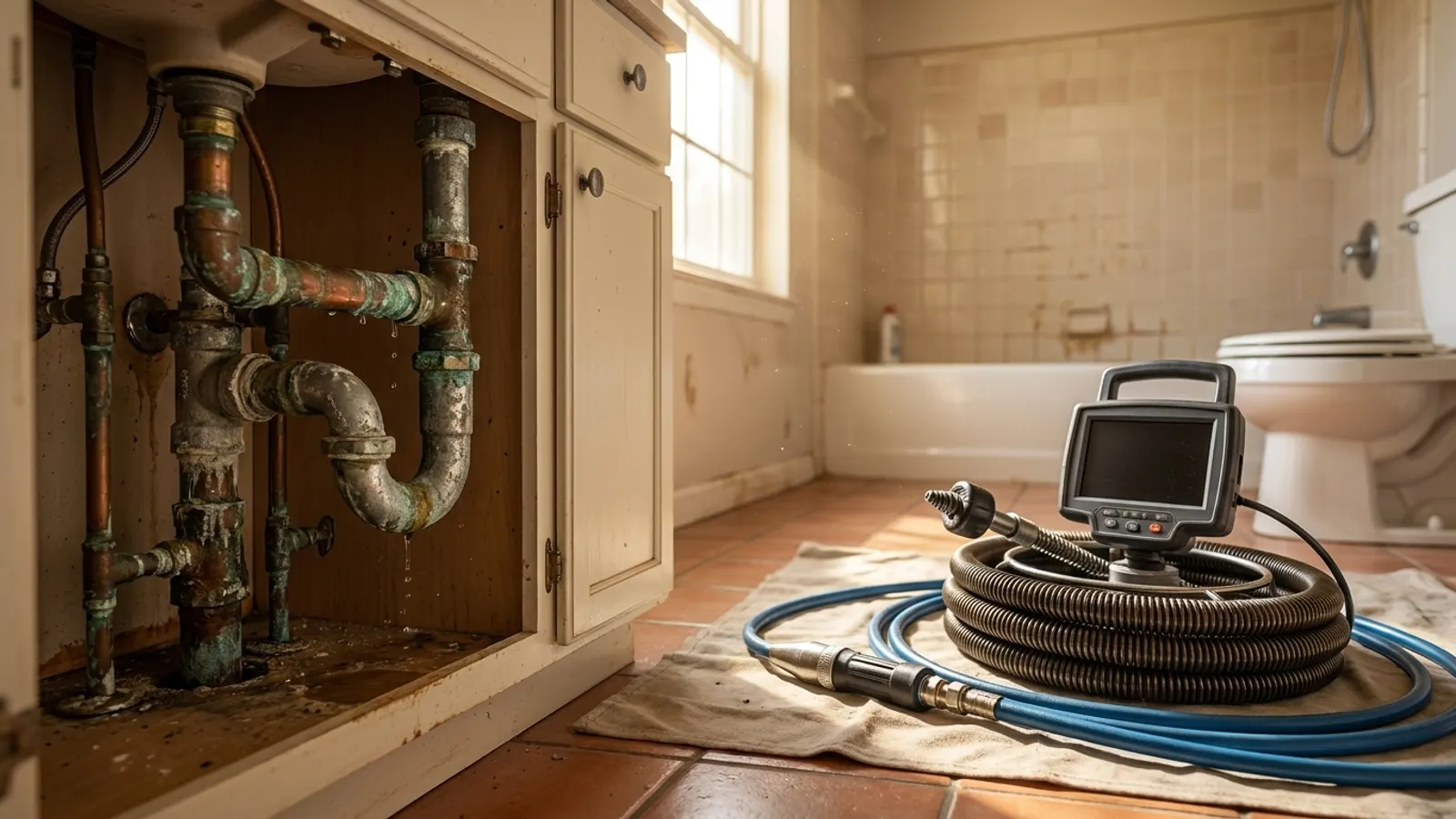
A sewer camera scope can provide information not visible during an ordinary walkthrough, particularly where there is a history of stoppages, mature vegetation, older piping, or another reason for concern. Whether it is appropriate is a transaction-specific decision.
If a scope is performed, request the accessible video or images, entry point, direction and approximate location of observations, identified limitations, and a clear explanation of the condition. The sewer video-inspection checklist helps distinguish evidence from a vague “line looks bad” conclusion.
Turn a Finding Into a Comparable Scope
Two prices are not comparable when the scopes differ. For each proposed repair, look for answers to these questions:
- What observed condition is the work intended to correct?
- Is more diagnostic work required before a firm scope is possible?
- What materials, access, removal, disposal, and testing are included?
- Who handles drywall, flooring, landscaping, paving, cabinetry, or other restoration?
- Are permits, utility coordination, or inspections applicable, and who handles them?
- What conditions would require a written change?
- What completion documentation will be provided?
The Mesa plumbing services overview can help route a finding to the correct specialty page before proposals are compared.
Avoid Transaction-Outcome Claims
No plumber can responsibly guarantee a sale, price increase, appraisal result, insurance decision, or buyer response. Even a correctly completed repair is only one input in a broader transaction.
Likewise, phrases such as “trusted by real estate professionals” or “preferred vendor” need current, specific support. An agent’s referral should not be interpreted as a guarantee, and the customer should still verify licensing, scope, and terms. Historical mentions should not be stretched into current endorsement claims.
A Cleaner Handoff for Everyone
The most useful handoff package is simple: original finding, specialist evaluation, approved scope, change orders, completion invoice, relevant permit or inspection records, product documents, and any required follow-up. Use consistent labels so a future owner can tell what was observed, what was recommended, and what was actually done.
When arranging plumbing help, tell JB Water & Air that the property is in a transaction and provide the decision deadline. Availability must be confirmed; no particular response or completion time is implied. Use the contact page to share the property, affected system, inspection excerpt, access arrangements, and the person authorized to approve work.