Skip to content
Free water purity tester ($75 value). Call (480) 969-3193 to claim

Open 24/7 · Since 1981

(480) 969-3193
JB Water & Air, family owned and operated for over 40 years

Household plumbing · Mesa, AZ

Your residential plumber in Mesa, room by room

JB fixes the everyday plumbing failures in Mesa homes, from a leaking fixture to a slow drain or a toilet that will not stop, and explains each one plainly.

Guarantee covers JB's own labor. Excludes normal wear, manufacturer defects and outside damage.

Scope it in three questions

How far does it reach, and can you stop it?

Residential plumbing service is the everyday repair and replacement work on the fixtures, supply lines, drains and water heating inside a home, scoped by how far the symptom reaches rather than by the fixture it shows up at.

Pick what you are noticing, run one reaction test, and check whether a valve can stop it. This is a reading to help you describe the problem on the call. It is not a booking, and it shows no availability.

Step 1 · What are you noticing?

Water you cannot stop, or a fixture out of service? JB is open 24 hours a day, 7 days a week.

(480) 969-3193

Small parts first

In hard water, the small parts give out first

Mesa water leaves scale wherever it is heated, held still or allowed to evaporate, so the cheap components inside a fixture are usually what failed, not the fixture itself. Knowing which part is which makes the call shorter and the fix cheaper.

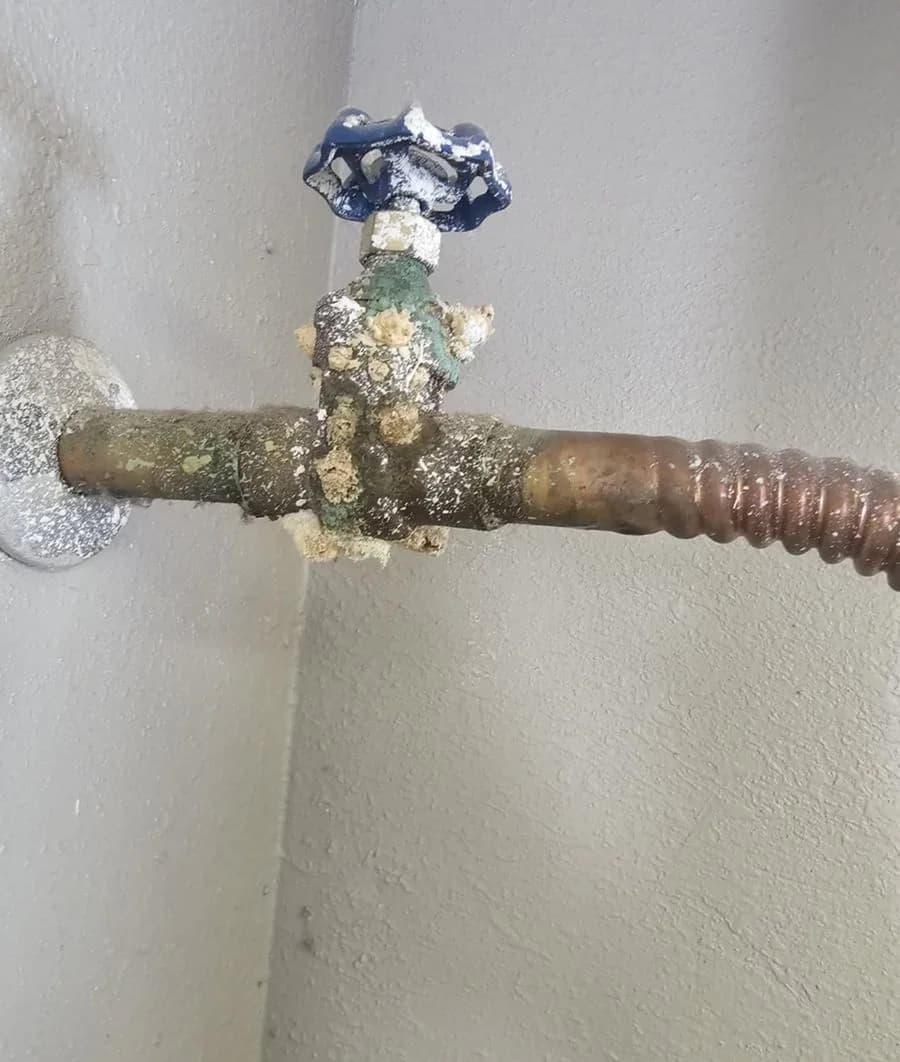
Heavy mineral scale and green corrosion on a shut-off valve photographed on a JB Water and Air service call
Real JB job photo. Mineral scale and corrosion on a shut-off valve, photographed on a service call. A stop in this condition is the one that will not close at two in the morning.

Angle stops: quarter turn against multi turn

The small shutoff under a sink or toilet comes in two forms. A multi turn compression stop uses a washer that hardens and a stem that scales in place, which is why so many of them will not close in an older Mesa home. A quarter turn ball stop has no washer to harden and is far more likely to work after years of sitting untouched.

Fixture supply connectors

Braided stainless connectors resist kinking and abrasion and are the normal choice at a faucet or toilet. Plastic and vinyl connectors cost less and fail more predictably with age and heat. Length matters as much as material: a connector stretched tight or coiled into a loop is being loaded in a way it was not designed for.

Faucet valve types

Compression valves seal a washer against a seat and can be rebuilt but wear steadily. Cartridge valves replace as a unit and are model specific, so identification matters before anything is bought. Ceramic disc valves tolerate hard water best, which is the relevant comparison here, though no valve is indifferent to scale.

Toilet flush valves

A flapper is cheap, universal and the usual cause of a tank that refills on its own, because the rubber stiffens in mineral-heavy water and stops seating. A canister style flush valve seals on a larger surface and tends to hold longer, but it is matched to the toilet rather than swapped in freely.

The shutoff ladder

Close the smallest valve that stops it

Start at the fixture and move outward, one rung at a time. How far out you have to go before it stops is itself the diagnosis: it tells you how far the problem reaches and leaves the rest of the house in service while you decide what to do.

  1. First

    The fixture stop

    The small valve under the sink or behind the toilet. If it closes and the trouble stops, the problem is contained to that one fixture and the rest of the house stays in service.

  2. Then

    The branch

    If no fixture stop reaches it, or the stop will not turn, the next valve out isolates the branch that several fixtures share. Reaching this rung already tells you the problem is not local.

  3. Last

    The main shutoff

    The valve that closes the whole house, usually where the supply enters or at the meter. Working out which valve controls what on a calm afternoon is the most useful check a household can make before an emergency.

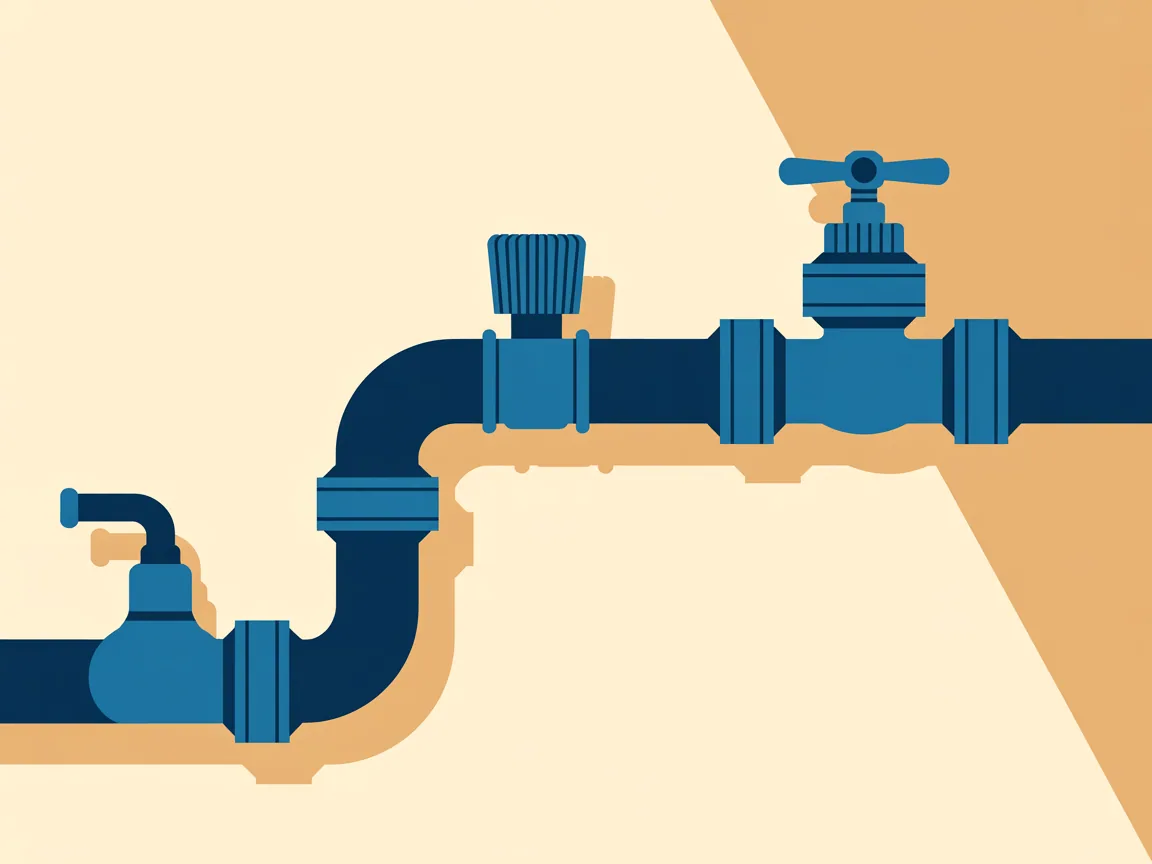
A water supply pipe running along a wall with three shutoff valves on it: a small angle stop at a sink, a larger branch valve, and the main shutoff where the pipe enters the building

The directory

Find it by the room it shows up in

Household plumbing sorted the way a home is, room by room. Every link is work performed under one Arizona classification, CR-77 plumbing. If two rooms react together, that is a shared line, and the reaction test above is the faster place to start.

Sorted by system instead of by room, the same trade is covered on the CR-77 plumbing hub. For everything JB does inside Mesa city limits, plumbing and air together, see plumbing and HVAC in Mesa, AZ.

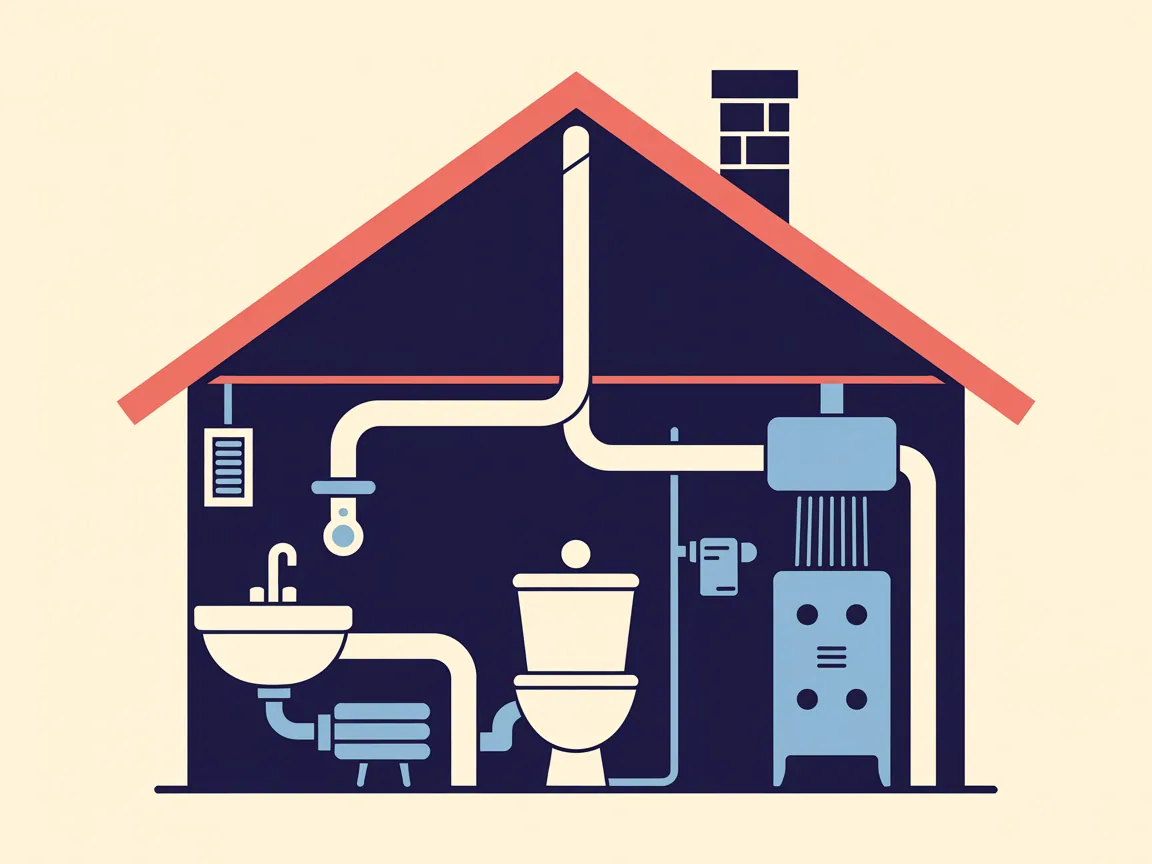
Cutaway of a house showing one water supply pipe entering from the street and branching to a kitchen sink, a toilet, a shower and a water heater, with the drain stack rising through the roof

The stop-and-wait test

The test is whether you can stop it and wait, not how large it looks

Do not wait

  • Uncontrolled water that you cannot stop by closing a valve.
  • Sewage entering the home, or backing up at the lowest drain.
  • Any moisture reaching drywall, cabinets, flooring or electrical equipment.
  • A gas smell is a separate case: leave the house and call the gas utility from outside first, before it is ever a plumbing call.

Usually can be scheduled

  • A drip caught in a container that is not reaching anything it can damage.
  • A toilet that runs, or one slow sink, while the rest of the house behaves.
  • A single fixture you have isolated at its own stop and left alone.
  • When it can wait, stop testing it. Every extra flush adds water a blocked system cannot move, and destroys the evidence a diagnosis depends on.
(480) 969-3193

Open 24 hours a day, 7 days a week, as listed on Google. For uncontrolled water or a sewage backup, the emergency plumbing page covers what to do next.

Residential Plumber in Mesa, AZ

JB Water & Air is a family-owned Mesa company that has worked the Valley since 1981 and holds Arizona plumbing license ROC #260511, classification CR-77. JB warrants its own labor on the plumbing work it performs for two years and returns to make failed work right at no cost; the guarantee excludes normal wear, manufacturer defects, and damage from outside causes. Household plumbing is the whole of what this page covers: a business or multi-tenant building is a different page, heating and cooling are a separate classification, and hard water itself is a treatment question rather than a repair. The service area runs from the Mesa shop out to Gilbert, Chandler, Tempe and Scottsdale.

Most East Valley homes sit on a slab, many on post-tension slabs that cannot be cut on a hunch, so a hidden leak is a locating job before it is a repair. Caliche makes reaching a buried line slower than its depth suggests, and the first monsoon storms silt up any cleanout with a cracked cap. Older neighborhoods still run original cast iron drains and galvanized supply lines, which fail gradually from the inside; ask about condition, not age.

The angle stops under sinks that have not been turned in twenty years decide what you can actually isolate at two in the morning, so working out which valve controls what on a calm afternoon is the most useful check a household can make. For the system side of the same trade, pipe by pipe rather than room by room, the CR-77 plumbing hub is the deeper page.

Questions homeowners ask

Straight answers

How do I repair a leaking pipe under the sink?

Close the angle stop feeding that fixture first, then work out which side is leaking, because supply and drain behave differently. Supply water is under constant pressure and gets worse while you watch. Drain water appears only while the sink is running. A slip joint on the trap can simply be loose. Split or corroded pipe is not a tightening problem and should not be treated as one.

Why does one faucet have low water pressure?

When only one fixture is weak, the restriction is almost always at that fixture: a scaled aerator screen, a mineral-loaded cartridge, an angle stop that is not fully open, or a kinked supply line. In Mesa, where scale forms readily in small components, the aerator is the cheapest of those to check and the sensible place to start. When every tap in the house dropped together, the cause sits upstream and becomes a different investigation entirely.

Does do-it-yourself drain cleaning work?

On one slow fixture, sometimes. Pulling hair from a stopper or opening an accessible P-trap reaches obstructions a few feet down. Past that, the reach is not there. Vinegar and baking soda cannot clear a main line at all: the fizz spends itself in the trap and never reaches roots, grease or a separated joint.

Does every plumbing fixture need a vent?

Yes. Every trap depends on a vent so that draining water cannot siphon out its own water seal. Gurgling is exactly that happening: the fixture is pulling air through the trap because it cannot get it from the vent. A dry trap in a rarely used bathroom and a blocked vent produce a similar sewer odor, which is why the smell alone does not identify the cause.

Does one leak mean the whole house needs repiping?

No. One leak is evidence about one location. A whole-home recommendation should rest on the condition and failure pattern across the system: repeated leaks in different areas, measurable pressure loss, or piping whose interior condition has been seen rather than assumed. A single repair, however awkward it was to reach, does not establish any of that on its own.

How do I request residential plumbing service?

Call JB Water & Air at (480) 969-3193 or use the contact page and describe the symptom rather than the suspected cause. Say which fixtures are affected, whether water is actively escaping, whether closing a valve changed anything, and what you have already tried. If it has happened before, say when, because a repeat is a different conversation from a first occurrence.

Talk through a household plumbing problem

Most calls start with something you can see or hear. Describe that and we will take it from there.

Describe the symptom rather than the suspected cause: which fixtures are affected, whether water is escaping, and whether closing a valve changed anything.

(480) 969-3193Request Service