Drains & Sewer5 min read
Why Plumbers Often Caution Against Chemical Drain Cleaner
Chemical drain cleaners can create exposure, compatibility, heat, and diagnostic problems. Learn when to stop, what not to mix, and safer next steps.
By JB Water & Air · Published Dec 29, 2025 · Reviewed Sep 2, 2026
- 4.9 · 580 Google reviews
- CR-77 licensedROC #260511 · CR-77
- Open 24/7
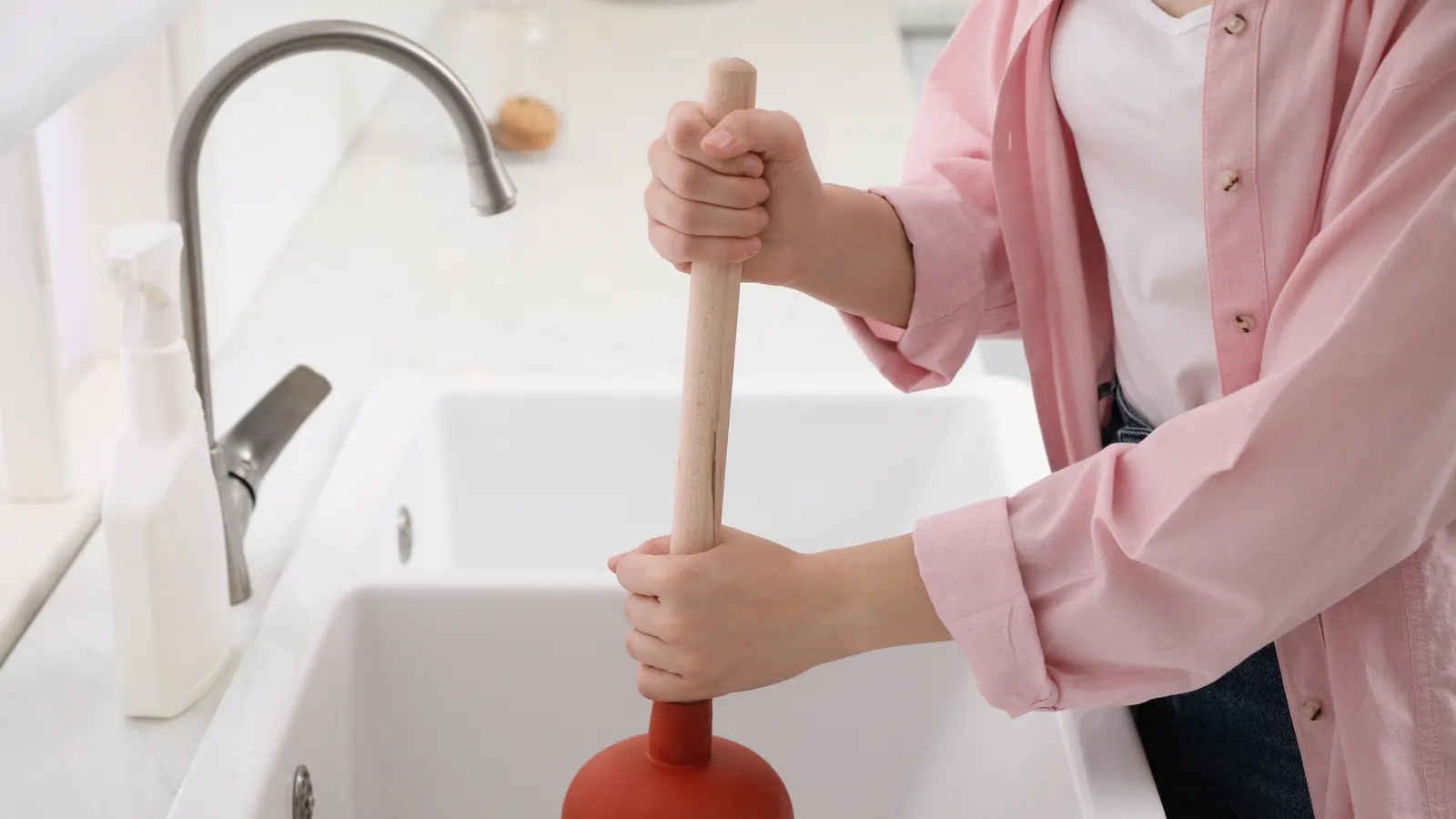
Plumbers do not caution against chemical drain cleaners because every product instantly ruins every pipe. They caution against them because the product, pipe, obstruction, prior chemicals, and exposure conditions are often unknown, and a partially cleared drain can leave corrosive liquid where the next person has to work.
Read the exact label and follow it. Never mix drain products or combine one with bleach, ammonia, acids, bases, vinegar, or another household cleaner. If a product has already entered the drain, tell anyone who works on the line.
For a recurring or multi-fixture problem, JB Water & Air’s drain-cleaning page explains why diagnosis matters more than pouring in a stronger product.
“Drain cleaner” is not one chemical
Products may use strong alkalis, acids, oxidizers, solvents, enzymes, bacteria, or combinations designed for certain conditions. They differ in reaction, temperature, required contact time, pipe compatibility, ventilation, protective equipment, and disposal instructions.
That variation is one reason universal advice is unsafe. A product labeled for one type of drain or plumbing system may not be suitable for another. A homeowner usually does not know the pipe material, previous repairs, standing-water depth, or exact location and composition of the clog.
The immediate concern is human exposure
Splashing can injure skin and eyes. Fumes or aerosols can irritate or harm people, especially in a small bathroom or poorly ventilated area. A sink or tub full of standing product can splash when plunged, cabled, disassembled, or vacuumed.
Keep children and pets away. Do not lean over the drain to check whether the product is working. Do not use a plunger or remove a trap after applying a chemical unless the label and appropriate safety guidance explicitly support the step.
If exposure occurs, follow the product’s first-aid label and contact the appropriate poison-control or emergency resource. Bring the product container or exact name when seeking help.
Chemical reactions can generate heat
Some drain cleaners release heat as they react with water or organic material. Heat may affect certain piping, seals, finishes, fixtures, or already weakened components, particularly when liquid remains concentrated in one place.
That does not mean every approved use damages pipe. It means compatibility and condition matter. A label claim for suitable piping cannot account for every corroded metal trap, thin plastic fitting, old repair, or unknown material in a particular home.
A cleaner may open flow without solving the cause
A product may act on some hair, soap, or organic material. It will not correct a broken pipe, displaced joint, root intrusion, collapsed lateral, poor slope, hard foreign object, or recurring buildup caused by a system condition.
Even when water begins to move, residue can remain on the pipe wall or the opening can be narrow. The homeowner sees a faster drain and assumes the problem is gone, only for the symptom to return.
Multiple slow fixtures, toilet bubbling when another fixture drains, wastewater at a low drain, or repeated main-line backups point beyond one local sink clog. Review sewer-line services rather than repeatedly treating individual fixtures.
Chemicals make later service harder to plan
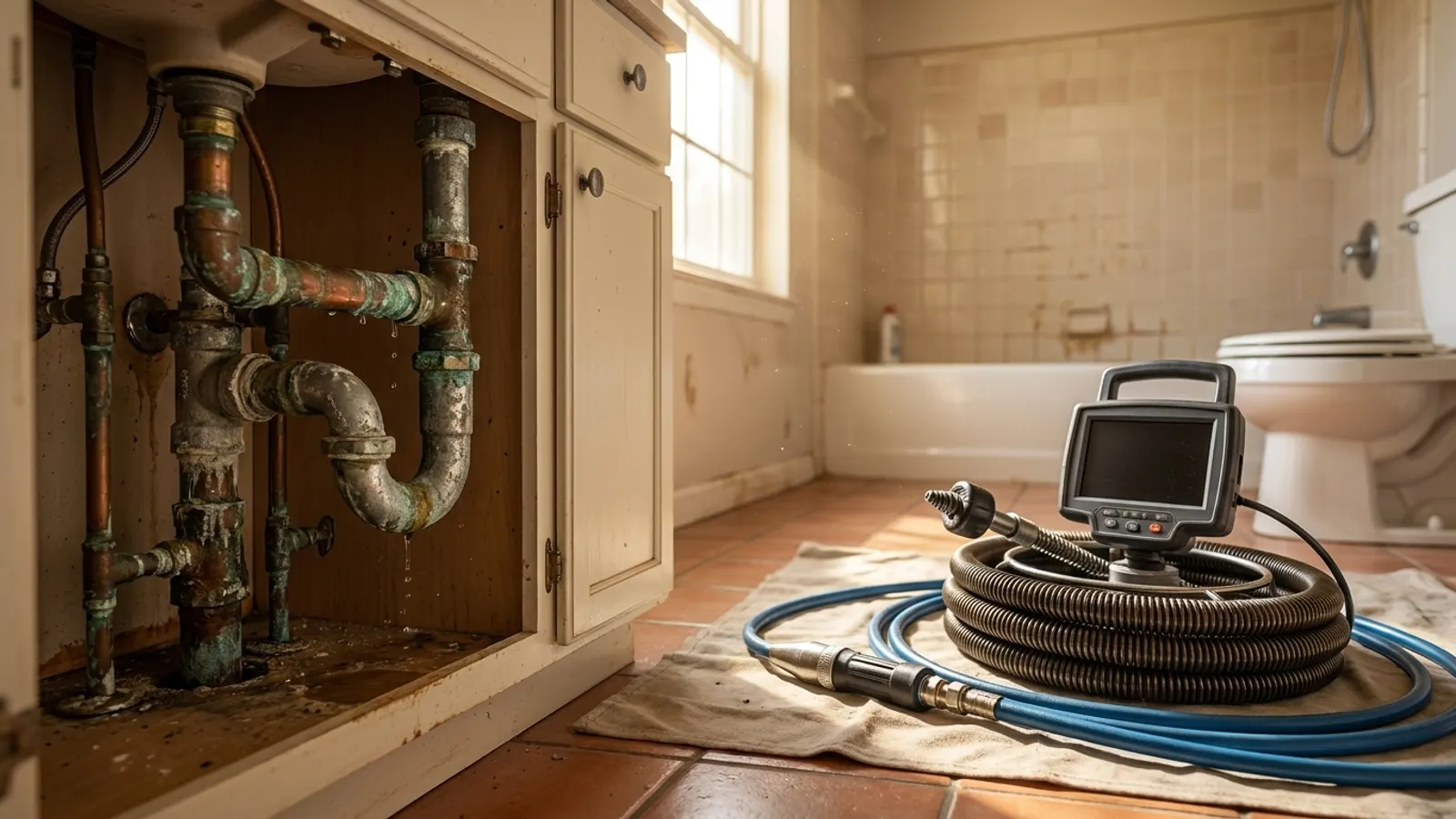
A technician may need to remove a trap, pull a toilet, insert cable equipment, or use a camera. Standing chemical changes the exposure risk and may affect which tools and protective steps are appropriate.
Always disclose:
- the exact product and amount used;
- when it entered the drain;
- whether another cleaner or home remedy was used;
- whether the drain moved at all afterward; and
- whether anyone experienced a splash, fumes, or symptoms.
Do not hide chemical use out of embarrassment. The information protects the people doing the work.
Septic and wastewater considerations vary
Product labels may include limitations for septic systems or disposal. A chemical that goes down a drain does not disappear; it enters a private onsite system or public wastewater system. Follow product and local guidance rather than assuming “septic safe” means unlimited or consequence-free use.
When a drain is completely blocked, adding more liquid may simply leave a larger volume of chemical in the fixture or pipe.
Safer first steps depend on the pattern
Before using any product, determine whether the issue is one fixture or several.
For a simple local slowdown with no hazardous chemical present, safe steps may include removing accessible hair from a stopper according to the fixture instructions or using the correct plunger. Stop if you do not know how to isolate power to a disposal, if a fitting is corroded, or if the action makes another drain react.
Do not put hands into a garbage disposal. Follow the manufacturer’s instructions and disconnect power using the specified method before any permitted inspection. Do not improvise with tools that can become caught or damage the unit.
For recurring clogs, a qualified plumber can choose a method based on access and likely pipe condition. JB Water & Air’s plumbing-services page describes the broader diagnostic context.
What a professional may do differently
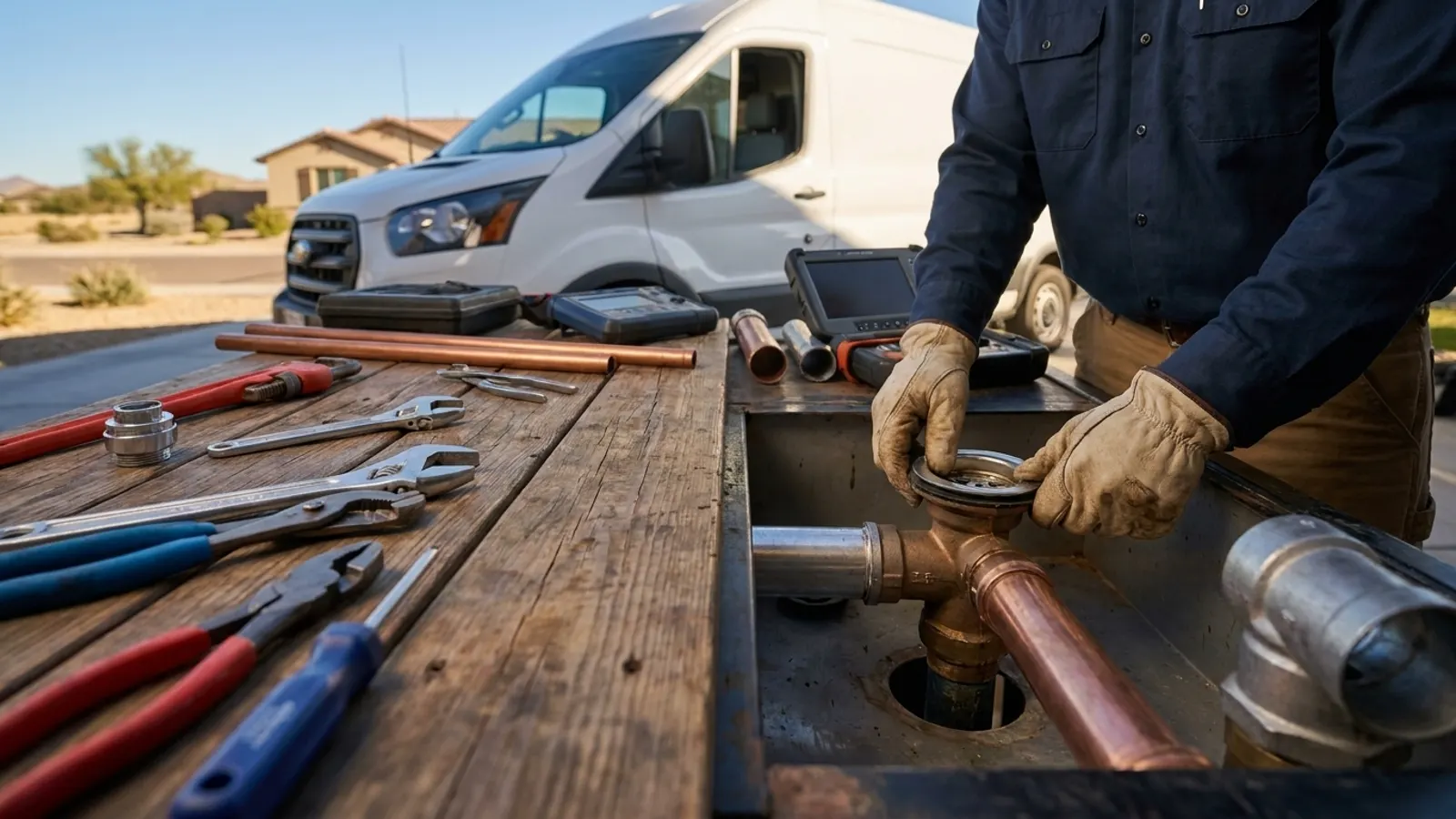
A plumber can map which fixtures share a line, identify available cleanouts, select cable or jetting equipment for the pipe, and determine whether inspection is useful. Powerful methods are not automatically appropriate; fragile or damaged pipe may change the plan.
Clearing an obstruction, cleaning pipe walls, inspecting the line, locating a defect, and repairing pipe are separate scopes. Ask what the proposed service includes and what evidence would justify additional work.
Call sooner when these signs appear
Arrange professional help when:
- several fixtures are affected;
- wastewater is backing up;
- a clog returns repeatedly;
- a foreign object may be lodged;
- a chemical is standing in the fixture;
- pipe leakage appears during drain use;
- sewage or strong sewer-gas odor is present; or
- a person has been exposed to a drain product.
Stop using water when continued flow worsens a backup. Keep people and pets away from wastewater. A strong sewer-gas odor or other immediate hazard may require leaving the building and contacting the responsible utility or emergency service.
JB Water & Air is a family-owned Mesa plumbing company founded in 1981. To discuss a drain problem, contact JB Water & Air at (480) 969-3193 with every affected fixture and the exact products used. Confirm current scope, availability, and price directly. The safest recommendation depends on the specific line, not a universal claim about every bottle or pipe.