Water Quality5 min read
Can Any Plumber Service a Water Softener? What to Ask
Not every plumber services every softener. Learn how to check licensing, model experience, parts access, diagnostics, warranty terms, and repair scope.
By JB Water & Air · Published Feb 17, 2026 · Reviewed Sep 2, 2026
- 4.9 · 580 Google reviews
- CR-77 & CR-39 licensed
- Open 24/7
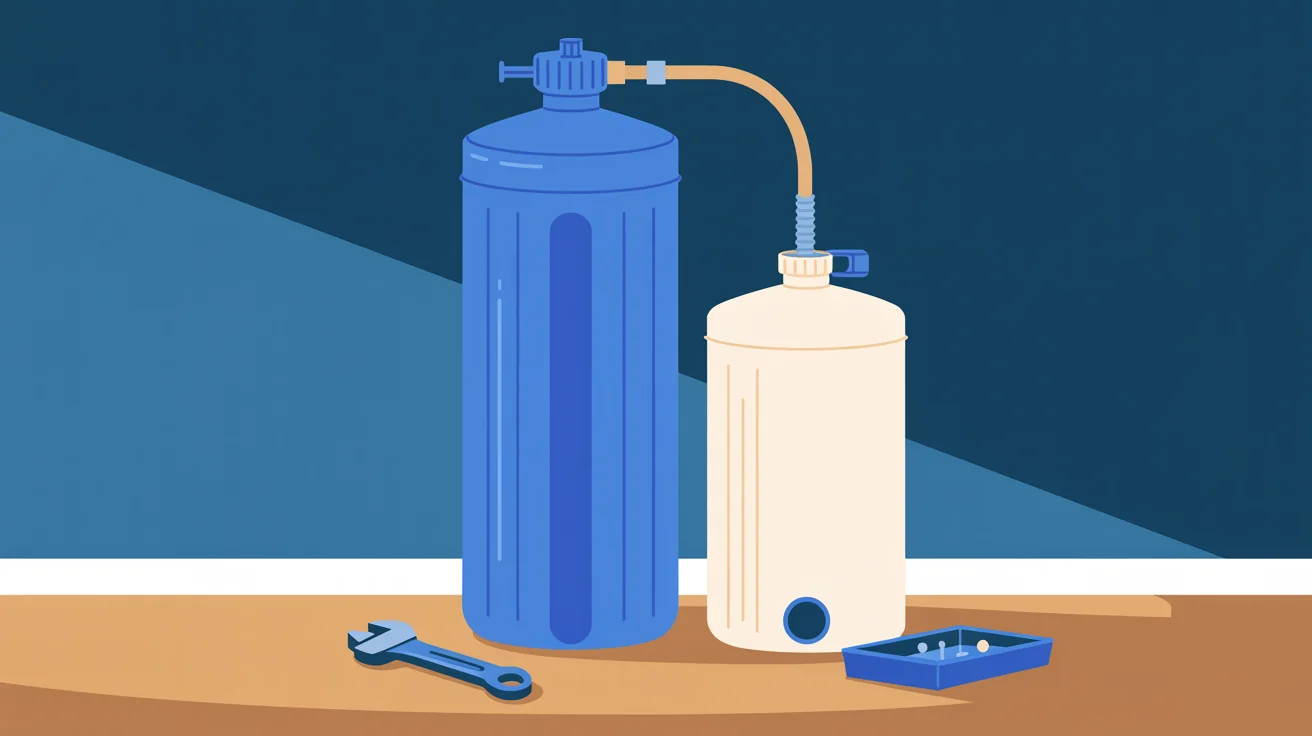
A plumber may be able to repair the piping, bypass valve, drain connection, or leak around a water softener without being prepared to diagnose its control head, resin bed, or regeneration settings. The useful question is not simply, “Do you work on softeners?” It is, “Do you service this make and model, and what part of the system can you diagnose?”
Not every plumbing company accepts every brand. Some equipment uses proprietary parts, programming, dealer-only support, or warranty procedures. Before scheduling, share the manufacturer, model number, approximate installation date, visible error code, and symptom. That information lets the company confirm its current scope rather than discovering a mismatch at the door.
Plumbing skill and treatment-system knowledge overlap
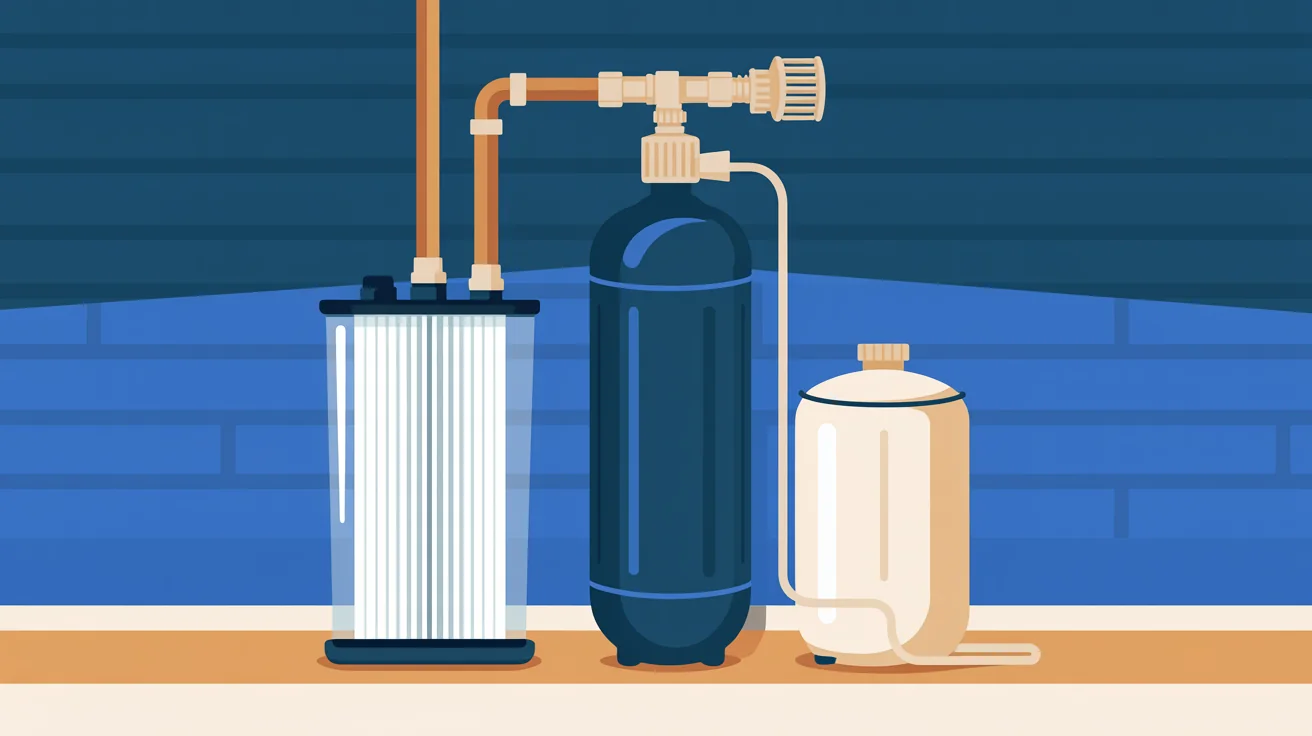
A conventional softener is connected to the home’s water supply and normally has a drain connection, bypass assembly, brine tank, mineral tank, and control valve. Licensed plumbing experience matters for the parts that can leak, restrict flow, or affect the water piping. Water-treatment experience matters for diagnosing why hardness is returning, why regeneration is abnormal, or whether media and settings match the water and household demand.
A service company may handle some or all of the following, but you should confirm rather than assume:
- Leaking supply connections or bypass components
- A control valve that will not cycle correctly
- Brine-tank problems, salt bridging, or blocked brine flow
- Drain-line routing or flow concerns
- Programming after a power interruption or household change
- Media condition, fouling, or loss of treatment capacity
- Replacement planning when parts are unavailable or repair is uneconomical
JB Water & Air publishes both licensed plumbing services and water-treatment services. The company holds Arizona plumbing license ROC #260511, classification CR-77, and its history began with John Bevell’s water-distillation work in 1981. Those are verifiable credentials and context; they are not a promise that every softener brand, part, or warranty is supported. Ask about your exact system.
Gather the model details before calling
The model label is commonly on the control head, underside of a cover, or back of the cabinet. Do not dismantle energized equipment or force a stuck valve to reach it. A clear photo of the label, control display, plumbing connections, and any water on the floor is often enough for an initial conversation.
Also note:
- Whether the water feels hard at every fixture or only one area
- Whether the change was sudden or gradual
- The most recent time salt was added
- Whether the salt level appears unchanged over many cycles
- Any recent power loss, plumbing work, or change in water use
- Whether pressure dropped after the unit was installed or serviced
- Whether putting the unit in bypass changes the symptom
Only operate the bypass if you know how the installed valve works and can do so without forcing it. If the unit is actively leaking, keep people away from wet electrical equipment. Use the home’s shutoff only if it is safe and you understand what it controls, then call for help.
Symptoms do not identify the failed part by themselves
Hard-water spots returning can mean the softener is bypassed, out of salt, failing to draw brine, programmed incorrectly, undersized for current use, or no longer treating effectively. Low pressure can involve the softener, a partially closed bypass, clogged plumbing, or a separate supply problem. Water that tastes salty has several possible causes and should not be treated as proof that “too much salt” was added.
An error code is useful, but the same code can lead to different repairs based on the valve and controller. Search the exact manufacturer manual rather than following instructions for a similar-looking model. Avoid adding chemicals, removing media, or changing injector parts based only on a generic video; an incorrect repair can create a leak, sanitation issue, or warranty dispute.
Ask these questions when choosing service
Before booking a water-softener repair in Mesa, ask:
- Do you currently service this manufacturer and model? Give the exact model, not just the brand.
- Can you obtain its parts? A technically repairable unit may not have practical parts support.
- Will service affect a manufacturer or dealer warranty? Get the answer from the written warranty or manufacturer when necessary.
- What does the diagnostic visit include? Confirm the fee, testing scope, and whether water characteristics will be checked.
- Will I receive a written repair scope? It should distinguish plumbing corrections, equipment parts, settings, media, and any excluded work.
- What ongoing maintenance does this model require? The manual should guide salt type, cleaning, sanitation, and service intervals.
Do not rely on a promise that a single repair will “fix water quality” without defining what is being measured. A basic hardness check can help assess softener performance, but it is not a comprehensive drinking-water safety test. The water and air evaluation guide explains how screening differs from certified laboratory analysis.
Repair, maintain, or replace?
Age alone does not decide. Compare the diagnosed failure, condition of the control valve and tanks, parts availability, service history, water use, and the installed plumbing. A failed seal or obstructed brine component is different from a discontinued controller or damaged pressure vessel.
Ask for alternatives in the same units of comparison: what is being repaired, what remains old, what warranty applies to each option, what maintenance is required, and what the expected treatment target is. If replacement is proposed, the sizing discussion should include incoming hardness, household demand, flow requirements, regeneration strategy, available drain and power, and installation layout. “Bigger” is not automatically better.
What JB Water & Air can confirm
JB Water & Air publishes plumbing and water-treatment categories for Mesa and its East Valley service area. The website does not establish universal brand coverage, free testing, same-day service, or a fixed diagnostic method. For an accurate answer, contact JB Water & Air at (480) 969-3193 with the model information and symptom. JB Water & Air is open 24 hours a day, 7 days a week, though arrival timing must be confirmed by phone.
That short model-specific conversation helps determine whether the job needs a general plumbing repair, treatment-system diagnostics, manufacturer support, or a combination of them.