Water Heaters5 min read
How to Flush a Water Heater Safely in Mesa
Learn when tank flushing is appropriate, the safe sequence to follow, what can go wrong, and why maintenance frequency depends on the unit.
By JB Water & Air · Published Sep 2, 2026
- 4.9 · 580 Google reviews
- CR-77 licensedROC #260511 · CR-77
- Open 24/7
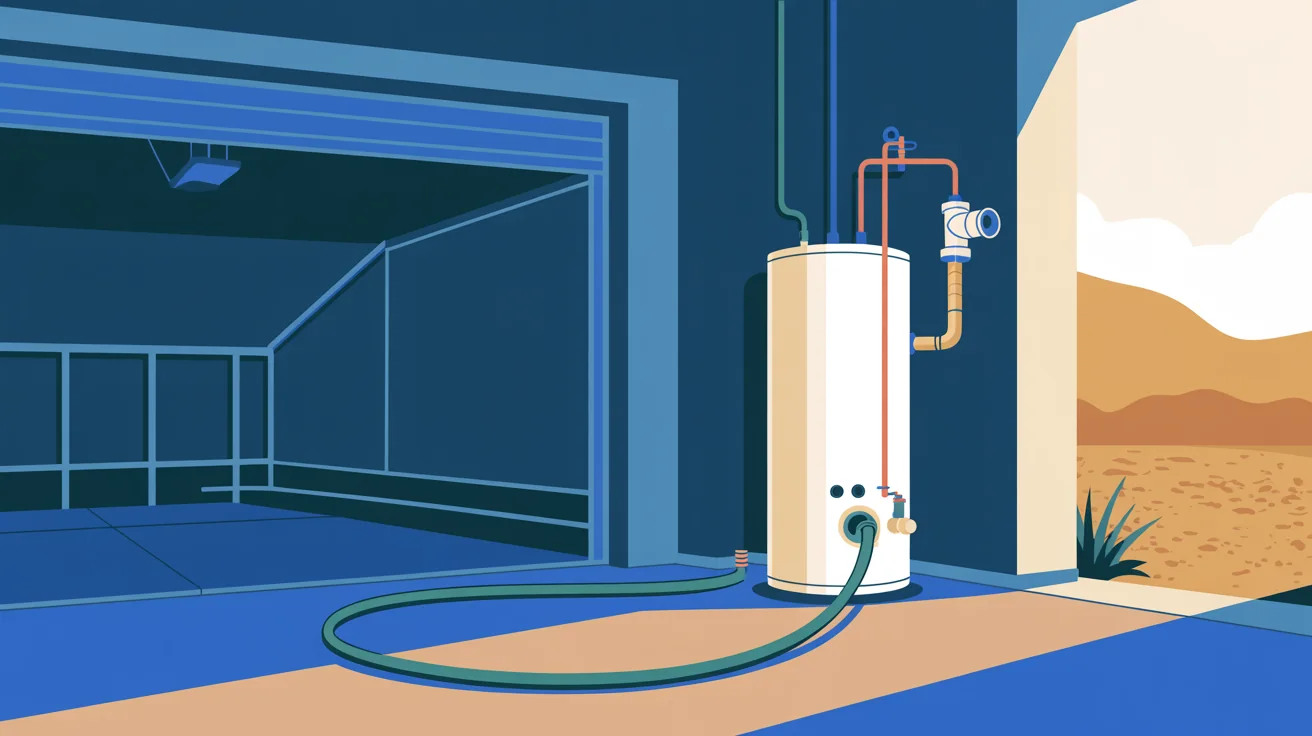
To flush a conventional storage water heater safely, follow the manufacturer’s instructions, shut off its energy source, control hot water and pressure, drain through a secured hose, refill completely, and only then restore power or fuel operation. A corroded valve, unsafe discharge route, or leaking tank can make this hazardous.
This overview does not replace the manual or qualified service. Tankless and heat-pump equipment can require different procedures. For help, use JB Water & Air’s water-heater service.
Why sediment collects in a storage tank
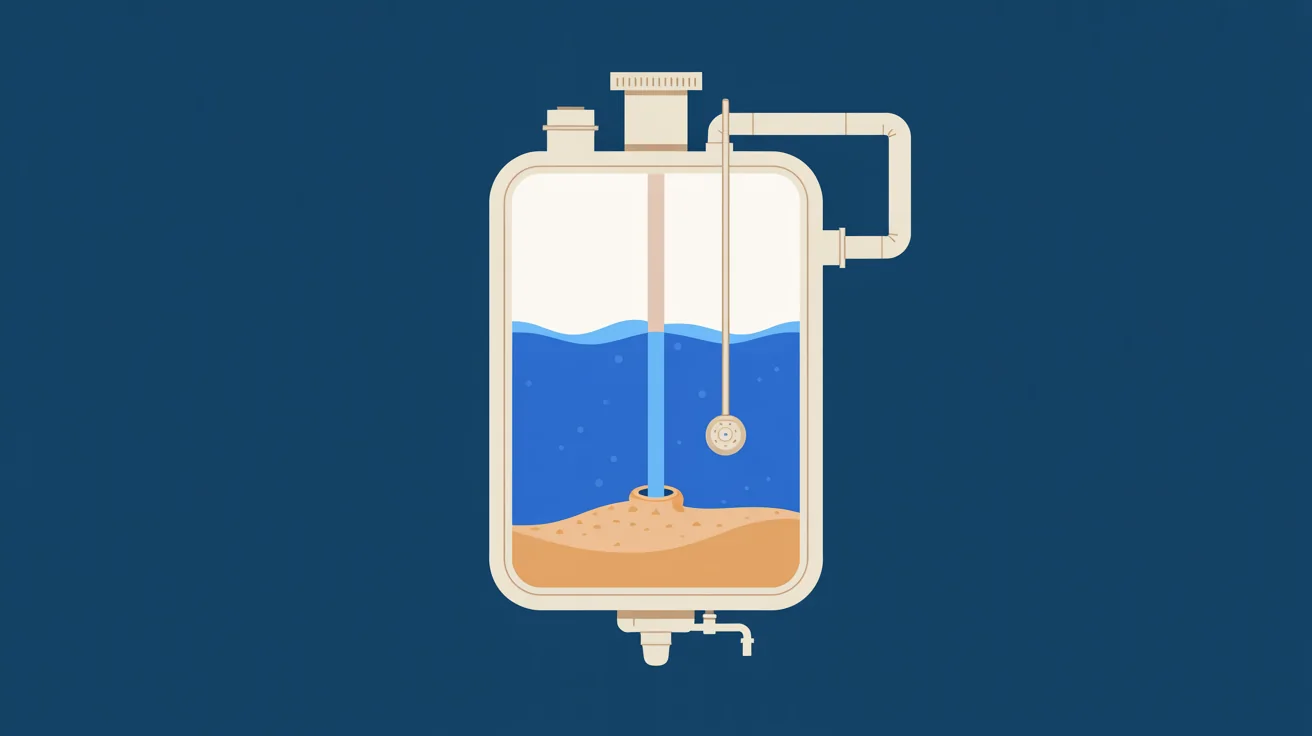
Heating can cause material in water to settle. The amount depends on the supply, treatment, heater design, temperature, use, and service history. Sediment may contribute to noise, reduced usable capacity, inefficient heat transfer, or a blocked drain valve, but those symptoms can have other causes.
Mesa households considering scale control throughout the plumbing can compare options on the water-treatment page. Treatment selection should be based on the water and the household’s goals; no system makes water-heater maintenance unnecessary.
Decide whether this should be a DIY job
Before connecting a hose, check the unit and work area. Stop and call a professional if:
- The tank body, base, connections, pan, or nearby floor is wet
- The drain valve is plastic, cracked, badly corroded, or already seeping
- The cold-water shutoff does not operate reliably
- You cannot positively identify and safely shut off the energy source
- Gas controls, venting, wiring, or combustion conditions appear damaged
- There is no safe, legal discharge route for hot water and sediment
- The unit has gone many years without service and shows significant deterioration
- The installation is in an attic, finished interior, or other location where a spill would be especially damaging
- The equipment is tankless or another design whose manual calls for a pump, isolation valves, or a specific cleaning solution
If you smell gas, leave and contact the gas utility or emergency services from a safe location. Do not operate switches or relight equipment.
Gather the correct information and equipment
Find the model number and manual. Confirm the required valve sequence. You may need a temperature-rated hose, approved drain location, protective gear, a sample bucket, and manufacturer-specified tools.
A landscape is not automatically an acceptable discharge point. Hot water can burn, damage plants or surfaces, carry sediment, or enter a prohibited area. Keep the hose controlled and away from people, pets, walkways, and electrical equipment.
The safe sequence for a conventional storage tank
1. Shut off the energy source
For an electric tank, use the identified circuit disconnect or breaker and follow the manufacturer’s procedure. If you cannot identify the circuit or there is evidence of damaged wiring, stop. For a gas-fired tank, use only the control sequence specified by its manufacturer. Do not disturb gas piping.
Never energize an electric heating element unless the tank is full. An element exposed to air can be damaged quickly.
2. Address water temperature before draining
Stored water can cause severe burns. The manual may direct a cooling period or another procedure. Do not assume that opening a hot faucet immediately makes the whole tank safe. Keep other household members from using fixtures or changing controls during the work.
3. Close the cold-water inlet as directed
Use the heater’s serviceable customer-side shutoff. Do not force a corroded valve. If it will not close or begins leaking, stop and arrange repair.
4. Connect and secure the drain hose
Thread the hose onto the drain valve without cross-threading or applying excessive leverage. Route it downhill where possible, avoid kinks, and secure the outlet. Confirm the receiving location can handle the water volume and temperature.
5. Admit air only as the manual directs
Many storage-tank procedures use a hot-water faucet to prevent a vacuum and help the tank drain. Follow the specific sequence for the heater. Do not operate, cap, or plug the temperature-and-pressure relief valve as an improvised vent.
6. Open the drain valve carefully
Stand clear of the discharge. Open the valve only using the method intended for it. If no water flows, sediment may be obstructing the opening, but inserting wire or disassembling a pressurized valve can release hot water unexpectedly. Stop rather than improvising.
Collect a sample only without exposure. Its appearance may inform future service, but “clear” water does not prove every surface is clean.
7. Rinse only if the manual calls for it
Some procedures briefly use the cold inlet to move remaining sediment; others differ. Follow the manufacturer’s sequence and keep the hose secured. Repeatedly cycling a questionable valve can make it fail.
8. Close, refill, and purge before restoring energy
Close the drain valve gently and check it for seepage. Restore the cold inlet as directed. Keep an appropriate hot faucet open until air has cleared and a steady stream confirms the tank and piping have refilled. Inspect the drain, supply connections, pan, and surrounding area.
Only after the tank is confirmed full should the energy source be restored using the manufacturer’s startup procedure. Recheck for leaks during and after recovery.
If the drain valve will not close afterward
Do not leave a leaking drain valve unattended or overtighten brittle parts. Keep the hose routed safely if that controls the drip, shut off the appropriate water and energy sources only if you can do so safely, and contact a plumber. An active uncontrolled leak may require emergency plumbing service; call to confirm availability and response timing.
A failed drain valve does not prove the tank needs replacement; a leaking tank body is a different condition.
How often should a Mesa water heater be flushed?
There is no universal “twice a year in Arizona” standard. Start with the manufacturer’s interval, then consider sediment, water chemistry, temperature, use, prior service, and valve condition. Record what was observed instead of increasing frequency based only on geography.
If a treatment system serves the home, its maintenance and settings can affect water characteristics, but they do not replace the heater manual. Tankless equipment often uses a product-specific descaling or flushing procedure and should not be treated like a storage tank.
Water-heater maintenance in Mesa
JB Water & Air is a family-owned Mesa company serving the area since 1981 under Arizona plumbing license ROC #260511 (CR-77). A technician can identify the heater type, evaluate tank and valve condition, and explain an appropriate maintenance or replacement scope.
To request water-heater service, contact JB Water & Air or call (480) 969-3193. Provide the model, location, age if known, leak status, and maintenance history so the visit can be planned without assuming that flushing is safe for every unit.
Frequently asked questions
- How often should I flush a water heater in Arizona?
- Use the water-heater manufacturer’s maintenance instructions and the actual sediment found in the tank. Water chemistry, temperature, use, model, and prior maintenance all matter, so annual or twice-yearly service should not be presented as a universal Arizona rule.
- Can I flush a water heater myself?
- A prepared homeowner may be able to flush a serviceable storage tank by following its manual. Hire a qualified plumber if the energy shutoff, drain route, valve condition, fuel controls, or refill procedure is uncertain, or if the tank is leaking or badly corroded.
- What happens if a water heater is never flushed?
- Mineral sediment can accumulate in a storage tank and may contribute to noise, reduced usable capacity, or inefficient heat transfer. The effect varies by water chemistry, heater design, temperature, use, and tank condition.
- Can flushing an older water heater reveal a leak?
- It can expose an already deteriorated valve or tank condition. Flushing does not create sound metal corrosion, but operating a fragile drain valve or disturbing deposits can reveal an existing weakness. Have a questionable tank evaluated first.