Drains & Sewer5 min read
How to Tell Whether Your Main Sewer Line Is Clogged
Multiple slow fixtures, low-drain backups, and cross-fixture reactions can point to a main sewer clog. Learn what to check and what not to do.
By JB Water & Air · Published Mar 9, 2026 · Reviewed Sep 2, 2026
- 4.9 · 580 Google reviews
- CR-77 licensedROC #260511 · CR-77
- Open 24/7
The strongest sign of a main sewer-line clog is not one slow sink. It is a pattern: several fixtures are affected, one fixture causes a reaction in another, or wastewater rises at a low drain. Those symptoms suggest the restriction is downstream of multiple branches. They do not reveal the exact cause, and they should not be diagnosed by repeatedly running water into a line that may already be full.
An isolated sink, shower, or toilet problem is more likely to be local to that fixture or branch. If the symptoms involve much of the house, treat the situation as a possible building-sewer problem and consider professional drain cleaning.
Seven warning signs of a main-line blockage
1. More than one fixture slows down together
Map the affected fixtures. If a bathroom sink, shower, and toilet in the same area are all slow, the problem may be in a shared branch. If fixtures across the home change at the same time, the suspected restriction moves farther downstream.
One slow drain does not prove the main line is clear, but it gives you less evidence of a whole-house problem. The fixture pattern is more useful than any one sound or odor.
2. A low fixture backs up when another fixture runs
When water cannot move through a downstream restriction, it may emerge through a lower opening. A toilet flush that sends water into a shower or tub is a particularly important cross-fixture reaction. So is a washing-machine discharge that makes a floor drain rise.
Stop the test as soon as you observe it. More water can turn a warning into a sewage spill.
3. Toilets gurgle or change water level
Air displaced through a restricted drainage system can produce gurgling. A toilet bowl may bubble when a sink drains or its water level may change unexpectedly. Gurgling alone is not proof of a main clog; vent problems and local restrictions can produce similar symptoms. Gurgling combined with slow fixtures or a backup is more significant.
4. Wastewater appears at a shower, tub, or floor drain
The lowest available drain often shows the problem first. Water containing debris or a sewage odor should be treated as contaminated. Keep people and pets away, avoid direct contact, and stop using connected fixtures.
5. The problem returns soon after clearing
A recurring blockage at the same place may mean material was only partially removed or that the pipe has a condition that catches debris. Roots, heavy deposits, an offset, a belly, a break, or deteriorated material are possible, not conclusions. A useful next step may include cleaning followed by targeted inspection.
6. An exterior cleanout is holding water
Some homes have an accessible sewer cleanout outside. Removing a cleanout cap can release wastewater under pressure, so it is not a risk-free homeowner test. Do not open a cap if sewage could spill toward people, electrical equipment, or the building. A plumber can choose an appropriate access point and contain the work area.
7. Sewage odor accompanies drainage changes
An odor may come from a dry trap, failed seal, vent issue, spill, or blocked line. Odor by itself does not locate the problem. When it occurs with multiple slow fixtures or a low-point backup, stop water use and have the system evaluated.
A quick symptom map
Use this as a starting point, not a final diagnosis:
| What you observe | What it may suggest |
|---|---|
| One sink is slow; nearby fixtures are normal | Stopper, trap, or local branch obstruction |
| One toilet is weak; tub and sink are normal | Toilet trapway or nearby branch issue |
| Fixtures in one room react together | Shared branch restriction |
| Fixtures across the home slow together | Larger branch or main sewer restriction |
| Toilet flush raises water in a tub or shower | Downstream restriction requiring prompt attention |
| Backup occurs only during heavy discharge | Partial restriction or drainage-capacity issue |
The location and layout of the home matter. A plumber may ask which fixture is lowest, what was running when the symptom appeared, and whether the home has cleanouts.
What not to do
Do not keep flushing toilets or filling sinks to see whether the line “catches up.” Do not mix chemical drain products, and tell the technician if any product is already in the line. Avoid forcing an unverified bladder, pressure device, or improvised tool into concealed piping; pressure can affect weak joints or push wastewater into another fixture.
Do not enter standing water near outlets, appliances, panels, or extension cords. For a gas odor or other immediate life-safety hazard, leave the area and contact the appropriate utility or emergency service.
What a plumber may do to confirm the problem
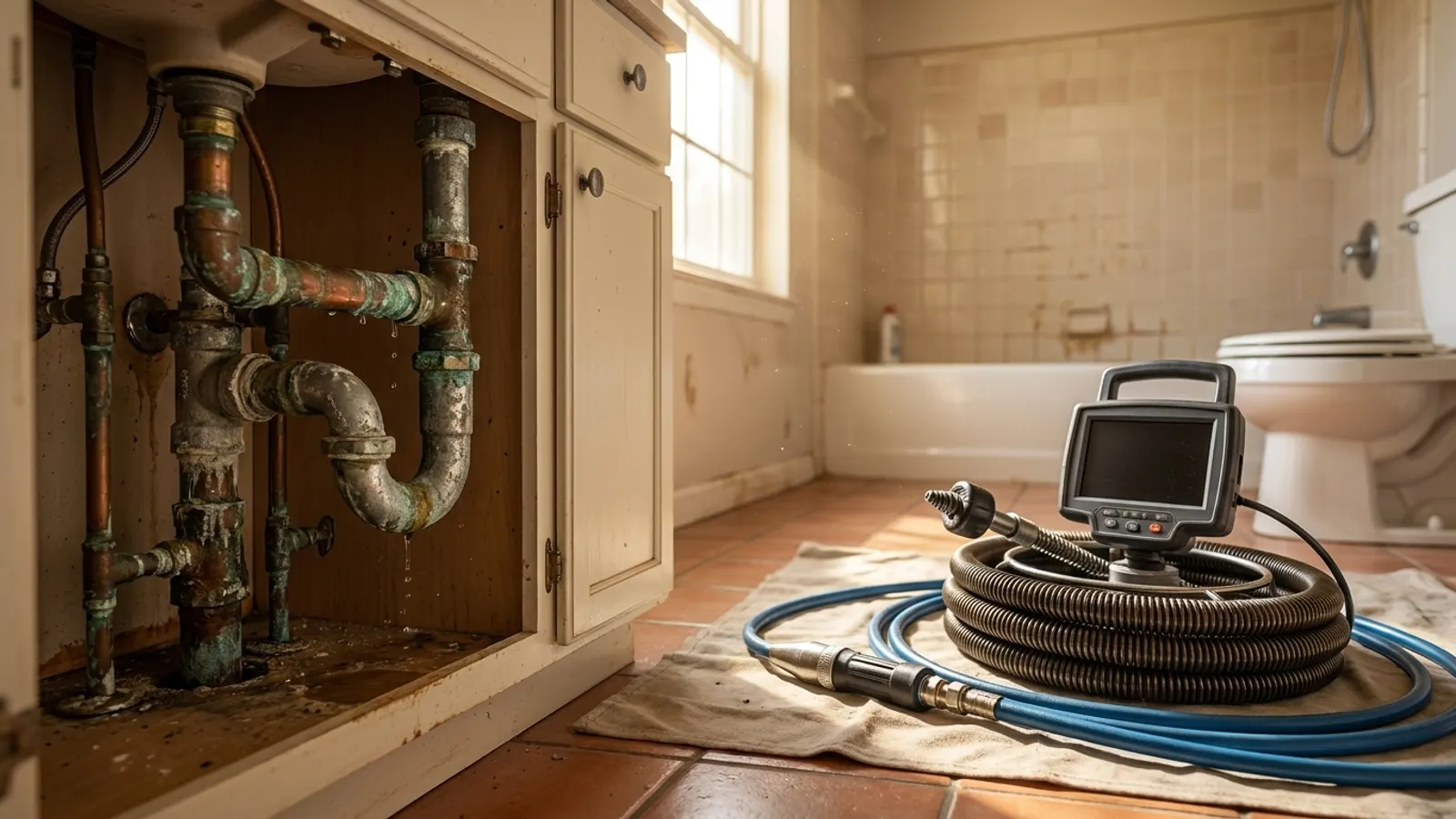
Diagnosis usually begins with the symptom pattern, accessible fixtures, and known cleanouts. The technician may identify an appropriate entry point and use cable equipment or another method to restore flow. The goal and method should be explained before work begins.
A camera can be valuable when a clog recurs or structural damage is suspected, but it is not magic. Dirty standing water may block the view, and the line may need to be opened before inspection. Ask what the footage shows, where the finding is located, and whether it demonstrates an obstruction, a defect, or only a possible concern.
Cleaning a serviceable line is different from sewer-line repair or replacement. If repair is recommended, ask for evidence, the affected segment, access requirements, alternatives, and a written scope.
When to make the call urgent
An active sewage backup, unusable essential toilet, uncontrolled water, or wastewater approaching living space deserves prompt attention. JB Water & Air is open 24 hours a day, 7 days a week. Arrival timing must still be confirmed by phone. The emergency plumbing service page explains the call route and safe first steps.
For less urgent symptoms, stop or limit use of affected fixtures until the cause is understood. Record which fixtures react and when. That information helps the technician trace the likely drainage path without adding unnecessary water.
Main sewer diagnosis in Mesa
JB Water & Air is a family-owned Mesa company serving the area since 1981 under Arizona plumbing license ROC #260511 (CR-77). The company can evaluate whether the pattern points to a fixture, branch, or main-line problem and explain the evidence behind the recommendation.
To request an evaluation, contact JB Water & Air or call (480) 969-3193. Describe every affected fixture, any cross-fixture reaction, whether sewage is present, and whether water use has stopped.