
Pipe lining and pipe bursting
Trenchless sewer repair in Mesa: less digging, not no digging.
Lining or pipe bursting rebuilds a sewer line from an access pit at each end, not a trench down the whole run. Footage of the cleaned line decides whether yours fits.
- 4.9 · 580 Google reviews
- CR-77 licensedROC #260511 · CR-77
- 2-year labor guarantee2-year workmanship guarantee
Guarantee covers JB's own labor. Excludes normal wear, manufacturer defects and outside damage.
What trenchless changes
- Lining (CIPP)
- A new interior cured inside the old pipe.
- Pipe bursting
- New pipe pulled through as the old one breaks outward.
In one line
Trenchless sewer repair rehabilitates or replaces a qualifying underground line through limited access points instead of opening a continuous trench along the full route.
Trenchless is not “no dig.” It reduces trench length and surface restoration, and it can take the caliche out of most of a run, but the access points still involve real digging, and it only fits a line the camera qualifies. It is not suitable for every pipe.
Where trenchless fits, and where it does not
The first decision is whether the sewer has a structural problem at all. Slow drains and backups can also come from an obstruction that needs clogged drain repair rather than rehabilitation. When several fixtures react together, work through the pattern in how to tell whether a main sewer line is clogged first.
Where the fault is in the pipe itself, trenchless methods are considered for cracks and localized deterioration, recurring root entry associated with pipe defects, corrosion or scaling in qualifying cast iron, sections that need structural rehabilitation, and lines selected for replacement through existing or limited access. Eligibility depends on inspection, access, route, connections, and the condition that remains after cleaning. JB Water & Air offers trenchless sewer options in Mesa under Arizona CR-77 plumbing license ROC #260511.
Roots bring many homeowners here, and they are the clearest case of a blockage that is really a pipe-condition problem, which tree roots in sewer lines works through in detail. Clearing restores flow. It does not close the opening the roots came through. Vinegar and baking soda do not enter this conversation: that reaction happens at the top of a fixture drain and cannot reach a defect out under a yard.
What tends to bring people here
A reading, and the question it opens
- Backups that return after every cleaning
- Flow was restored, but the reason the line filled was not addressed. Recurrence at a similar interval points at the pipe rather than at what went down it. The question is where that defect sits and how much sound pipe surrounds it.
- Roots coming back on the cutter head
- An opening the roots are using, usually a joint, a crack, or an offset. Cutting removes the growth and leaves the opening. The question is whether that opening is one identifiable spot or a condition repeating along the run.
- Standing water at the same point on every camera pass
- A low spot, or belly, holding water. This is the grade question, and it decides more trenchless eligibility than anything else on this list, because a liner takes the shape of what it is installed into.
- A driveway, patio, or slab section cracked or settled over the line
- Possible soil movement around the pipe, sometimes from water escaping it. The question is which came first, and the answer changes whether that surface is evidence or simply a surface to protect.
Camera first
The order the decision gets made
A method named before the line is located and cleaned is a method chosen against a guess. Only the second camera pass, after cleaning, shows the pipe wall, and the pipe wall is what says whether a host pipe can carry a liner at all.
Locate and survey
The line is camera surveyed and the defect is located from the surface before any method is named. Sequence is the point here: a method chosen before locating is a method chosen against a guess.
Clean, then survey again
Jetting or mechanical cleaning removes roots, grease, and scale, and the line is re-inspected afterwards. Only the second pass shows the pipe wall, and the pipe wall is what establishes whether a host pipe can carry a liner.
Set the method and the access points
Lining, bursting, a spot repair, or open excavation is decided against the cleaned condition, the route, and the ground and surfaces at each proposed pit. This is the step where the yard, the driveway, and the slab enter the plan.
Install, reconnect, and re-test
The liner or replacement pipe is installed, affected branches are reinstated, and the finished line is re-inspected and tested. Without that closing survey nobody can say what the work actually achieved.
Ask to see the footage behind any trenchless recommendation
It should answer all five of these before a method is named.
- Where is the damaged section?
- How much of the line was actually visible?
- Is the host pipe open and shaped for the proposed method?
- Which connections or branches intersect the work area?
- What condition would make the method unsuitable?
A sewer camera inspection that stops short of the defect has not answered the question. Trenchless should be selected because it fits the pipe, not because the word sounds less disruptive.
The methods
Pipe lining and pipe bursting: what each can do, and what it cannot
These are not interchangeable. The line most people skip past is the one that matters most on a Mesa lot: a liner takes the shape of the pipe it is installed into, so it reproduces a belly rather than correcting it.
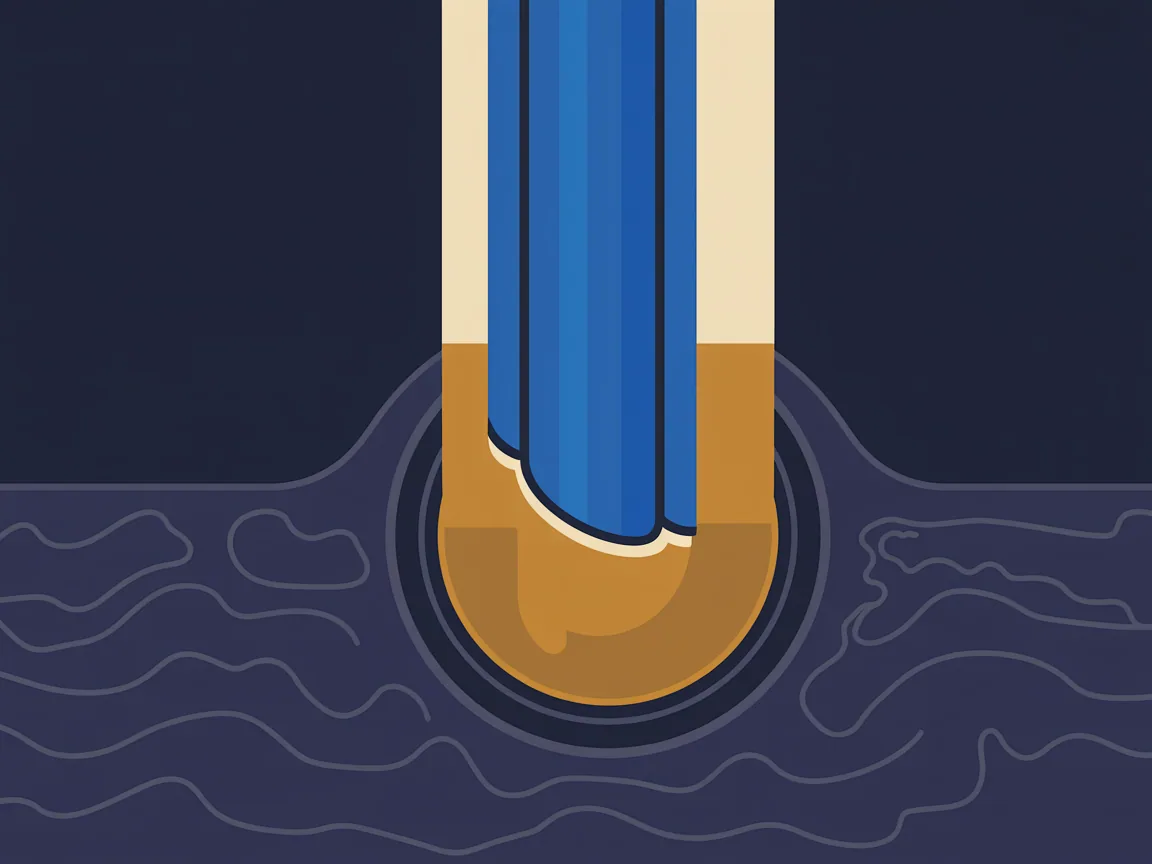
Pipe lining, cured in place (CIPP)
Builds a new interior inside a qualifying host pipe. On a caliche lot the soil only matters at the access points.
Cannot correct a collapse, a severe deformation, or an alignment fault, and it reproduces the existing grade rather than fixing it.
Pipe bursting, HDPE pulled through
Fused pipe drawn through while the old pipe is broken outward, so a failing host pipe is no barrier.
Needs a pit at each end and ground that will accept the displacement. Cemented caliche does not give the way loose soil does.
PVC laid in an open trench
The conventional replacement, and the only option here that lets grade be reset and a route realigned.
Requires the trench that caliche makes slow and labor heavy across the run.
More on pipe replacementSectional liner for a spot repair
A short liner set across one defined defect on otherwise sound pipe. Proportionate when the camera shows a single fault.
The wrong choice when the same fault type repeats along the run.
Not sure which of these your line would qualify for? That is a camera question, and it starts with one call.
(480) 969-3193Weigh it up
Trenchless or open trench, on the balance
Tick the conditions that match your line and watch which way the beam leans. It is a way to organise the question before you call, not a ruling on your pipe. One hard fault, a collapse or a belly that has to be regraded, can outweigh a whole pan of favorable signs.
Before anyone scopes work all the way to the street, settle where your responsibility ends, because sewer line responsibility is not drawn in the same place everywhere. The sewer line repair and replacement guide covers the broader repair-versus-replacement decision.
Tick the conditions that match your line to see which way the beam leans.
This is a weigher, not an eligibility ruling and not a booking. It cannot see your line. Even when the beam leans toward staying inside the pipe, the access points still involve real digging, and only the cleaned camera footage settles what any method can actually do here.
How Mesa ground changes it
The part most proposals leave unexplained
Caliche and hardpan
Where the Valley sits over cemented caliche, an open trench stops being a digging job and becomes a breaking job: hammers, rock teeth, more hours in the same trench. Lining can take that hard layer out of the project almost entirely, because the work happens inside the pipe.
Bursting and displacement
Bursting displaces the fractured old pipe outward into the ground, and cemented material does not give the way loose soil does. Nobody reads that from the surface. A test pit, or a potholed access point, is how the ground on a given lot gets established rather than assumed.
Post-tension slabs
Many Arizona homes from the 1980s onward sit on post-tension slabs, where steel tendons are held under tension. Tendons have to be located before any opening is cut. That is a structural matter, and a strong argument for staying inside the existing pipe.
Monsoon and haboob
An open trench is exposed. A storm can put water in it, dust can partly fill it, and saturated sidewalls in weak soil can slough. It is worth asking how many days a trench stays open and how it gets covered overnight.
Central Mesa also has a large stock of homes still draining through their original cast iron, which corrodes from the inside: a line can measure round at the ends while the invert has thinned or channeled along the bottom. Whether that host pipe can carry a liner is a condition question rather than a material one. The cast iron pipe repair page covers what that deterioration looks like.
What drives the quote
No number belongs here yet
A figure given before the line is inspected is a guess dressed as a price. Two quotes are only comparable when they cover the same work, and quotes that look far apart usually differ on scope, not on method. A written quote should map the work two ways: pit by pit, and across the whole run.
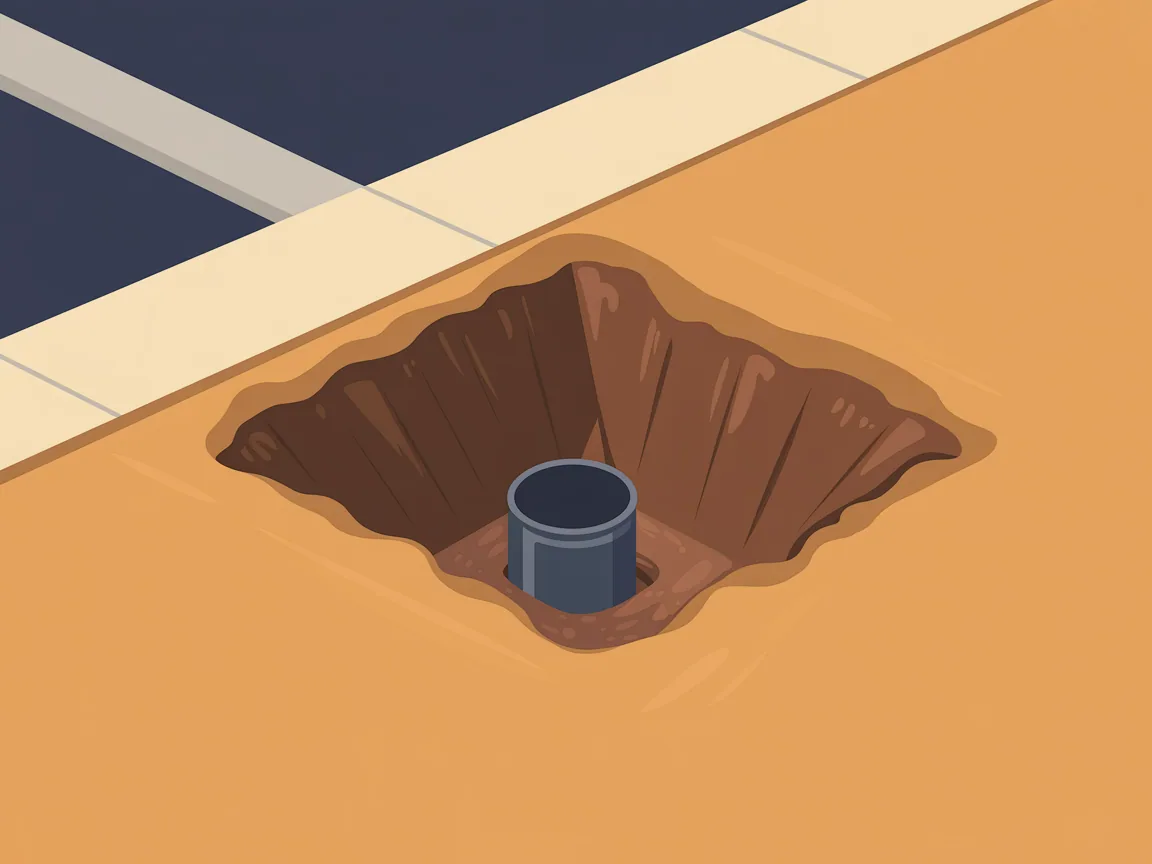
At each access pit
Where trenchless still means real digging, priced per opening.
- The depth of the line and the number of access pits
- What sits above each pit: turf, decorative rock, pavers, concrete, or slab
- The ground expected at that pit, caliche included
- Restoration of that surface, and who performs it
Across the run
The segment as a whole, endpoint to endpoint.
- The length and the two endpoints being addressed
- Pipe diameter, existing material, and the liner or replacement pipe proposed
- Branch connections to be reinstated
- Cleaning and the second camera pass
- Permits, inspection, and testing
- How unexpected conditions get priced and approved before work continues
Whether resulting damage is claimable is a separate question, and blocked drains and homeowners insurance sets out what an insurer asks first.
What a rehabilitated line still carries
This page does not promise a completion date, zero excavation, a particular material in stock, or a fixed result before the line is evaluated. If the route crosses a yard, driveway, slab, or interior finish, clarify which surfaces get opened and who restores them. Trenchless can still involve meaningful work at the access points.
A rehabilitated line also still carries whatever goes into it, and root pressure at joints outside the repaired segment does not disappear. That is why how often drains need professional cleaning is answered from evidence rather than from a calendar.
Ask what trenchless would involve here
Start with the footage, not a figure
Access points still matter. Ask where they would go before you picture the work.
The guarantee covers JB's own labor. It excludes normal wear, manufacturer defects and outside damage.
- Share the backup history, the known pipe material, and the approximate age of the house.
- Send any existing camera footage. A comparison across two dates says more than one pass.
- A JB team member calls to talk through what an evaluation would look like. Nothing is booked here.
Open 24 hours a day, 7 days a week
Questions people ask
Straight answers
Can trenchless sewer repair fix a belly?
- Usually not. A belly is a low spot where the pipe has lost grade, and a liner follows the shape of the host pipe, so lining a sag reproduces the sag. Correcting grade normally means excavating that section and re-bedding the pipe at the proper fall. Ask specifically how a documented belly is being handled.
What is the difference between pipe lining and replacement?
- Lining leaves the old pipe in the ground and builds a new interior inside it. Replacement takes the old pipe out of service, either by pulling new pipe through it with a bursting head or by excavating and laying new pipe. Lining depends on the host pipe staying continuous and correctly graded. Replacement does not.
How long does trenchless sewer repair last?
- There is no single answer, and a figure quoted before the line is inspected is a sales number rather than an assessment. Service life depends on the method, the material installed, how much original pipe is retained outside the repaired segment, the connections, ground movement, and what keeps going down the line.
How do I request a trenchless evaluation?
- Call (480) 969-3193 or use the contact page. Share the backup history, the known pipe material and approximate age of the house, any prior clearing or repairs, and any existing camera footage. Earlier recordings are useful evidence, because a comparison across two dates says more about a line than a single pass does.
Related sewer and pipe services
More on sewers from the JB team
Worried about the yard or the driveway?
Ask where the access points would go before you picture the work. That conversation costs nothing, and it starts with the camera, not a number.