Water Heaters5 min read
Water Heater Maintenance That Helps Prevent Early Failure
Use a practical water-heater maintenance plan to spot leaks, manage sediment, follow manufacturer guidance, and reduce avoidable wear.
By JB Water & Air · Published Nov 3, 2025 · Reviewed Sep 2, 2026
- 4.9 · 582 Google reviews
- CR-77 licensedROC #260511 · CR-77
- Open 24/7
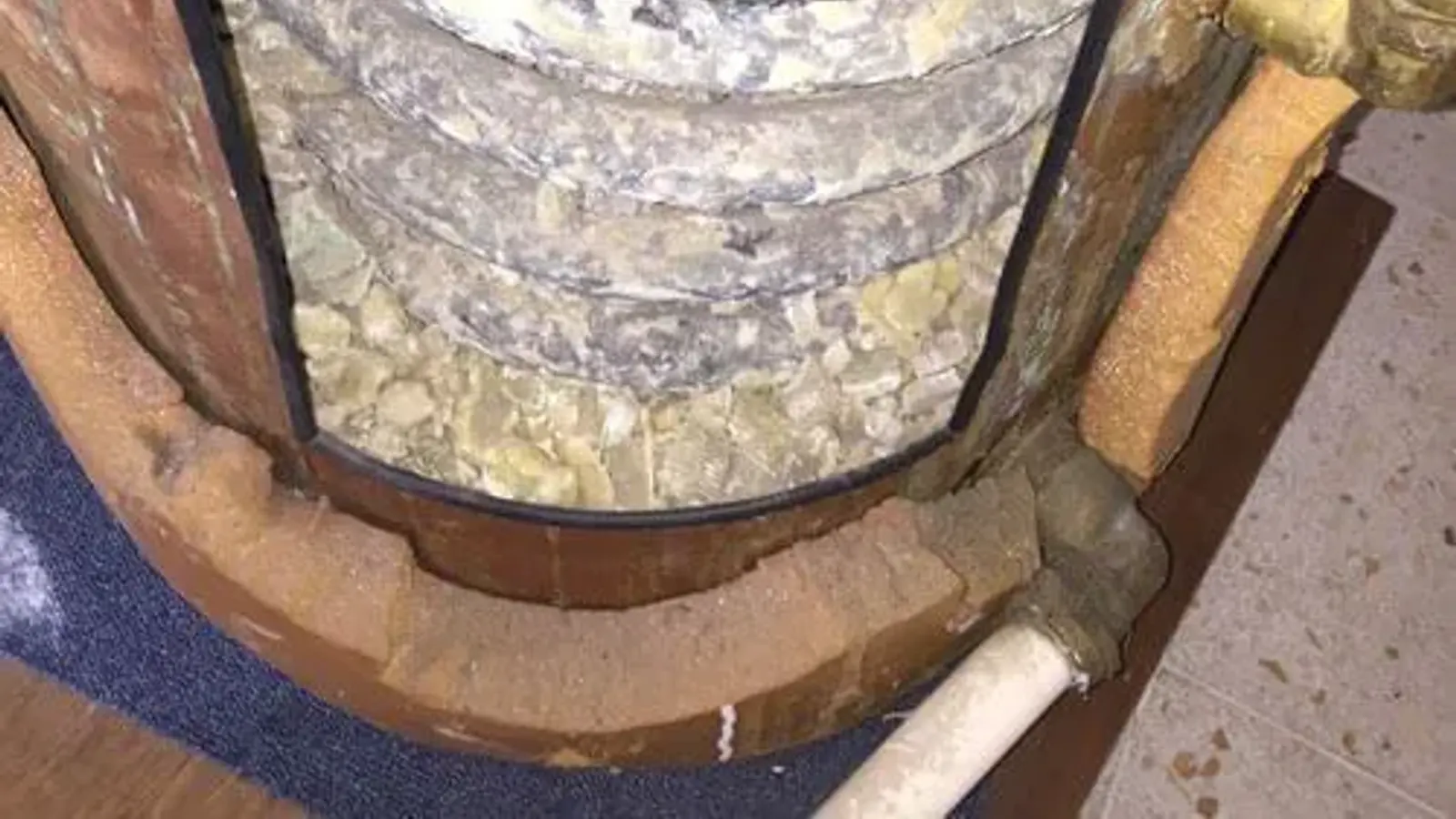
Maintenance can reduce avoidable water-heater wear, catch small leaks before they become larger, and help equipment operate as intended. It cannot promise to “double” a unit’s life. Age, water chemistry, installation quality, demand, manufacturing differences, and component failures all affect how long a particular heater remains serviceable.
The best maintenance plan begins with the manual for the exact model. A generic calendar is only a starting point. This guide explains what to watch, which questions to ask, and where a qualified professional may be needed.
Start with a monthly visual check
You do not need to disassemble the heater to notice important changes. From a safe position, look for:
- moisture, rust trails, or mineral deposits around the tank and connections;
- corrosion on accessible fittings;
- a damaged drain pan or blocked pan drain;
- staining near the temperature-and-pressure relief discharge;
- loose or visibly damaged venting on a fuel-burning unit;
- scorched surfaces, unusual odors, or repeated control errors; and
- stored items that crowd required clearances or service access.
Do not touch wet electrical equipment. If you smell gas, leave the area and contact the gas utility or emergency services from a safe location. If water is actively escaping, close a safe, accessible water shutoff only if you know how and can reach it without entering an electrical or other hazard.
The water-heater service page provides a useful place to begin when a visual check reveals a problem.
Treat sediment according to the equipment and water
When water is heated, dissolved minerals and particles can collect in a storage tank. Accumulation may contribute to noise, lower usable capacity, difficult draining, or reduced heat transfer. Mesa homeowners often notice scale elsewhere in the home, but the maintenance need still depends on actual water conditions and the equipment.
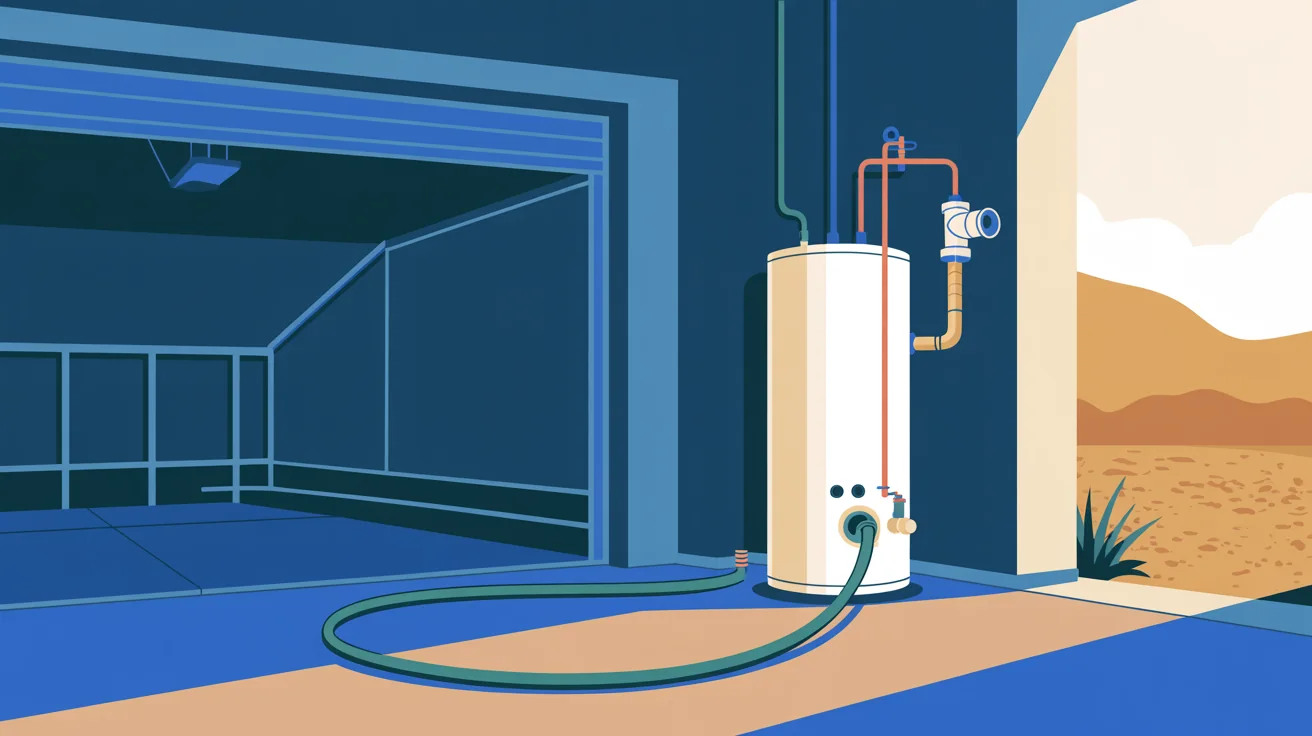
Flushing is not a universal do-it-yourself instruction. The procedure differs by model, and an old drain valve may leak or clog when disturbed. Hot water can cause severe burns, and electric or gas equipment must be shut down and restarted correctly. A neglected tank with heavy buildup may not respond to a routine flush the way a newer, regularly maintained tank does.
Follow the manufacturer’s procedure and have a qualified provider handle the work when the shutoffs, drain route, fuel or electrical controls, or equipment condition are uncertain. Ask what was observed in the discharged water rather than assuming every tank needs the same interval.
Understand the anode rod’s role
Many tank water heaters use a sacrificial anode rod to help protect the steel tank from corrosion. The rod is intended to deteriorate over time. How quickly that happens varies with water chemistry, temperature, demand, tank design, and the installed rod.
Inspection or replacement can require clearance above the tank, significant force, specialized parts, and careful sealing. Some models use different anode configurations or other corrosion-protection systems. Check the manual and model information before ordering a generic part.
Replacing an anode at the right time may support tank protection; it does not repair a tank that is already leaking or guarantee a new lifespan. Ask a technician to explain the rod’s observed condition and whether service is practical for that installation.
Keep safety controls available and intact
The temperature-and-pressure relief valve is a safety device, not a routine faucet. Never cap, plug, or obstruct it or its discharge pipe. Do not assume that dripping from the discharge is harmless; it can reflect a valve problem, thermal expansion, pressure condition, temperature issue, or another cause that needs evaluation.
Testing instructions and intervals vary, and operating an old valve can reveal a failure to reseat. Follow the manufacturer’s instructions and local professional guidance. A plumber should assess an active discharge, missing or improper drain route, corrosion, or any valve you are not prepared to operate safely.
Use a reasonable temperature setting
Higher settings can increase scald risk, energy use, and stress on equipment. A single universal number is not appropriate for every household or system. Manufacturer instructions, local requirements, dishwasher needs, mixing controls, and occupants who are more vulnerable to burns all matter.
Do not change concealed gas controls or energized electrical wiring. If delivered temperature is inconsistent with the setting, the issue may involve a thermostat, heating element, burner, sensor, mixing valve, crossover, or plumbing condition. Measure and diagnose rather than repeatedly turning the control higher.
Check the surrounding plumbing
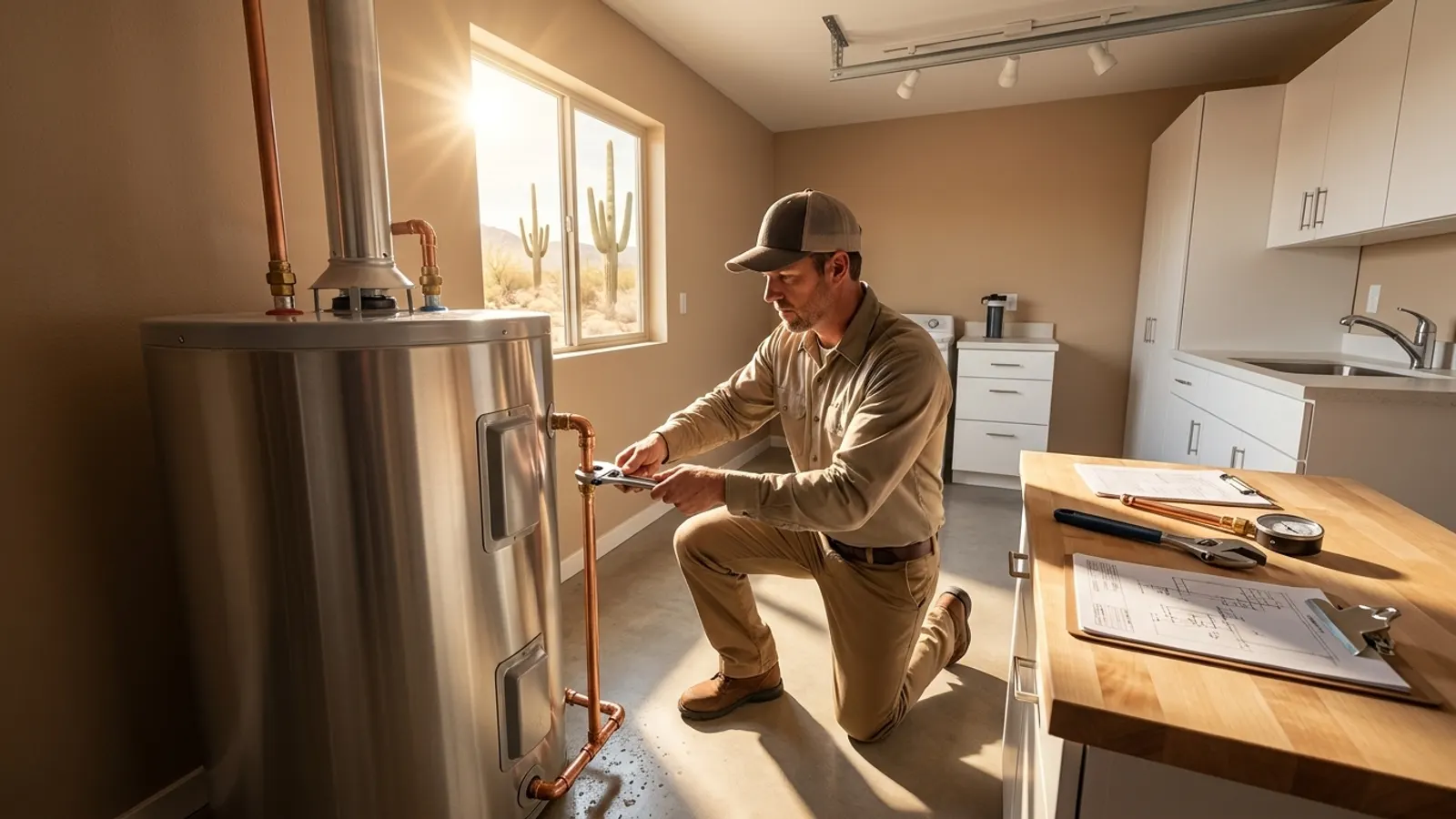
Water-heater maintenance is not limited to the tank. A technician may need to evaluate shutoff valves, flexible connectors, unions, gas piping, venting, electrical supply, expansion control, drain pans, relief discharge, recirculation components, and nearby signs of leakage.
High pressure and uncontrolled thermal expansion can stress the heater and fixtures. The correct limits and control strategy depend on the building and applicable requirements. JB Water & Air’s broader plumbing-services page explains why the connected system matters.
Water treatment may also affect maintenance. A softener addresses hardness; a filter serves a different purpose. Neither should be added automatically as a promise to extend equipment life by a fixed number of years. If scale is a recurring concern, compare the documented problem with available water-treatment services and the exact equipment requirements.
Keep records instead of relying on memory
Create a simple equipment record with:
- manufacturer, model, serial number, fuel type, and capacity;
- installation date if known;
- manual and warranty documents;
- maintenance dates and observed conditions;
- repairs and replaced parts;
- water-treatment equipment serving the heater; and
- photos of the label and installation area.
Records help a professional distinguish a new symptom from a recurring one. They also make it easier to follow manufacturer maintenance terms and compare repair with replacement without guessing the unit’s history.
Know when maintenance is no longer the answer
Maintenance cannot reverse a leaking storage tank, repair advanced corrosion, or make an unsafe installation acceptable. Active tank leakage, combustion concerns, damaged wiring, repeated relief discharge, persistent error codes, or worsening performance call for diagnosis. Shut the system down only according to safe manufacturer or emergency guidance.
A repair decision should consider the failed component, tank condition, parts availability, prior repairs, installation deficiencies, and household needs, not age alone. Likewise, replacement should not be sold solely because a unit has reached a generic birthday.
JB Water & Air is family owned in Mesa and has served the area since 1981. To ask about a model-specific maintenance or repair assessment, contact JB Water & Air with the label photos, symptoms, service history, and any visible leakage. Confirm the current scope, availability, and price directly; this article does not promise a maintenance result or fixed equipment life.