Water Heaters5 min read
What Causes a Water Heater to Fail? Nine Common Mechanisms
Understand how tanks, heating components, controls, venting, pressure, scale, and installation conditions can cause water-heater failure.
By JB Water & Air · Published Feb 24, 2026 · Reviewed Sep 2, 2026
- 4.9 · 580 Google reviews
- CR-77 licensedROC #260511 · CR-77
- Open 24/7
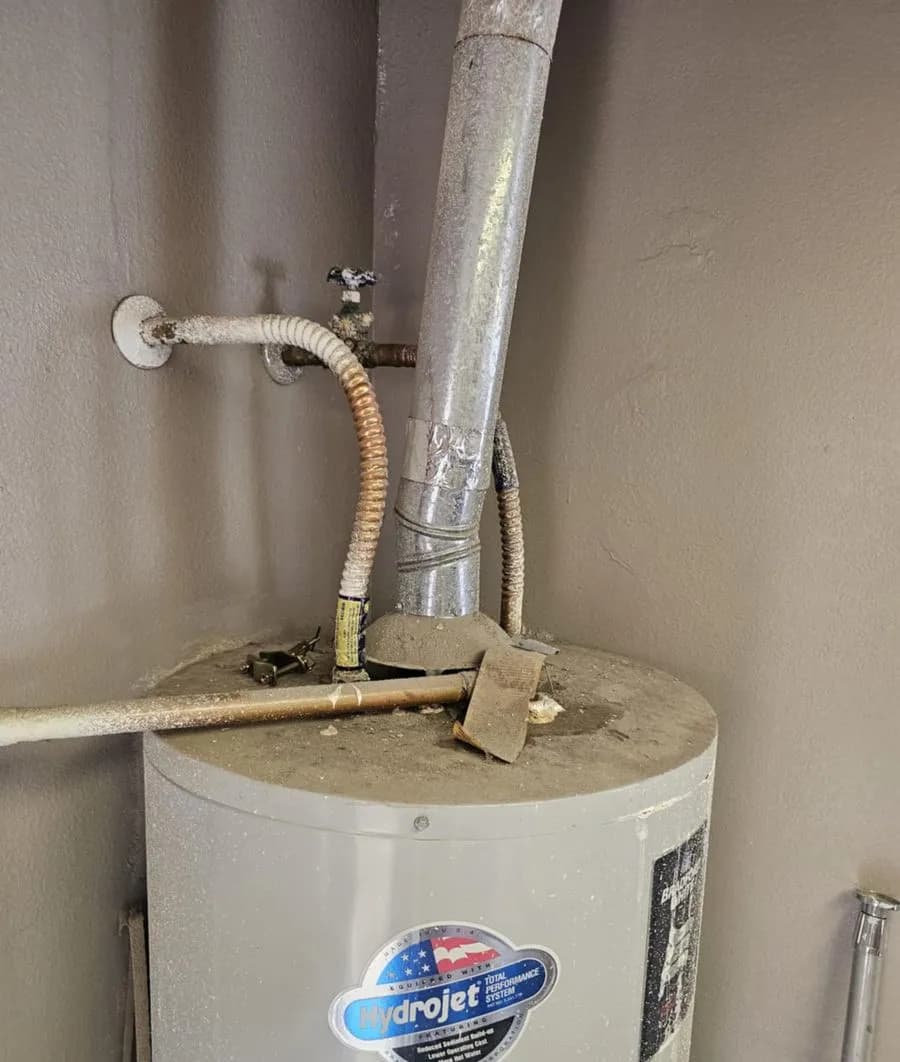
Water-heater failure is an outcome, not a single diagnosis. A storage tank can leak while its burner still works. An electric unit can have an intact tank but a failed heating element. A tankless heater can shut down to protect itself from a venting, flow, ignition, or scale-related condition.
Knowing the failure mechanism matters because the remedy ranges from a serviceable component to full replacement. These nine categories explain what a qualified technician may investigate; they are not instructions to bypass covers, fuel controls, electrical protection, or safety devices.
JB Water & Air’s water-heater service page outlines the local service path for Mesa and the East Valley.
1. Tank corrosion and leakage
Most storage tanks rely on a lined steel vessel and a corrosion-control strategy such as a sacrificial anode. Over time, lining damage, depleted protection, water chemistry, temperature, and normal material aging can allow corrosion to progress.
Once the pressure-containing tank itself leaks, replacing an external fitting does not repair the vessel. The first task is confirming the source. Water can also come from a connector, valve, drain, relief discharge, condensate path, or nearby plumbing.
2. Failed electric heating elements
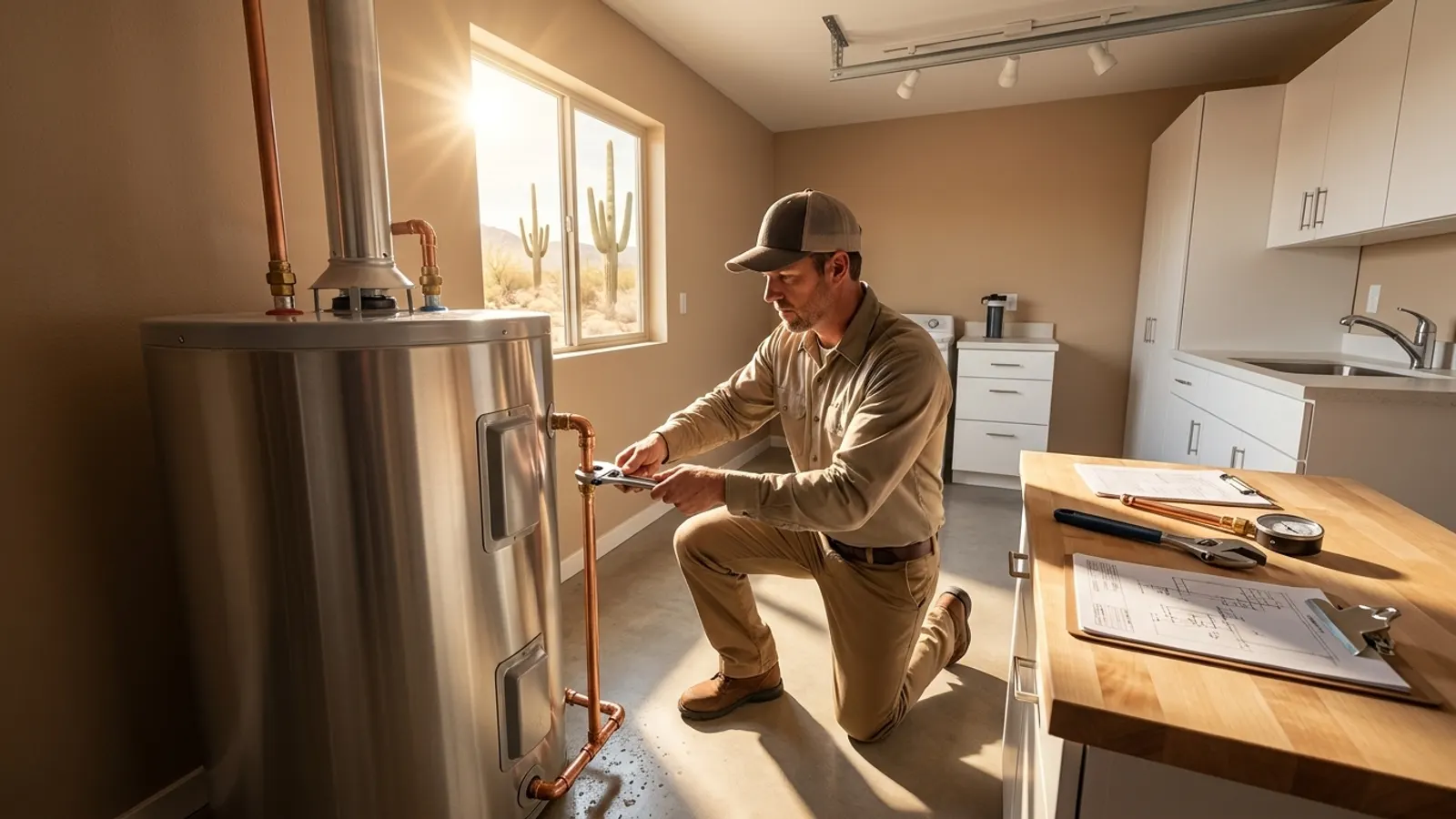
Electric tank heaters commonly use one or more heating elements. An element can open electrically, short, accumulate scale, or fail after operating without the required water coverage. Depending on the design, one failed element may produce some hot water but reduce recovery or usable capacity.
Testing involves energized electrical systems and should be done by someone qualified for the equipment. Replacing an element without asking why it failed can miss a control, wiring, scale, or installation issue.
3. Burner, ignition, or fuel-supply problems
Fuel-burning units need the correct fuel supply, ignition sequence, combustion air, burner condition, venting, and safety-control response. A dirty component, failed igniter, valve or control problem, supply interruption, blocked intake or exhaust, or improper combustion condition may prevent heating.
Never defeat an interlock or repeatedly attempt ignition when gas odor, soot, scorching, or abnormal flame behavior is present. Leave the area for a suspected gas or carbon-monoxide hazard and contact the utility or emergency services from a safe location.
4. Thermostat, sensor, and control failure
Thermostats and sensors tell the heater when to operate and when to stop. Mechanical controls can drift or fail; electronic boards can log codes or shut the unit down when inputs fall outside the expected range.
The displayed code is a clue tied to the exact model, not a universal answer. Record it before resetting anything. A control may be responding correctly to another problem, so replacing the board simply because it displays an alarm can be an expensive misdiagnosis.
5. Sediment and scale accumulation
Minerals and particles can settle in tank bottoms or form scale on heated surfaces and heat exchangers. Accumulation may contribute to noise, restricted flow, reduced heat transfer, difficult draining, overheated components, or recurring service codes.
Mesa water conditions can make scale a practical maintenance topic, but the amount and effect vary by source, treatment, temperature, use, and equipment. A softener, filter, flush, or descaling service should be recommended for a defined condition, not as a guaranteed way to add a fixed number of years. Review water-treatment services when hardness management is relevant.
6. Pressure and thermal-expansion stress
Water expands when heated. In some plumbing systems, that expansion can increase pressure unless it is properly controlled. Excess supply pressure or failed expansion components can stress fixtures, valves, connectors, and the heater.
Repeated relief-valve discharge, pressure swings, or leaks at multiple fixtures can justify system-level evaluation. Never plug a relief outlet. The correct pressure limits and control method depend on the installation and applicable requirements.
7. Flow and capacity mismatch
Not every “failure” means a broken part. A storage tank can run out during a new demand pattern. A tankless unit can reach its maximum flow or temperature-rise capacity. A low-flow condition may fail to activate some equipment. Recirculation or mixing changes can also affect delivered temperature.
Diagnosis should compare the original sizing assumptions with actual simultaneous use. Raising the temperature is not a safe substitute for appropriate capacity and can increase scald risk.
8. Venting, condensate, or environmental conditions
Fuel-burning equipment depends on a vent system that matches the unit and installation. A vent restriction, improper material or slope, damaged termination, inadequate combustion air, or pressure interaction can cause shutdowns or unsafe operation.
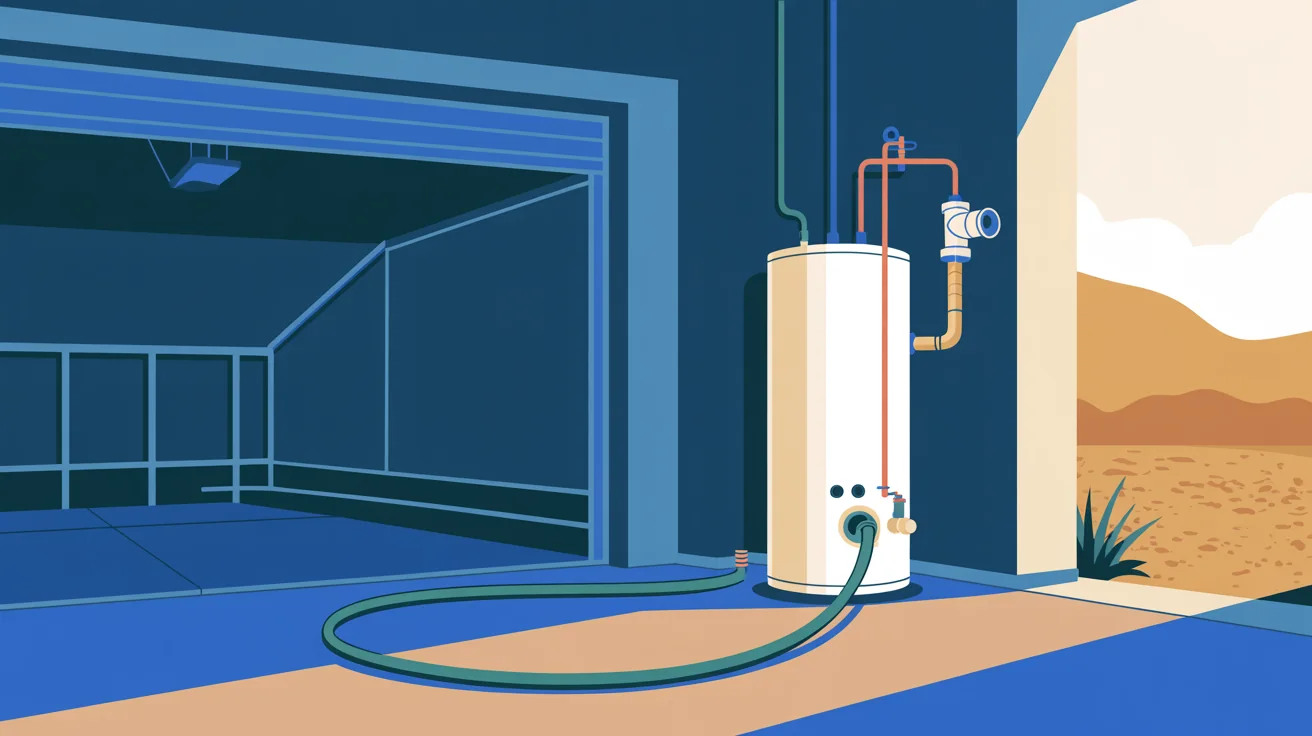
High-efficiency models may produce condensate. Blocked, frozen, damaged, or improperly routed condensate components can trigger faults or leaks. Outdoor and garage installations may also face heat, dust, weather, impact, or clearance concerns. Manufacturer instructions and local requirements should guide the assessment.
9. Installation and connected-system defects
A reliable heater depends on more than the appliance. Incorrect wiring, undersized gas supply, unsuitable venting, poor drainage, unsupported piping, improper valves, missing service clearances, or mismatched components can cause immediate trouble or accelerate later failure.
That is why replacing the failed unit without assessing the connected systems can repeat the problem. JB Water & Air’s broader plumbing-services overview shows how water heaters fit into the home’s supply, drainage, and fixture systems.
How a technician narrows the cause
A disciplined diagnosis usually begins with the symptom, equipment identity, and operating history:
- Confirm whether the issue affects one fixture or the whole hot-water system.
- Record the model, serial number, fuel type, capacity, and displayed codes.
- Inspect for leakage, corrosion, venting concerns, damaged wiring, and altered controls.
- Verify utilities and operating conditions with appropriate instruments.
- Test suspected components according to manufacturer procedures.
- Explain the evidence, repair boundary, and remaining risks before work is approved.
Homeowners can help by providing photos, noting when the symptom occurs, and listing recent plumbing or treatment changes. They should not open energized compartments or manipulate gas controls to gather more information.
Decide between repair and replacement on evidence
A replaceable component may make repair reasonable when the tank and installation are sound. Tank leakage, repeated failures, unavailable parts, serious installation deficiencies, or a system that no longer fits demand may shift the decision toward replacement.
Compare complete scopes. A repair proposal should identify the failed part and what remains unchanged. A replacement proposal should identify the exact model, capacity basis, connection changes, permit responsibilities, startup checks, maintenance, and warranty categories. Neither decision should rely on an unsupported universal lifespan or guaranteed savings claim.
JB Water & Air is a family-owned Mesa company founded in 1981. To ask whether a water-heater problem falls within its current scope, contact JB Water & Air with the equipment label, symptoms, code history, and visible site conditions. Confirm availability and pricing directly, especially when fuel gas, active leakage, or electrical hazards are involved.