Water Quality5 min read
Do You Need a Whole-House Water Filter? A Decision Guide
Whole-house filtration is useful only when it matches a defined water concern. Compare treatment goals, flow, testing, maintenance, and alternatives.
By JB Water & Air · Published Oct 24, 2025 · Reviewed Sep 2, 2026
- 4.9 · 580 Google reviews
- CR-77 & CR-39 licensed
- Open 24/7
Not every home needs a whole-house filtration system. The right system depends on the water source, the condition you want to change, whether that condition affects every fixture, and the evidence supporting a particular treatment method.
A whole-house filter can be a good fit for a defined point-of-entry goal. It can also add unnecessary pressure loss, maintenance, cost, and complexity when a single drinking-water faucet is the only concern. Start with the problem, not the equipment category.
JB Water & Air’s water-treatment overview explains its published service category. This guide provides the questions to answer before requesting a recommendation.
What “whole-house” means
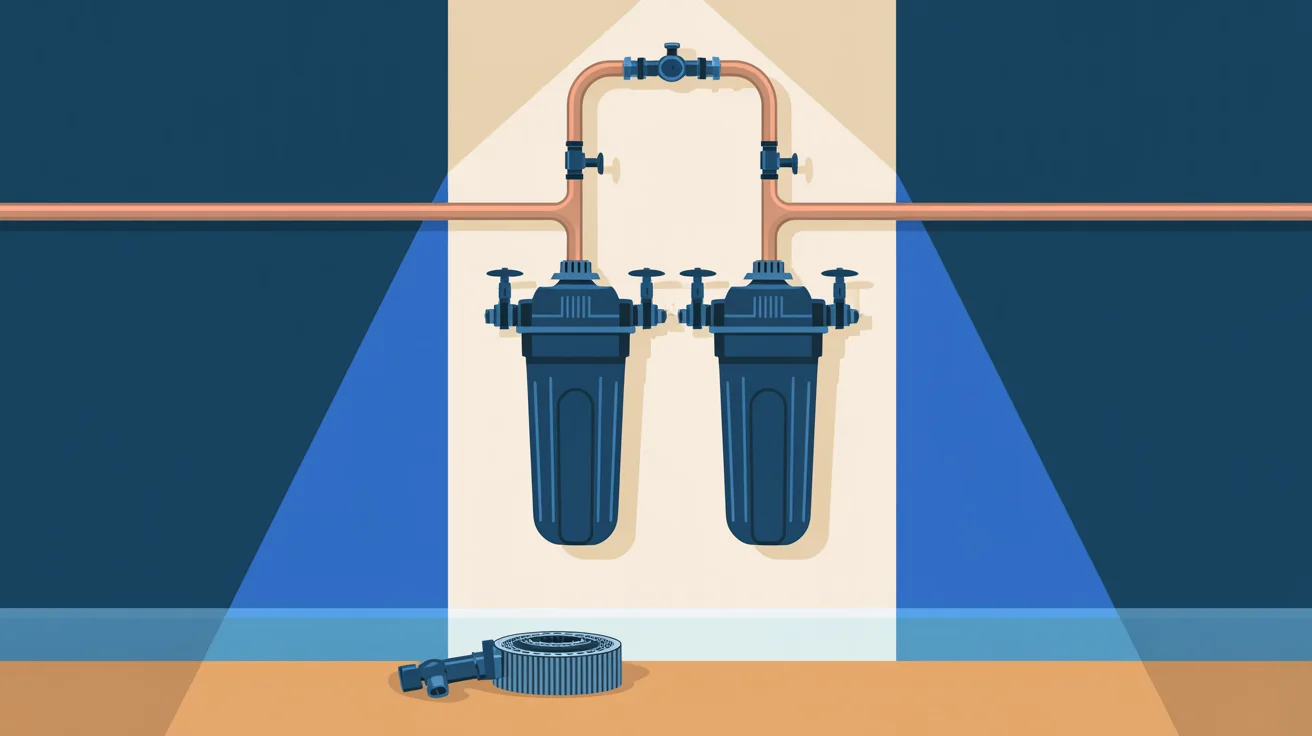
A point-of-entry system treats water near the point where it enters the building, before the supply branches to fixtures. It must support the home’s peak flow and pressure needs while providing enough contact or filtration for its intended function.
That is different from a point-of-use system at a kitchen sink, refrigerator, or shower. Point-of-use treatment handles a smaller flow and can be more appropriate when the objective is limited to drinking and cooking water.
Whole-house does not mean “removes everything.” The media, micron rating, vessel size, flow, source-water conditions, and documented product claims define what a system can be expected to do.
Reasons a household may consider it
Sediment throughout the home
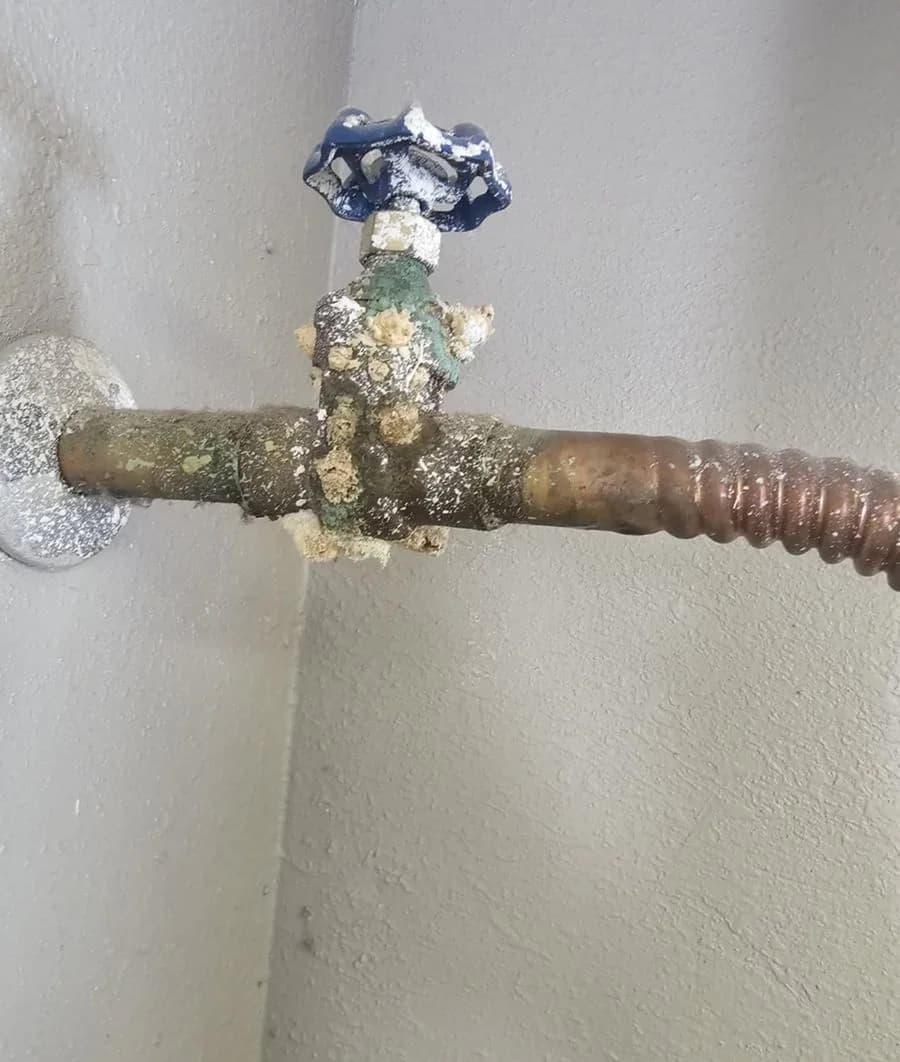
Particles appearing at multiple fixtures may justify investigating a point-of-entry sediment filter. First identify the likely source. Utility work, a private well, corrosion, a failing water heater, treatment media, or internal plumbing can create different patterns.
A sediment filter captures particles within its design range. It does not identify dissolved contaminants or prove that water is microbiologically safe.
A taste or odor concern at many fixtures
Certain carbon systems may have documented claims relevant to particular taste, odor, or chemical-reduction goals. Capacity and contact time matter at whole-house flow. A small cartridge that works at one faucet may not perform the same way on the main supply.
Odor can also originate in a water heater, drain, well, or plumbing component. Confirm whether the issue is on hot water, cold water, or both before choosing equipment.
Protection for downstream treatment
Pretreatment may protect a softener, reverse-osmosis system, ultraviolet unit, or specialized media from conditions that interfere with performance. This should be based on manufacturer requirements and source-water information, not a generic “three-stage is better” rule.
A documented contaminant goal
If a qualified laboratory or utility identifies a substance of concern, use that information to compare product-specific treatment claims. Confirm concentration, required reduction, flow, capacity, breakthrough monitoring, and replacement schedule. A certification or test result must apply to the exact model and contaminant, not merely the brand.
What whole-house filtration does not do automatically
It does not automatically soften hard water. A conventional softener uses ion exchange to reduce calcium and magnesium hardness; sediment and carbon filters have different functions.
It does not automatically make any source safe to drink. Some microbial, chemical, and radiological concerns require specific treatment, controls, monitoring, or an alternate water source. Treatment selected without appropriate sampling can miss the actual problem.
It does not guarantee health outcomes. Claims about curing skin conditions, preventing disease, “detoxing,” or producing universal wellness benefits need medical evidence and are outside a plumbing company’s role.
The Pure Water page compares softening, filtration, reverse osmosis, and distillation so homeowners can separate these functions.
When point-of-use may be the better fit
A dedicated kitchen system may be more practical when the goal concerns only drinking and cooking water. It treats less volume, may use smaller equipment, and avoids processing water used for toilets, irrigation, or other non-drinking purposes.
That does not make point-of-use universally better. It may not address whole-home sediment, a shower-related issue, or protection for connected equipment. The decision depends on where the concern occurs and how much treated water is needed.
Flow and pressure must be designed, not guessed
A whole-house system that is too restrictive can reduce pressure when several fixtures run. A vessel or cartridge that is too small may provide inadequate contact time, load quickly, or require impractical replacement.
Sizing should account for:
- service-line and plumbing capacity;
- peak simultaneous fixture use;
- household demand;
- incoming pressure;
- water temperature and chemistry;
- media or cartridge capacity;
- backwash flow and drain needs where applicable; and
- space for bypass, isolation, and future service.
Ask the installer to state the sizing assumptions. Bedroom count alone is a weak substitute for measured or estimated peak demand.
Maintenance is part of the treatment result
Filters do not remain effective forever. Sediment loads media, carbon has finite capacity, and specialized treatment may require testing or monitoring. Replacement timing can depend on gallons, time, pressure drop, source-water concentration, or manufacturer criteria.
Leaving a cartridge in service beyond its useful capacity can reduce flow or fail to meet the intended treatment goal. Replacing too early adds waste and cost. A proposal should include part numbers, replacement procedure, expected criteria, bypass instructions, sanitation guidance, and the consequences of missed service.
Whole-house equipment also needs leak protection and a safe drain arrangement when it backwashes. Do not hide equipment where a leak or pressure change will go unnoticed.
Testing: define the question first
Appearance, taste, odor, hardness, pH, or total dissolved solids may provide clues, but none is a complete safety screen. Public-water customers should review information from their actual utility. Private-well owners should seek source- and risk-appropriate sampling guidance from qualified agencies or laboratories.
JB Water & Air publishes water and air test information, but the current method, analytes or measurements, cost, turnaround, and interpretation must be confirmed. A sales demonstration should not be represented as certified contaminant analysis.
Before sampling, ask a qualified laboratory for the correct container, sample location, flushing, preservation, transport, and analysis. Improper collection can make a precise-looking result unhelpful.
Questions to ask before buying
- What exact condition is the system intended to change?
- What evidence establishes that condition?
- Why is point-of-entry treatment preferable to point-of-use?
- What is the exact model and documented performance claim?
- What peak flow and pressure drop were used for sizing?
- What pretreatment, drain, power, or bypass is required?
- How will performance be monitored?
- What parts and maintenance are needed?
- What happens during a power outage, bypass, or exhausted media condition?
- Which claims and costs are excluded from the proposal?
A Mesa-specific next step
JB Water & Air is a family-owned Mesa company founded in 1981 and provides plumbing and water-treatment services across its published East Valley area. That local scope does not mean every home needs the same filter or that every contaminant can be addressed by one system.
To discuss a defined water concern, contact JB Water & Air with the service address, water provider, symptoms, existing treatment, household flow needs, and any laboratory or utility report. Confirm the current assessment scope and price directly. The strongest recommendation may be whole-house, point-of-use, softening, another method, or no new equipment at all.