
Whole-home repipe · Mesa, AZ
Whole-home repipe in Mesa, before the leaks pick the date
A repipe replaces the water piping in your walls as one planned project. Pinhole leaks in several rooms usually mean the rest matches the pipe that already failed.
- 4.9 · 580 Google reviews
- Since 1981Family owned since 1981
- CR-77 licensedROC #260511 · CR-77
- 2-year labor guarantee2-year workmanship guarantee
Guarantee covers JB's own labor. Excludes normal wear, manufacturer defects and outside damage.
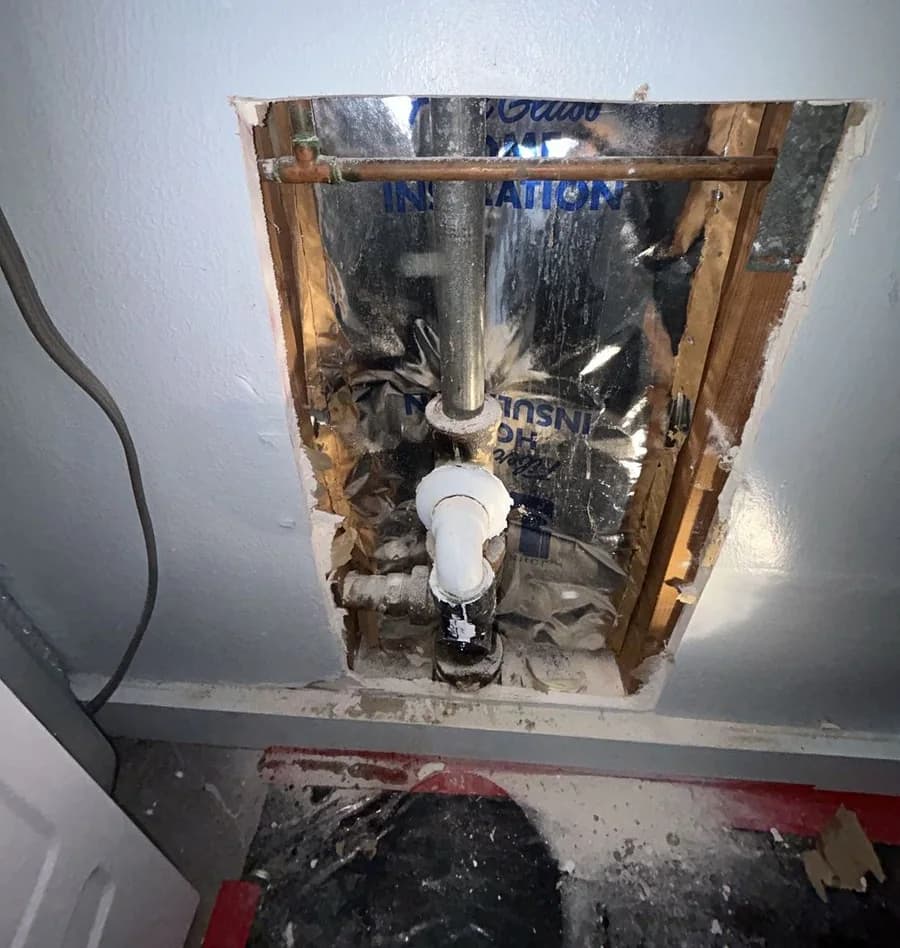
Sounds like your house?
- Pinhole leaks in more than one room
- Pressure drops when a second fixture opens
- A warm patch on the slab floor
- Repairs in three or more branches
What a whole-home repipe is
A whole-home repipe replaces a property's water-distribution piping as one coordinated system, normally in copper or PEX, rather than repairing one failed section at a time.
Before the scope, the pattern
Is this a pattern, or a coincidence?
A repipe is most defensible when the evidence shows a shared cause across the property. The reason for the project sets the boundary of it, and sometimes rules a whole-home repipe out in favour of a smaller scope.
One leak is not a repipe. A pattern might be.
Age frames the risk but does not diagnose the pipe. The useful question is not how old the plumbing is, it is whether the failures share a cause. Five signals move a run of incidents toward a system-level argument.
- Repeated leaks in different branchesSeparate failures in separate rooms point at a shared cause, not bad luck at one fitting.
- Widespread visible corrosionWhere you can see it usually tells you what the pipe you cannot see is doing.
- Pressure or flow affecting many fixtures at onceA whole-house drop points at the distribution itself rather than one restricted branch.
- Prior repairs with more compromised pipe still in serviceEach patch left the neighbouring pipe in the same condition that failed. The pattern outruns the repairs.
- An older material tied directly to the failuresGalvanized steel or early copper failing on its own record, not guessed at from the year the house was built.
If the damage is isolated and the surrounding pipe is sound, a focused pipe repair or a defined pipe replacement is the honest comparison to make first, before the larger project.
If the failures share a cause, the next step is a conversation, not a form. Tell us where the leaks have been.
(480) 969-3193Repipe Services in Mesa, AZ
A repipe is most defensible when the evidence shows widespread deterioration, repeated leaks in different areas, or a system-level problem that sectional repairs will not solve. JB Water & Air repipes Mesa homes and businesses under Arizona CR-77 plumbing license ROC #260511.
One leak does not justify a repipe. If damage is isolated and the surrounding pipe is sound, compare pipe repair or a defined pipe replacement against the larger project first. The useful question is not how old the plumbing is. It is whether the failures share a cause.
Age frames the risk but does not diagnose the piping. A central Mesa house from the 1950s or 1960s may still run original galvanized steel on the supply side and original cast iron on the drain side, and those are two decisions with two sets of evidence. Drain condition belongs to cast iron pipe repair, not to a supply repipe. If a line has already let go at speed, the damage-control steps worth taking before a plumber arrives are useful reading.
What Mesa Water Does to the Argument
Mesa treats surface water from the Colorado River, delivered through the Central Arizona Project, alongside Salt River Project water, and it uses groundwater as well. The blend varies by plant and by season, and the water is hard. Hardness is reported in grains per gallon, and the figure for an address comes from the current utility water quality report rather than from a contractor's impression. Our explainer on what Mesa hard water actually means separates the hardness question from the safety question.
This matters because scale forms on the inside of supply lines, so a pressure complaint in an older Mesa house is often a narrowing problem rather than a supply problem. A repipe removes the scaled pipe. It does not change the water entering the building, and new pipe carrying the same water scales again, which is why the piping decision and the water treatment decision are better made together than in sequence.
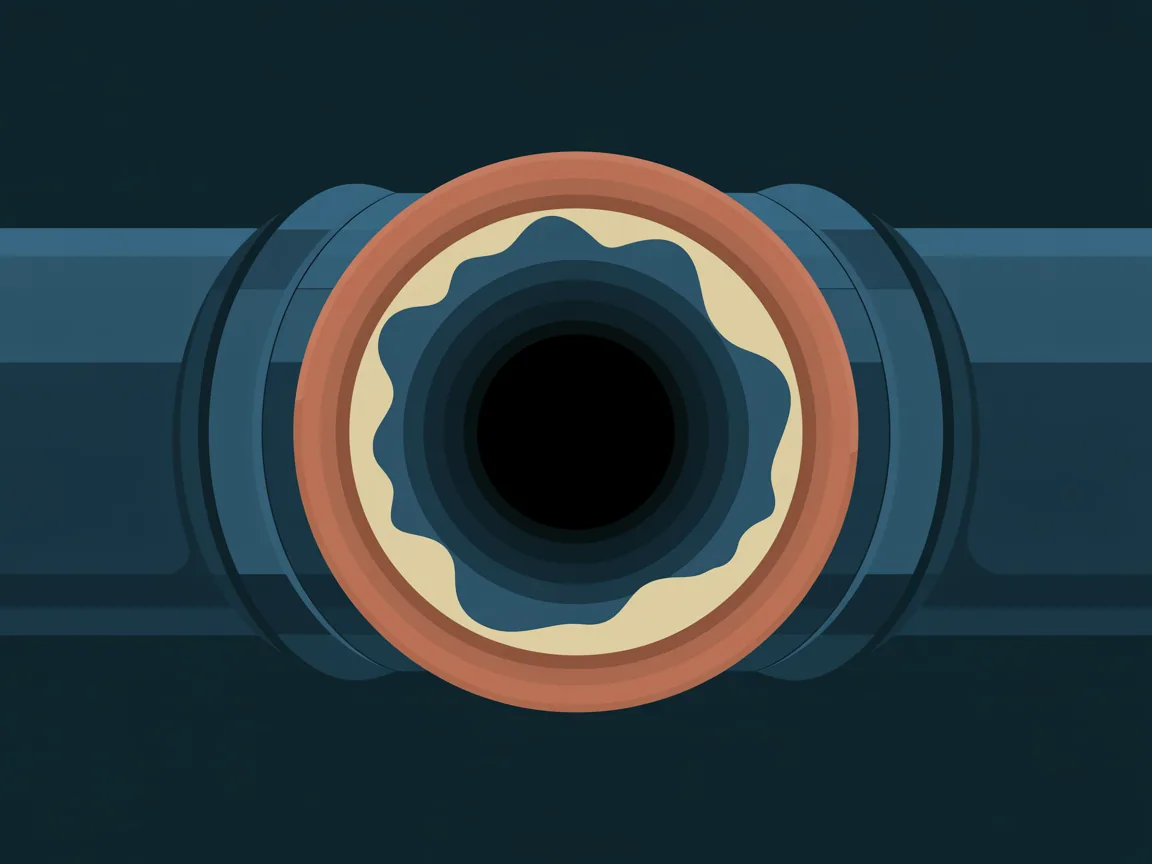
Named by application
What goes in, and what usually comes out
A proposal should name the material by application and explain every transition to whatever is being kept. Copper is specified by wall thickness, so ask which type is quoted rather than accepting the word copper on its own.
Copper
Rigid, joined by solder or press fittings, with a long service record in Valley homes and good tolerance of attic heat. It is specified by wall thickness, so the proposal should name the type rather than just say copper. It corrodes from the inside, which is what a pinhole leak is.
PEX
Flexible tubing that can often be pulled from a manifold to a fixture in one continuous piece. Fewer joints means fewer places to fail, and fewer wall openings because it can be fished where rigid pipe needs the wall cut. It is not for exposed exterior runs, since sunlight degrades it.
CPVC
Rigid plastic joined with solvent cement. It appears in some repipe proposals and in a lot of existing houses. It can become brittle with age and with certain chemical exposure, so ask why it is being proposed over copper or PEX for your route.
Galvanized steel
Usually the material coming out rather than going in. Zinc-coated steel corrodes and scales inward, which is why supply pressure in an older central Mesa house tends to fall gradually rather than all at once.
Why a slab repipe goes overhead
A slab repipe is a drywall project too
Most Mesa housing sits on a concrete slab, and that fact drives more repipe decisions here than material choice does. Rather than trenching concrete, new lines usually run overhead and drop down interior walls to each fixture. Toggle the route and watch what the reroute actually opens.
Original lines run inside or beneath the slab.
0openings to close and restore
Nothing new opened yet
The original distribution runs inside or beneath the slab. You cannot see it, and reaching it means cutting and trenching the concrete. In a post-tension slab that is not something to wave through, because the slab holds steel tendons under load. Toggle to the overhead reroute to see the route most Mesa slab repipes actually take, and what it opens.
Repiping a Slab Home: Post-Tension and Caliche
A warm patch underfoot points under the slab but locates nothing on its own, so confirm what the leak detection work established, and exactly where, before approving a scope built on top of it.
Post-tension slabs
If the home has a post-tension foundation, the slab holds steel tendons under load, and cutting into it without locating them first is not something to wave through. Ask directly whether the slab is post-tensioned, how that was established, and what the plan is if concrete work is still proposed.
Caliche and what is underneath
Where trenching cannot be avoided, the soil matters. Caliche, the cemented hardpan common across the East Valley, can turn a short excavation into a slow one, and it is a fair reason for a scope to carry a stated unknown. If a quote includes work outside the walls, ask whether caliche was accounted for. Exterior work is usually a separate water line scope, not part of an interior repipe.
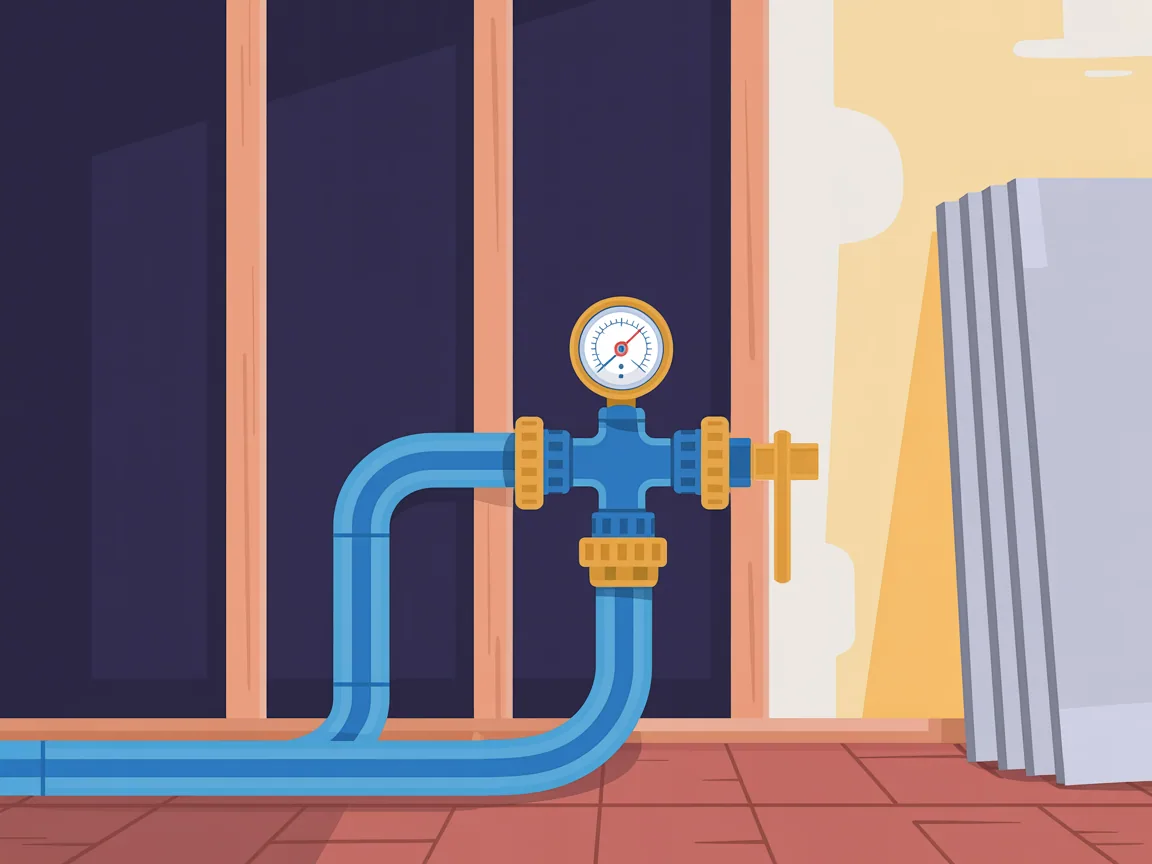
Permits and Inspection in Mesa
A repipe alters the water distribution system, so it is permitted work. The permit is taken out on the City of Mesa record under the contractor's license before the job starts, not applied for afterwards. Ask for the permit number, and confirm the license on it belongs to the company that will be in the house. Our guide to choosing a Mesa plumber covers checking a license against the Arizona Registrar of Contractors record.
Ask for the closed permit, the inspection record, and a note of where the new lines run. Rerouted piping is invisible once the drywall is back up, and the next contractor or the next buyer will need to know. Plumbing documentation carries weight in an Arizona property transaction.
What a Repipe Quote Should Cover
The quote should identify:
- every included supply route and fixture connection;
- any pipe or branch that will remain;
- the proposed material and sizing approach;
- wall, ceiling, cabinet, attic or slab access;
- permit and inspection responsibilities;
- how long and where water must be shut off;
- testing before openings are closed; and
- cleanup and restoration boundaries.
Do not assume a complete repipe includes the main water line outside the home. Before the first wall opens, make sure you know where your shutoffs are.
Inspect before you close
The order matters more than the speed
New piping is pressure tested and inspected while it is still exposed, and nothing closes until that passes. Build the order below and see where it refuses to bend.
1. Establish the pattern before the scope
What the failures share matters more than how many there have been. The reason for the project sets the boundary of it, and sometimes rules a whole-home repipe out in favor of a smaller scope.
2. Permit before the first wall opens
The plumbing permit is taken out on the City of Mesa record under the contractor's license before work starts, not backfilled afterwards. Ask for the permit number and confirm the license on it matches the company in the house.
3. Test and inspect while the pipe is exposed
New distribution is pressure tested and inspected before anything is concealed. Nothing gets closed, textured or painted until that has passed, which is why restoration cannot be scheduled ahead of it.
4. Restore against a written boundary
Drywall, texture and paint follow the inspection. Which openings get closed, by whom, and to what finish belongs in the scope before the first cut, not in a conversation at the end.
Pick the steps in the order a repipe actually runs.
Remaining steps
- The order builds here as you pick.
Reading the symptom
What you are seeing, and the question it raises
A symptom sets the direction of the investigation. It does not on its own justify a whole-house recommendation.
- Pinhole leaks in more than one room
- Copper failing from the inside at separate points. It raises whether the cause is water chemistry, flow velocity or the original installation, because that is what decides how much of the system is at risk.
- Pressure drops when a second fixture opens
- Restriction somewhere in the distribution. It raises whether the narrowing is scale inside the pipe, an undersized branch, a partly closed valve or something ahead of the house entirely.
- Discolored water on the first draw of the day
- Material shedding inside a pipe or a heater while the water sat still. It raises which run it comes from, since hot-only and whole-house point in different directions.
- A warm patch on the slab floor
- A hot line under the concrete losing water. It raises whether this is one location or the first visible point of a wider pattern.
- Repairs in three or more separate branches
- A pattern rather than a coincidence. It raises whether the pipe still in service is in the same condition as the pipe already replaced.
- Grit clogging aerators and fixture screens
- Solids moving through the supply. It raises whether the material is coming off the inside walls of the piping or arriving from upstream.
Comparing proposals
Two quotes, one house, sixteen walls apart
Price only means something when the scopes match. A quote that opens six walls and a quote that opens sixteen are not describing the same job, and the difference surfaces in drywall and paint rather than in pipe.
6walls and ceilings opened
Flexible tubing fished from a manifold to each fixture, so fewer walls come open. Fewer joints, fewer places to fail. Not for exposed exterior runs.
16walls and ceilings opened
Rigid pipe that needs the wall cut where tubing could be fished, so more openings. A long Valley record and good attic-heat tolerance. Specified by wall thickness, which the proposal should name.
A quote that opens six walls and one that opens sixteen are not describing the same job. The difference surfaces in drywall and paint rather than in pipe, so price only means something once the opening counts, and who closes them, match. If a workmanship policy is referenced, get its terms in the job documents: coverage, exclusions, start date, transferability and remedy.
Ask for a repipe evaluation
Share the leak history
Tell us which rooms and branches were affected, the pipe material if you know it, what has already been repaired and where, whether the home sits on a slab, and any leak detection or water quality reports you already hold. That detail is what decides whether this is a repair or a larger conversation.
Are the leaks spread across the house?
Send the details and a JB team member will call you to confirm the timing and the next step. JB's labor carries a 2-year workmanship guarantee, excluding normal wear, manufacturer defects and damage from outside causes.
For a line that has already let go, use the emergency plumbing page. JB is open 24 hours a day, 7 days a week.
Questions people ask
Straight answers
How much does it cost to repipe a house?
How long does it take to repipe a house?
Is PEX or copper better for a repipe?
Can you repipe a house built on a slab?
Do you need a permit to repipe a house in Mesa?
What is a repipe specialist?
Will a repipe replace drain and sewer lines?
Will repiping improve my water quality?
Do you have to move out during a repipe?
How do I request a repipe evaluation?
Related pipe and repipe services
Ask what a repipe would cover here
Scopes vary. Ask where the work starts, what stays, and what restoration is included.
Open 24 hours a day, 7 days a week · ROC #260511 · 2-year workmanship guarantee on our labor (excludes normal wear, manufacturer defects and outside damage)