
Plumbing fixture installation
Faucet installation in Mesa, plus toilets and shower valves
JB installs faucets, toilets, disposals and shower valves in Mesa, including ones you bought. The fixture is the easy part: the stops and drain behind it are the job.
- 4.9 · 580 Google reviews
- CR-77 licensedROC #260511 · CR-77
- 2-year labor guarantee2-year workmanship guarantee
Guarantee covers JB's own labor. Excludes normal wear, manufacturer defects and outside damage.
Reading the fixture
What the symptom is really asking
A fixture reports on the connections behind it. Each of these is less a diagnosis than the question it forces next.
The toilet rocks when you sit down
The bowl is not bearing evenly on the floor. The question is how the top of the closet flange sits relative to the finished floor, because a floor tiled over an older one leaves the flange low.
Water appears at the base of the bowl
Water is arriving at the floor rather than starting there. The question is whether it shows up only after a flush, which points at the seal or the flange, or all day, which points elsewhere.
A faucet drips with both handles closed
Something inside the valve is passing rather than sealing. The question is whether the cartridge or seat for that model is still available, since that decides whether repair or replacement is even a choice.
The shower handle turns further than it used to
The mixing valve is not delivering the same temperature at the same position. The question is whether the change came on gradually, which suggests wear and scale, or suddenly after work elsewhere in the house.
Before you buy
Check the fit before the fixture is anywhere near the sink
What changes the scope is rarely the fixture itself. It is the valve type, the condition of the supply, and, the moment the fixture moves, the drain and the vent behind it.
Pick a fixture and whether it is replacing one already there or going somewhere new. The panel shows the measurements to confirm before buying and the conditions that change the job once the old unit is off.
- Rough-in
- wall to bolt center
- Hole spacing
- deck openings
- Clearance
- wall, cabinet, ledge
- In the box
- drain, supply, hardware
These are the measurements that cannot change once the fixture is set. Confirming them is the cheapest step to get right.
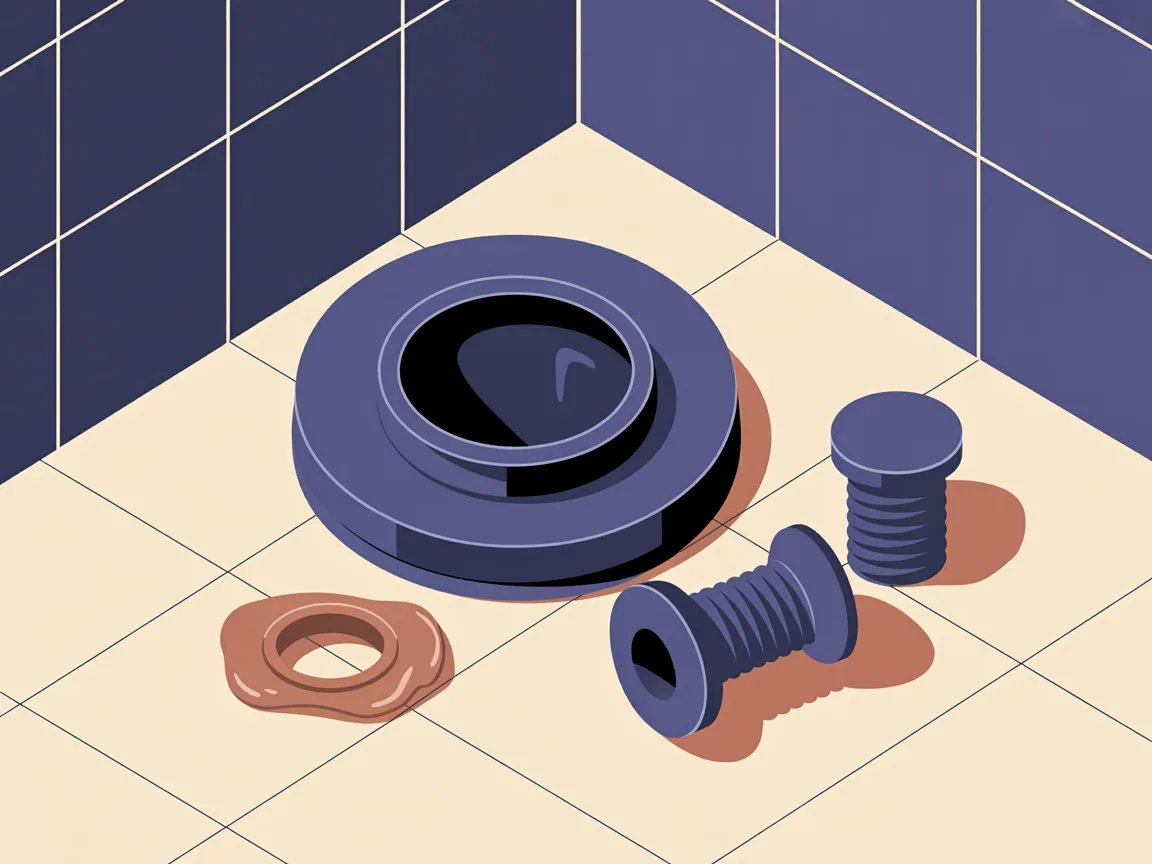
Not sure the fixture you picked will fit what is already there? Describe it on the phone and a JB plumber will tell you what to measure first.
(480) 969-3193The parts behind the fixture
Two options, and when each is the right one
None of these is the “best” choice on its own. Each pairing is about the condition it suits and the failure mode to watch for.
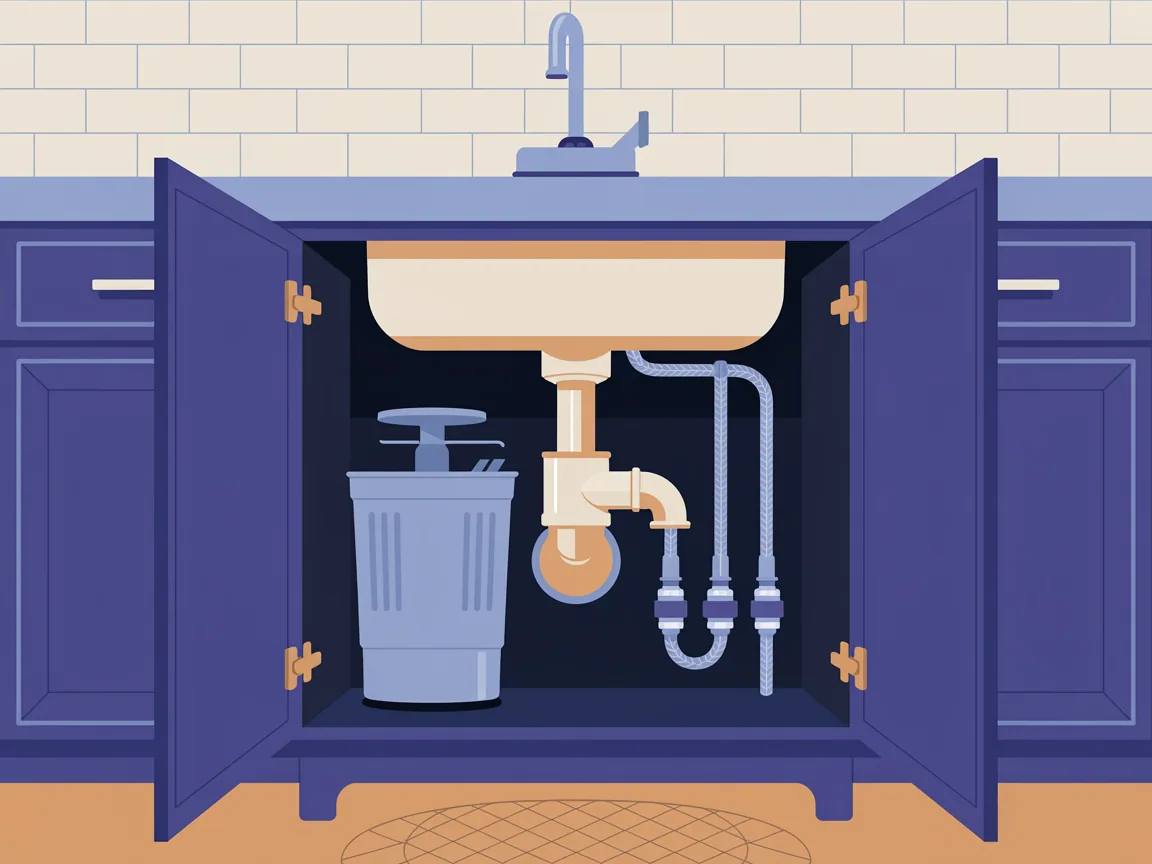
A wax ring is inexpensive, forgiving of small irregularities, and destroyed the moment the bowl is lifted or set down twice. A waxless seal can be repositioned and tolerates a slightly low flange better. Neither fixes a flange at the wrong height, which is a floor repair, not a seal choice.
A quarter-turn ball stop closes with a lever in one movement and tends to keep working after long periods untouched. An older multi-turn compression stop relies on a washer that hardens with age, which is why so many of them will not seal again once they are finally turned.
Braided stainless connectors absorb misalignment and are easier to fit in a tight cabinet. Rigid chrome risers look neater and have to be cut and bent to suit. The failure to watch for on either is a connection overtightened onto a plastic thread.
Ceramic disc and cartridge valves resist wear well and are the common choice now. Older compression valves seal with a rubber washer against a seat. In hard water either can be held open by scale, so the practical question is whether replacement parts are still made for the model.
A pressure balancing valve holds the hot and cold ratio steady when another fixture draws, which is the anti-scald function. A thermostatic valve holds a set temperature and usually allows volume to be controlled separately. Both are valve body decisions, so choosing between them means opening the wall.
How the visit runs
Fit, isolate, inspect, then test under use
Confirm the fixture fits
Before anything is removed, check the measurements that cannot be adjusted later: hole pattern and spacing, rough-in, clearance to wall and cabinet, and what the box actually contains. This is the cheapest step to get right.
Isolate and test the stops
Close the angle stops, open the fixture and confirm the water has really stopped. A stop that will not close changes the job, and finding that out now rather than with the old fixture off is the difference between a contained repair and a disabled sink.
Remove and inspect the mounting surface
With the old unit off, the flange height, deck condition, tailpiece alignment and cabinet floor are all visible. Scope changes are discovered here, so this is the point to agree what happens next rather than after the new fixture is set.
Set, connect, then test under use
Fit the fixture, make the supply and drain connections, restore water and run it the way it will be used. Fill and drain the basin, cycle each function, then check every joint again once it has been under pressure for a while rather than only at the moment of connection.
The standard of done: A fixture installation is finished when the new unit fits its mounting, connects to stops and drain components that work, operates as intended, and stays dry at every joint after it has been used, not only at the moment the connection was made.
One job, same wall
One exterior hose bib, before and after
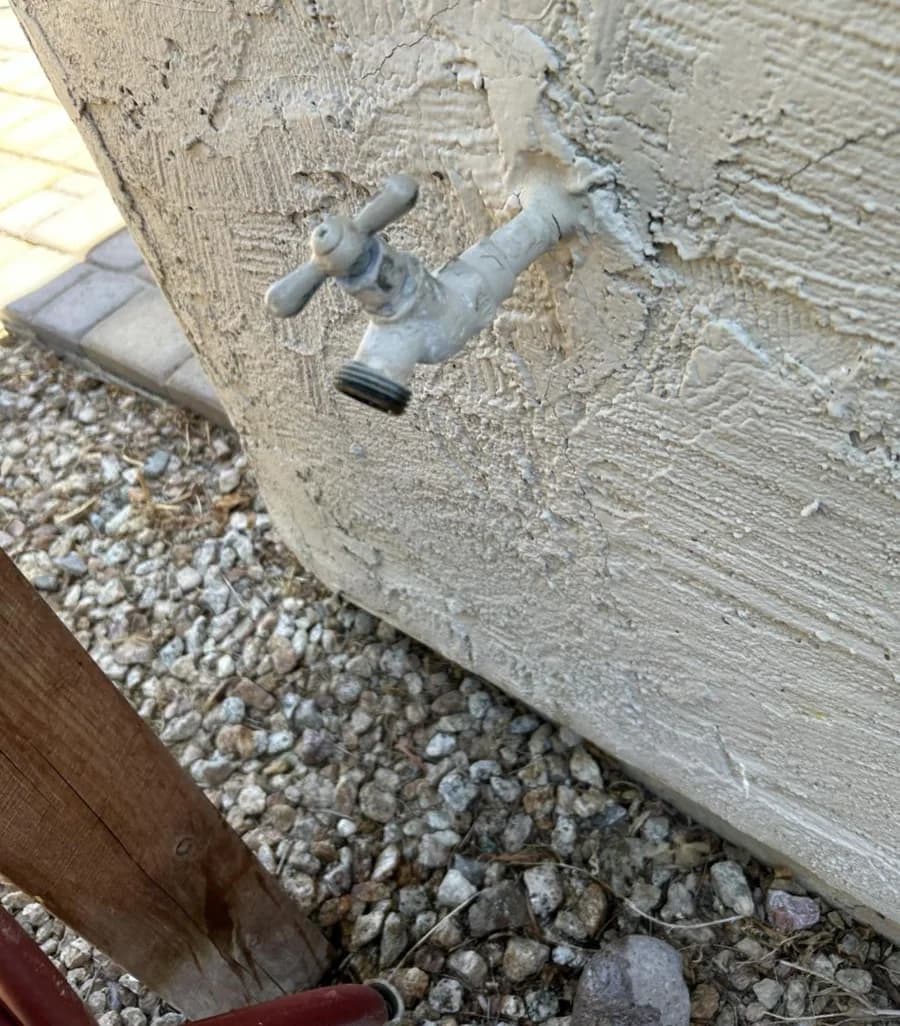
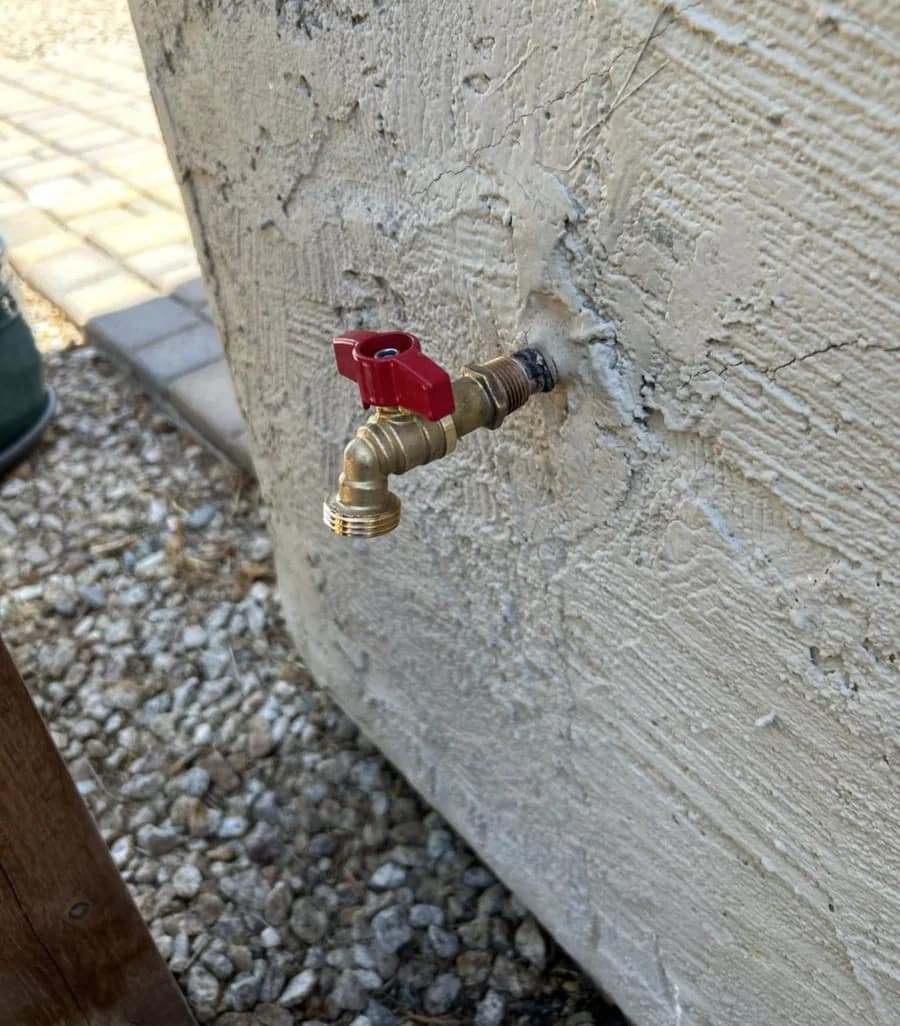
Both photographs are from the same JB service call. They show what this particular job involved and are not a statement about timing on any other call.
Published on Google
“He arrived on time, was very professional, gave me a few tips for future reference”
7Google reviews mention faucet installation, as of 2026-09-02.
JB Water & Air installs faucets, toilets, disposals and shower valves for Mesa homes under Arizona CR-77 plumbing license ROC #260511, and the phone is answered 24 hours a day, seven days a week.
A fixture swap looks simple until the old unit comes off. Corroded angle stops, a mounting pattern that does not match, a closet flange below the finished floor, or a drain that no longer lines up can all change the scope before the new fixture is anywhere near the sink. Establishing those conditions before the water goes off is what keeps the sink usable at the end of the day.
Traps, Vents and Moving a Fixture
Every fixture has a trap, and every trap needs a vent so its seal is not siphoned out when something else on the line discharges. That is why an island sink, a laundry sink added in a garage, or a bathroom rearranged across a wall is a drainage project rather than a supply one. Relocating a toilet raises the foundation question first: cutting a post-tension slab means establishing tendon positions before a saw comes out, and Mesa caliche can make an exterior trench for a new hose bib or outdoor shower the slowest part of the job.
Replacing like for like leaves the drainage count alone. Adding a fixture where none existed, or moving one, changes it, because code sizes the drain and the vent by the fixtures they serve.
What to Check Before Buying a Faucet
Mounting pattern and space
Count the sink or countertop openings and note their spacing. A deck plate adapts some configurations and not others. Check clearance to the wall, backsplash, cabinet, window ledge or medicine cabinet before the box is opened.
Supply connections and shutoffs
The existing stops have to close, and the supply connections have to match the new fixture. Our walk-through of changing a bathroom faucet without creating a leak sets out the order those checks belong in.
Drain components and daily use
Bathroom faucet packages often include a pop-up drain assembly, and sink depth, overflow design, the existing tailpiece and cabinet clearance decide whether it fits. Spout reach, handle clearance and cleaning access matter more in use than showroom appearance.
Toilets: Rough-In, Flange and Seal
Two measurements decide most toilet installations. Rough-in is the distance from the finished wall to the center of the closet bolts, and it is not the same in every house. Flange height is the relationship between the top of the closet flange and the finished floor.
Where tile or vinyl has been laid over an older floor, the floor rises and the flange effectively sinks. That is the usual reason a bowl rocks, or a seal fails again soon after replacement. A rocking bowl is reporting on the floor and the flange, not on the bolts, and tightening it further cracks china. Common toilet problems and where to stop separates the checks a homeowner can safely make from the ones that need the fixture lifted.
Where a toilet sits over original cast iron, the closet bend and the flange belong in the assessment before a new bowl is set, and cast iron pipe repair explains how that older material gets evaluated.
Shower, Tub and Disposal Work
The trim is not the valve
Behind the wall is the valve body. In front of it is the trim: handle, escutcheon and spout. Trim kits are brand specific and rarely fit another manufacturer's body, so replacing worn trim and replacing a failed mixing valve are different jobs. Mesa homes with tiled shower walls often have no access panel, and reaching the body may mean opening the wall from the room behind it.
Disposals follow the drain
A disposal has to line up with the existing trap arm, not the other way round. Check the dishwasher knockout, the discharge height against the P-trap, and whether a dedicated switch and outlet already exist, since the electrical side is separate work. Removing a P-trap safely shows why that alignment is not cosmetic, and a line that was draining slowly before the disposal went in is a clogged drain repair question rather than a fixture one.
What to Ask Before Work Begins
- Is removal and disposal of the old fixture in the scope?
- Who supplies missing adapters, stops or drain parts?
- Is repair of a damaged sink, counter, cabinet or wall excluded?
- What happens if a shutoff will not close, or a flange needs work?
- What do the job documents say about coverage, and where does the manufacturer's own product documentation take over?
What shapes the quote
A fixture quote is built from a short list of facts: how many fixtures, whether the stops and supply lines are replaced with them, whether the drain assembly is included or supplied by you, the working room under the cabinet, whether tile or drywall has to be opened to reach a valve, and whether the flange, tailpiece or trap arm needs attention once the old fixture is off. Ask for those itemized separately from labor, so one quote can be set against another on the same list.
Questions people ask
Straight answers
What is a plumbing fixture?
- A plumbing fixture is a device connected to both the water supply and the drain, waste and vent system: it receives water for use and discharges the waste. Sinks and lavatories, toilets, bidets, tubs, showers, laundry sinks, floor drains and hose bibs all count. The definition matters because code sizes drains and vents by fixture.
Do I need a plumber for toilet installation?
- It depends on what the floor is doing. A like for like swap onto a sound closet flange at the right height is a contained job. A bowl that rocks, a flange sitting below a floor that has been tiled over, a stop that will not close, or original cast iron below the bowl are the conditions that move it out of homeowner range.
How is a faucet installed?
- In this order: confirm the fixture fits the openings and the space, close and test the stops, remove the old unit and inspect the mounting surface and drain, then set, connect and test. The sequence matters because the inspection step is where scope changes get found, while the sink can still be put back together.
What does a bathtub faucet installation involve?
- Two separate possibilities. Replacing the trim, meaning handle, escutcheon and spout, works with the valve body already in the wall. It is brand specific and rarely crosses manufacturers. Replacing the valve body itself needs access behind the tile, which often means opening the wall from the room on the other side.
Can I buy my own faucet?
- Yes, and it works best when the model is confirmed before the visit. Send the manufacturer and model number, and check what is actually in the box, since drain assemblies, supply lines and mounting hardware vary. Missing or incompatible parts are the common reason an owner-supplied fixture stalls halfway through.
Should I replace the shutoff valves too?
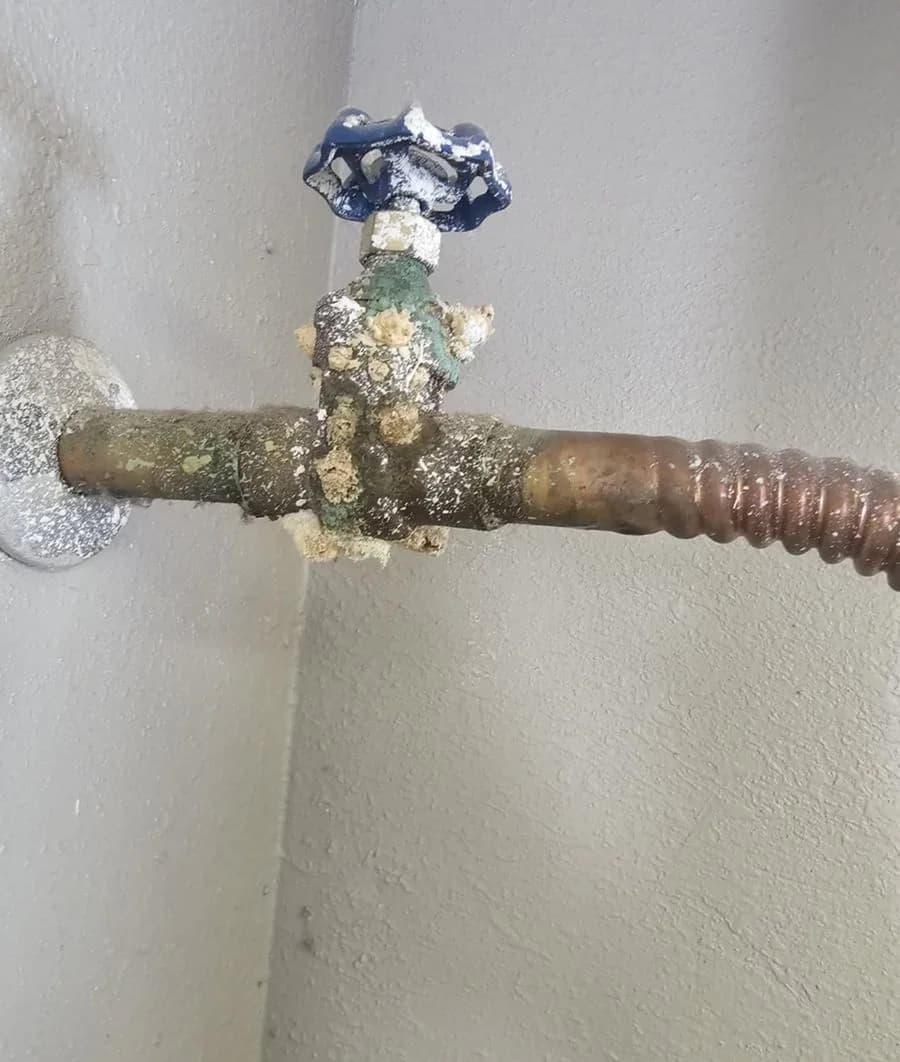
- Only if their condition or operation supports it. A stop that closes fully and shows no defect does not need replacing simply because the faucet changes. A stop that will not close, weeps once turned, or has not been operated in decades is a different matter, and it is better established before the old fixture comes off.
How do I request faucet installation?
- Call (480) 969-3193 or use the contact page. Provide the fixture type, product information if it is already purchased, and any known issue with the sink, stops, drain or cabinet access. Say whether it is a like for like replacement or a fixture going somewhere new, because that changes what the visit involves. JB Water & Air is open 24 hours a day, seven days a week.
Get the fixture fitted properly
Tell us the fixture and the spot
Tell us the fixture and whether the existing valves and shut-offs are still working.
Open 24 hours a day, 7 days a week · ROC #260511 · 2-year workmanship guarantee on our labor (excludes normal wear, manufacturer defects and outside damage)
Send this with your request
- The fixture type, and the manufacturer and model number if it is already bought.
- Whether it is a like-for-like replacement or a fixture going somewhere new.
- Anything already known about the sink, the stops, the drain or cabinet access.
Send the details and a JB team member will call you to confirm the specifics, the timing and any pricing. For water already running, use the emergency plumbing page or call instead.